
Models link the Great Unconformity to mantle movements — Ars Technica
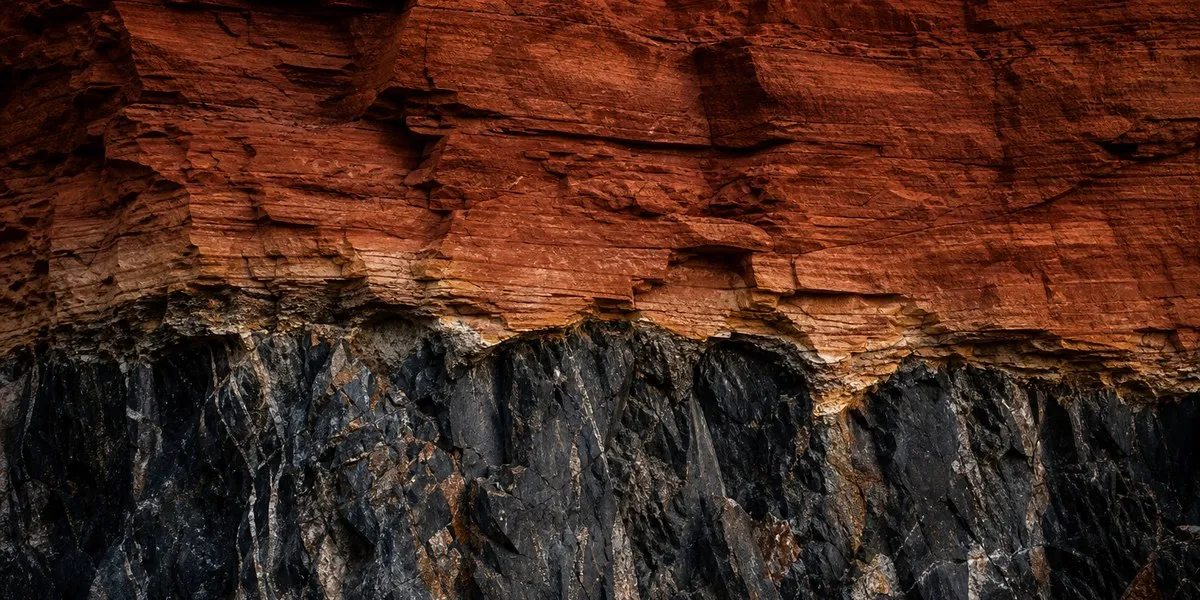
Geologists modeled movements in Earth’s mantle over the past billion years and suggested that prolonged continental uplift combined with large-scale glaciation may have formed the Great Unconformity — a vast gap in the geological record. It is clearly visible, in particular, in the rocks of the Grand Canyon: ancient crystalline rocks there are overlain by Cambrian sandstones, with between 200 million and more than 1 billion years of geological history potentially missing between them, Ars Technica reports.
Continental uplift and erosion
The authors of the study, published in the journal Nature, Nicolas Flament and Santosh Dungana, conducted six simulations of mantle convection. In the models, hot masses of rock slowly rising in the mantle lifted parts of continents, while cold slabs of ocean floor sinking into the mantle at subduction zones contributed to surface subsidence. The amplitude of such vertical movements is estimated at several hundred meters, although its precise value remains debated.
The researchers noted that uplift alone was too gradual to destroy enough rock. In their view, an additional factor may have been glacial erosion during the period around 720–635 million years ago, when glaciers reached the tropics. According to Flament, ice sheets wear away rock about ten times more effectively than rivers. When continents subsided during the Cambrian period, seas flooded the eroded surface and covered it with new sediments.
More current news is available on the UA.News Telegram channel Telegram.
Why the gap is visible in North America
The models indicate that Laurentia — the ancient core of North America — underwent prolonged uplift between approximately 930 and 510 million years ago, before beginning to subside during the Cambrian period. Five of the six simulations reproduced this sequence. For Northern Europe and Northern China, it appeared in four models.
By contrast, calculations indicate that South America and Australia experienced two cycles each of uplift and subsidence, making one major unconformity more difficult to identify there. In Africa, mountain belts significantly affected erosion and sediment accumulation. The authors also acknowledge uncertainty in the models’ initial configurations: magnetic data make it possible to establish ancient continents’ distance from the equator, but not their longitude.
The team suggests that intense erosion may have carried rock material into the oceans shortly before the Cambrian explosion, when calcium became more widespread in seawater and life began forming skeletons and shells. At the same time, Flament stressed that mantle dynamics was only one of the processes that may have contributed to these changes.




