
Schoolchildren in Australia plant 1,000 plants for microforest — ABC News Australia
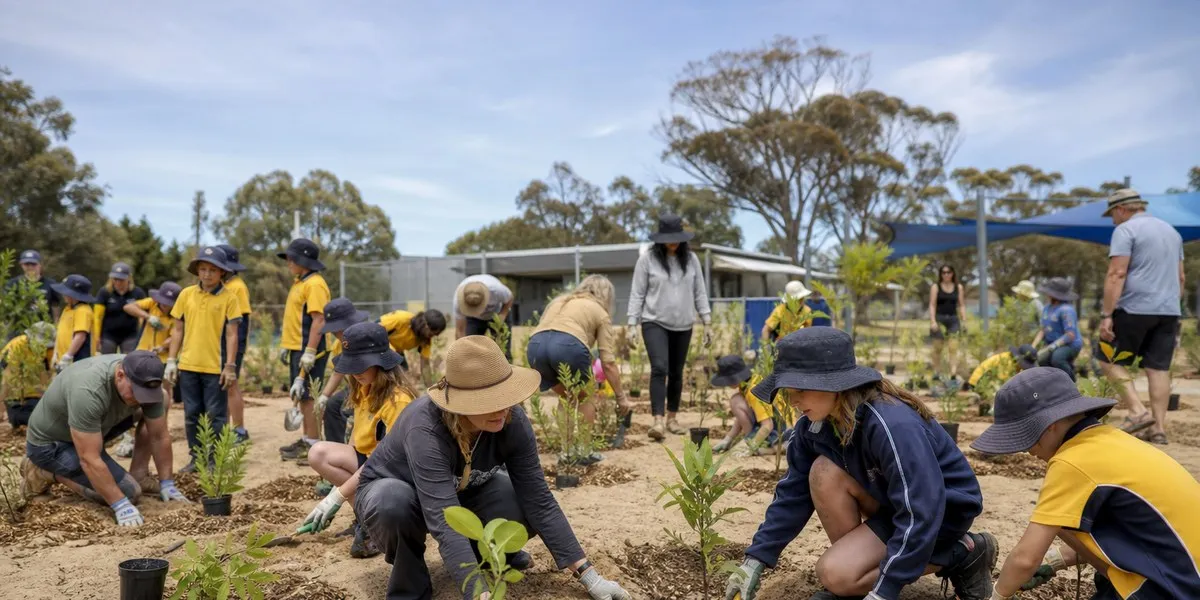
Fourth-grade students at St Peter's Anglican College in Broulee, Australia, planted about 1,000 native plants on a barren section of the school grounds. A self-sustaining microforest is set to emerge there, intended to make the space greener and cooler, ABC News Australia reports.
Plants of the local coastal forest
Over the course of a week, students, teachers and volunteers planted trees, shrubs and climbing plants characteristic of the region's endangered coastal rainforest. Student Zale Neal said the participants aim to restore some species lost during the 2020 bushfires.
St Peter's Anglican College became the first school in New South Wales to work with the nonprofit Microforest Collective on researching, designing and planting a microforest as part of the curriculum.
More current news is available on the UA.News Telegram channel Telegram.
The Miyawaki method and water harvesting
Microforests are densely planted areas of native vegetation in urban or degraded locations, often no larger than a tennis court. The project used the Japanese Miyawaki method: a mix of native species is planted densely to accelerate their growth.
Microforest Collective co-founder and landscape architect Edwina Robinson said that with this approach, plants can grow up to ten times faster. She estimated that the microforest could reach about seven metres in height within two to three years.
Because of the site's sandy soil, a rainwater collection system was installed: about 40 metres of underground trenches were lined with clay. Before planting, the schoolchildren visited local forests, studied the species and conditions required for their growth, and also analysed the site and calculated the required amount of mulch. Microforest Collective plans to use this experience as a model for other schools.




