
US imposes sanctions on three Iranian railway companies — Deutsche Welle
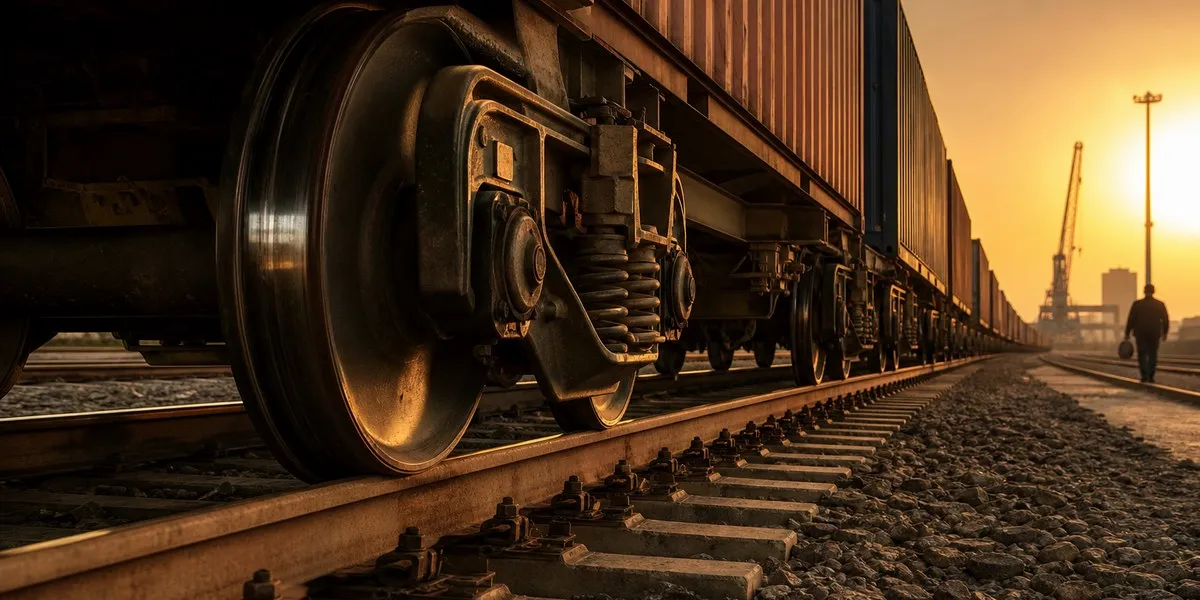
On October 1, the United States imposed sanctions on three Iranian railway companies, as well as seven car manufacturers and five foreign suppliers of automotive components. The restrictions became part of the US Economic Outcast operation, Deutsche Welle reports.
The US Treasury Department stated that Iran’s railway and automotive industries provide the state with revenue and logistics capabilities and are linked to networks of the Islamic Revolutionary Guard Corps.
Iran develops overland routes
Tehran is expanding the use of overland corridors due to complications in maritime trade. The country’s railway network has about 15,000 km of main and secondary tracks, more than 35,000 railcars, and nearly 500 diesel locomotives, said Shahriar Naghizadeh, director general for foreign trade at Iran’s railway administration.
According to him, in the year ending in March 2026, Iranian railways transported about 44 million tonnes of cargo, compared with approximately 40 million tonnes a year earlier. The country’s authorities plan to raise this figure to 54 million tonnes this year. Iran has 13 railway border crossings that provide connections with Turkey, Azerbaijan, Afghanistan, and Pakistan, and, via Turkmenistan, with Central Asia and China.
More current news is available on the UA.News Telegram channel Telegram.
Delays constrain shipments
According to Bloomberg data cited by Deutsche Welle, the frequency of freight trains from Xi’an, China, to Tehran increased from about once a week to once every three to four days. In September, one of the trains transported automotive components, consumer goods, and other cargo through Kazakhstan, Uzbekistan, and Turkmenistan to Sarakhs in Iran.
However, a Chinese freight company told DW that under current conditions, the actual rail delivery time from western China to Tehran may be 50–60 days, although the expected transit time for an individual trip was estimated at 14–16 days. Road transport along a similar route takes approximately 22–25 days. The timing is affected by customs inspections, changes in track gauge, train availability, payment problems, and sanctions restrictions.
Alireza Salavati, head of London-based Middle East Analytica, noted that railways can be useful for supplying automotive components, machinery, electronics, and other critically important industrial goods. At the same time, he stressed that container trains cannot replace maritime shipping in terms of volume and transportation costs.




