
Lahore’s air quality index exceeds 530 — Dawn
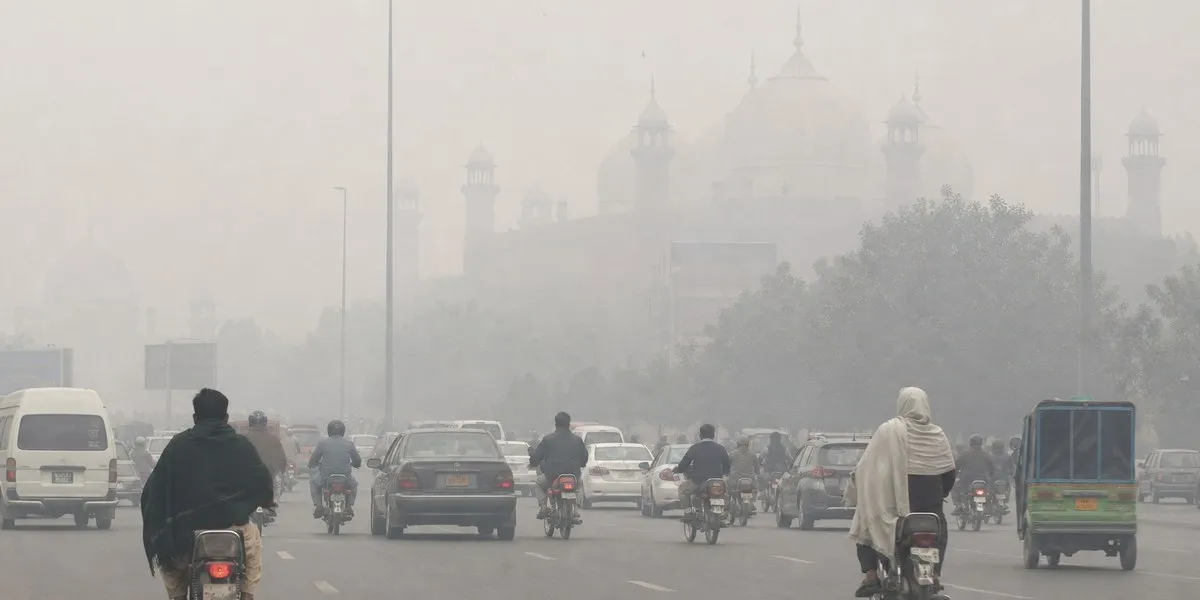
In Lahore, Pakistan, the air quality index reached 535 points on the morning of November 2, corresponding to a hazardous level of pollution. The concentration of fine particulate matter PM2.5 was 343 micrograms per cubic meter. Dawn reports, citing the IQAir monitoring platform.
PM2.5 consists of fine particles that can penetrate deep into the lungs and enter the bloodstream. Air quality in the city deteriorated sharply early in the morning, while hourly readings also reached the hazardous category.
High readings in Punjab cities
The problem affected not only Lahore. According to IQAir, five cities in Pakistan’s Punjab province were among the country’s six most polluted urban centers. Gujranwala topped the list with an index of 606, Lahore recorded 509, while Faisalabad and Multan each had 310. The index stood at 260 in Sialkot and 216 in Peshawar.
The readings changed during morning updates: Gujranwala later recorded an index of 675 and Lahore 535. This indicates rapid fluctuations in pollution levels.
More current news is available on the UA.News Telegram channel Telegram.
Satellites detected thousands of fires
The deterioration in air quality is occurring amid an increase in detected agricultural fires in Punjab. According to an analysis by the environmental monitoring website HamariHawa, NASA satellites detected 13,241 fire hotspots in Pakistani Punjab from October 1 to 29. In Indian Punjab, 3,158 such hotspots were recorded during the same period.
About 92% of the detected fires in Pakistani Punjab were located on agricultural land and were likely linked to the burning of crop residues. The highest number of such hotspots was recorded in Okara district, with 2,144, followed by Gujranwala with 1,011 and Nankana Sahib with 1,003.
The Pakistan Air Quality Initiative reported that the average PM2.5 concentration in Lahore in October fell by 27% compared with the same month last year across 26 monitoring sites. At the same time, after weather conditions were taken into account, the improvement was estimated at only 4%. According to the initiative, PM2.5 concentrations exceeded Pakistan’s established daily standard every day throughout October.




