
Australia consults on requirement to purchase low-carbon fuel — ABC News Australia
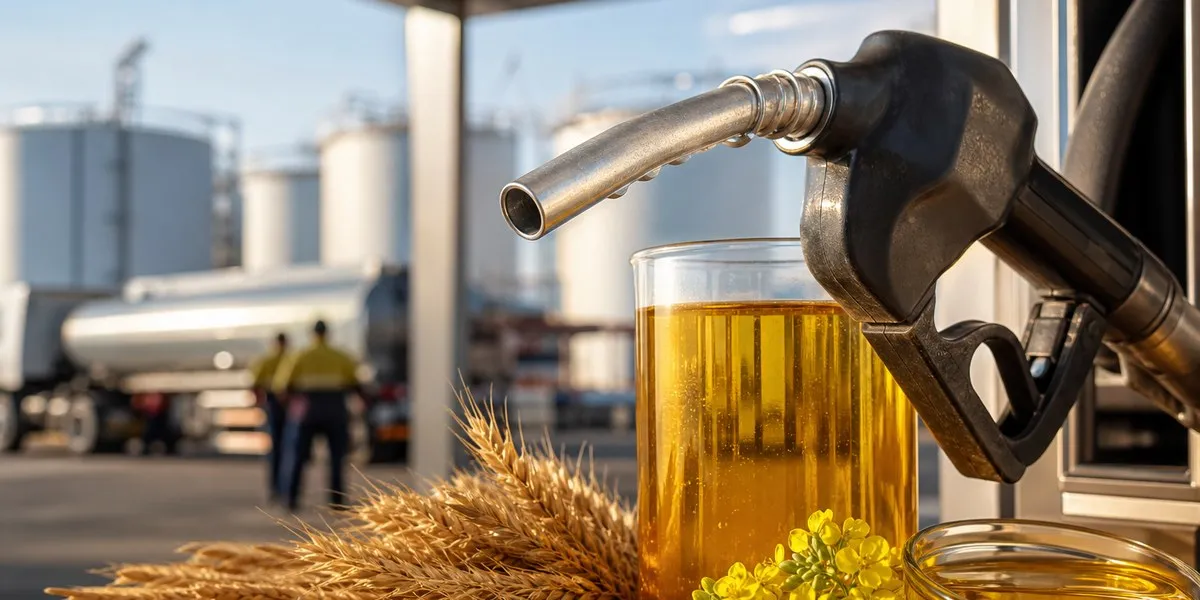
Australia’s federal government is consulting on a possible requirement for fuel companies to supply or purchase specified volumes of low-carbon liquid fuel, including biofuels. Such a mechanism could create demand for domestic products and strengthen the country’s resilience to price and supply shocks, ABC News Australia reports.
In the first half of the year, more than 60 megalitres of domestically produced ethanol and biodiesel were exported from Australia, although the country was seeking additional fuel volumes. The Biofuel Producers Alliance says its members’ existing production capacity amounts to around 470 megalitres of ethanol and biodiesel, equivalent to approximately three days of additional reserves.
Reserves and exports
Australia currently has petrol reserves for 41 days and diesel fuel reserves for 33 days. This is more than at the beginning of the war in Iran, following emergency measures taken earlier, but it remains below the international requirement to maintain a 90-day supply.
More current news is available on the UA.News Telegram channel Telegram.
Biofuel Producers Alliance chief executive Matt Hobbs said that in March and April, E10 petrol was among the first types of fuel to disappear from service stations. At the same time, he said, 24 million litres of ethanol were shipped to Southeast Asia, South Korea and other countries. The alliance, which includes Manildra Group, Wilmar Sugar and three biodiesel producers, is calling for a national biofuel blending requirement from 2027.
Government and business proposals
The government’s consultation proposal provides for the introduction from 2029 of a volume requirement for suppliers to purchase or supply specified amounts of alternative fuel. After 2035, the approach is planned to change: requirements are to be determined by the fuel’s carbon emissions intensity rather than its specific type or volume.
The Australian Chamber of Commerce and Industry said current projects could potentially provide up to 2 billion litres of domestic low-carbon fuel. At the same time, the organisation opposed market obligations until sufficient supply at competitive prices and the readiness of infrastructure and monitoring systems are confirmed. Last year, biodiesel accounted for only 0.1% of diesel fuel consumed in Australia.




