
Mexico’s president did not authorize pilot fracking, Bárcena says — Anadolu Agency
Mexico’s Environment Minister Alicia Bárcena said on October 6 that President Claudia Sheinbaum had not authorized pilot hydraulic fracturing, or fracking, tests. The matter concerns only studies intended to confirm the presence of deep saline water, Anadolu Agency reports.
The Mexican government is considering the possibility of extracting unconventional gas in certain areas to increase domestic production and reduce dependence on energy imports from the United States. Mexico imports 75% of the natural gas it consumes. According to Sheinbaum, the authorities are openly discussing the use of unconventional gas where social justice and minimal environmental impact will be guaranteed.
Conditions for research
An expert commission convened in April recommended a complete ban on fracking in the Tampico-Misantla Basin on the Gulf of Mexico coast because of its biodiversity and population density. At the same time, it allowed further study of the Sabinas-Burro-Picachos and Burgos basins in the north of the country, provided that the presence of deep saline water is confirmed so as not to affect freshwater resources.
More current news is available on the UA.News Telegram channel Telegram.
The National Center for Natural Gas Control, Cenagas, reported that if supplies from the United States were halted, the country’s gas reserves would last for about three days. The Energy Ministry plans to increase daily dry natural gas production to nearly 5 billion cubic feet. Mexico currently consumes about 9 billion cubic feet of gas per day, while the state-owned company Pemex provides 2.3 billion cubic feet.
Community opposition
Following Sheinbaum’s statement in August, activists held a protest outside the government palace in the state of Nuevo León. Representatives of the Noreste sin Fracking coalition oppose the possible development of the northern basins, believing that fracking threatens water reserves and ecosystems.
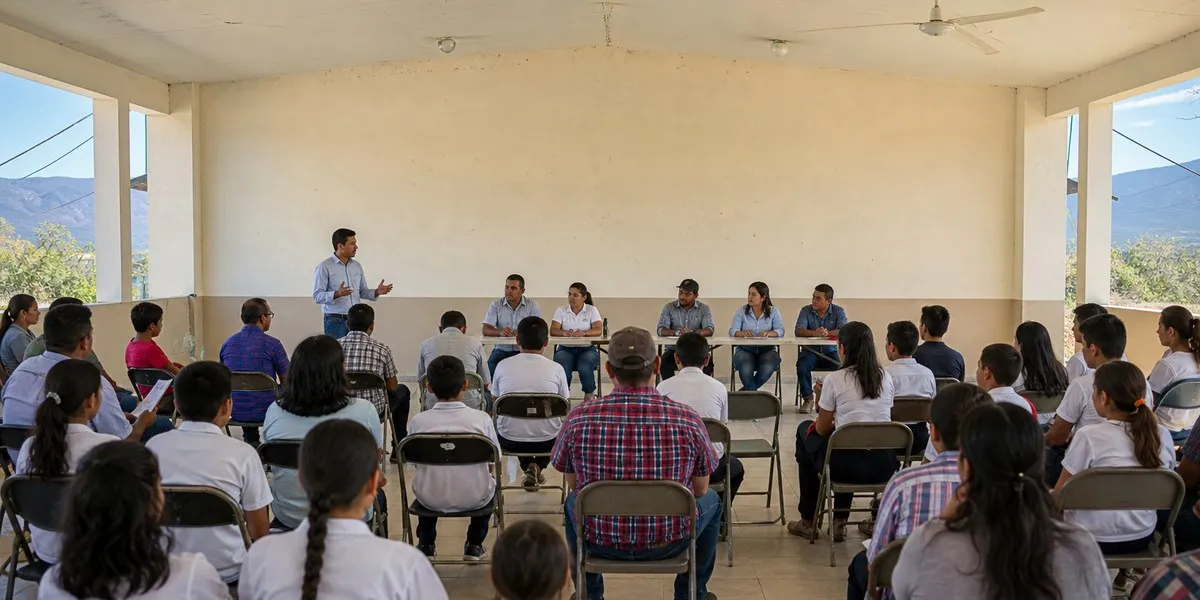
In the city of Bustamante, located in the Sabinas Basin, the environment minister of Nuevo León state and the environmental organization Pronatura informed residents about a proposal to grant part of the territory protected area status. Mayor Mario Reséndez said that possible shale gas extraction could harm the city, which depends on tourism and agriculture. Pronatura biologist Antonio Hernández also warned of risks to water supplies in the arid region and a possible link between fracking and induced seismicity.




