
Pharmaceutical companies prepare production in orbit — Channel NewsAsia
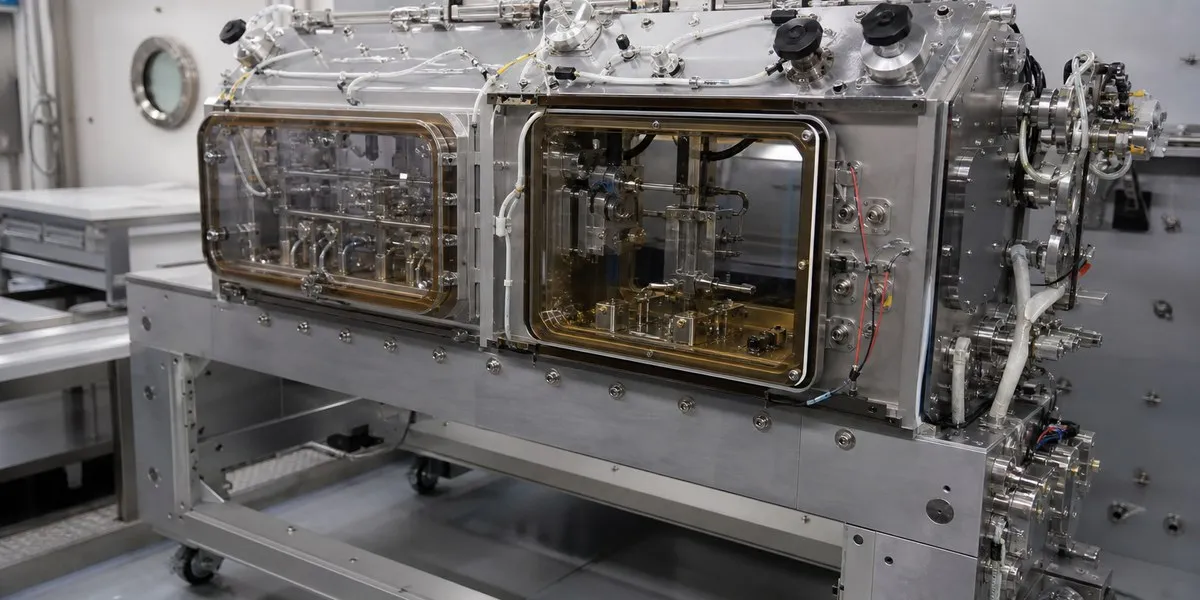
Pharmaceutical, biotechnology and space companies are preparing to expand research and pharmaceutical production in low Earth orbit ahead of the planned end of operations of the International Space Station at the end of the decade. As Channel NewsAsia reports, citing Reuters, industry representatives aim to prove that manufacturing in space can be reliable and economically viable, and are also working with regulators on rules for such medicines.
Research in microgravity
Researchers are studying the potential of microgravity, which makes it possible to distribute cells and particles in biological materials in ways that are difficult to reproduce on Earth. LambdaVision uses these conditions to develop an artificial retinal implant: proteins and polymers in it are to be applied layer by layer to a scaffold. Since 2018, the company has completed nine missions to the ISS and hopes to begin clinical trials in 2028.
Auxilium Biotechnologies successfully used its 3D bioprinter aboard the ISS to produce structures containing human liver, kidney and cartilage tissue cells. The company’s vice president of engineering, Isaac Lazarovitz, called this a step toward manufacturing transplant-suitable tissues in orbit. Merck conducted research on the ISS that helped develop a subcutaneous form of the anti-cancer immunotherapy Keytruda as a faster and more convenient alternative to intravenous infusion.
Commercial platforms and regulation
For now, such projects depend heavily on the ISS, where laboratory space, astronaut time and cargo return capabilities to Earth are limited. Michael Roberts, chief scientist of the ISS National Laboratory, compared the station to a “test kitchen,” noting that it was not designed to scale up experiments.
More current news is available on the UA.News Telegram channel Telegram.
After the ISS is decommissioned, companies are counting on commercial orbital platforms. Starlab, Vast and Axiom Space are developing private space stations, while Varda Space Industries is creating autonomous capsules for processing materials in orbit and returning them to Earth. According to a Bristol Myers Squibb representative, specialized orbital laboratories may have more automation, separate production areas, specialized crew training, and more predictable launch and cargo-return schedules.
Regulators have not yet created a separate mechanism that would ensure space-based manufacturing complies with the same standards as terrestrial production. In 2018, NASA and the US Food and Drug Administration signed a memorandum of understanding on biomedical research and product development during space missions, but did not introduce a framework for regulating and approving the results of such work. In March, the UK medicines regulator reported cooperation with the UK Space Agency on guidance for medicines produced in space.
Industry representatives also describe returning cargo to Earth as a greater constraint than launches themselves, because the results of a previous experiment are often needed to plan the next one.


