
Researchers boosted CAR T cells by activating the PPARD protein — ScienceDaily
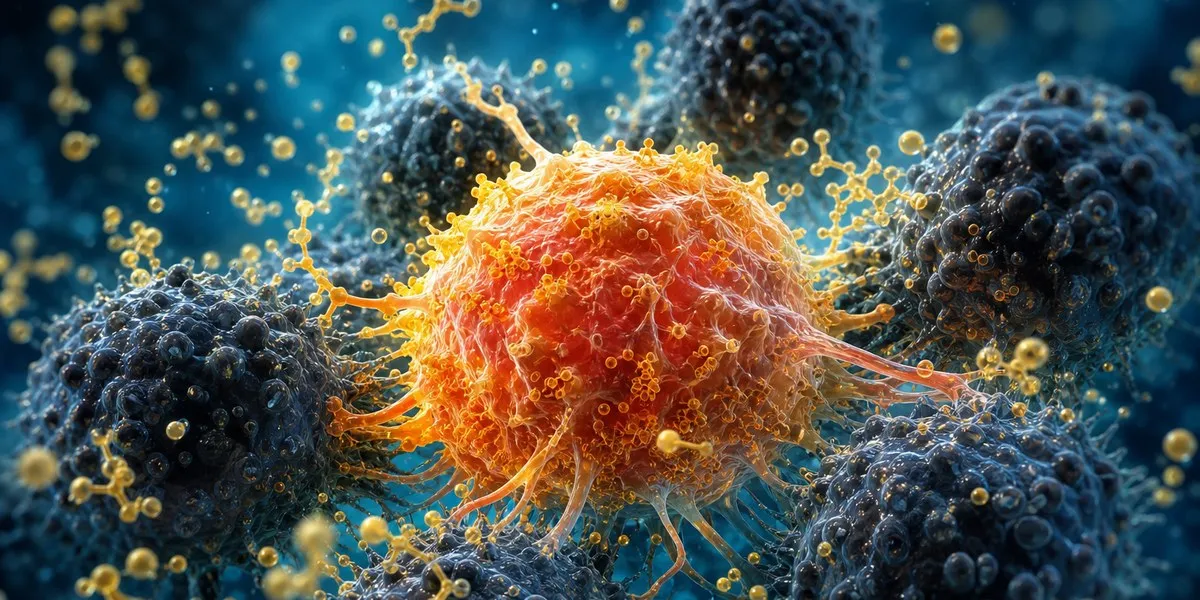
Researchers at Cold Spring Harbor Laboratory found that activating the PPARD protein in immune cells may enhance their ability to attack tumors. As ScienceDaily reports, in laboratory experiments, activated PPARD helped modified CAR T cells slow or stop tumor growth in colorectal cancer models. The results were published in the journal Nature Immunology.
A protein with different roles in cells
PPARD, or peroxisome proliferator-activated receptor delta, regulates the use of fats as an energy source and belongs to transcription factors — proteins that control gene activity. Cancer cells can use PPARD to sustain their activity.
Scientists initially studied mice with colorectal cancer. They found that activation of the same protein in immune cells works differently: it changes the tumor environment in favor of an immune response. According to the team, more intensive use of fats as an energy source makes immune cells metabolically better adapted to fight cancer.
More current news is available on the UA.News Telegram channel Telegram.
Testing in CAR T cells
The researchers then activated PPARD in CAR T cells — genetically modified immune cells capable of recognizing and attacking cancer. They tested them on organoids grown from patient tissues, human cancer cell cultures, and models in which human cancer cells were implanted into mice.
In these experiments, CAR T cells with activated PPARD slowed or stopped tumor growth. The results were also promising for models of breast cancer, ovarian cancer, and melanoma. However, this approach has not yet been tested in patients, so its clinical effectiveness must be assessed in further studies.
The laboratory is also studying whether enhancing the metabolic activity of immune cells may be useful in endometriosis — a chronic inflammatory disease in which the immune system may fail to clear the body of affected cells.




