
In the US, UCLA team establishes CRISPR therapy production for trial — News-Medical
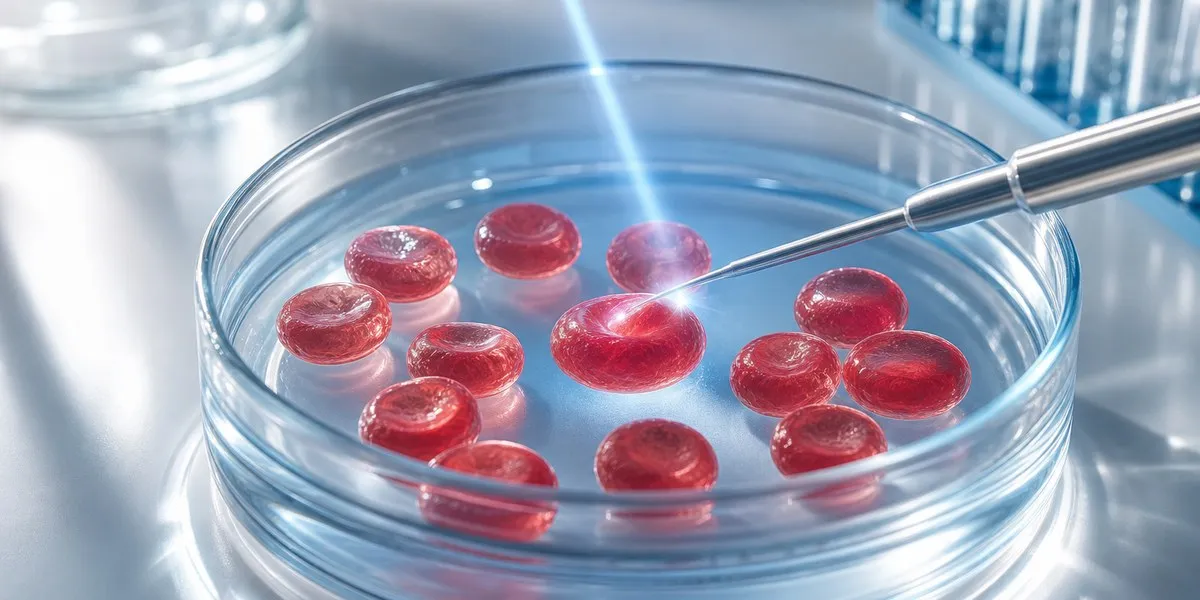
In the United States, a team at the University of California, Los Angeles developed a reproducible process for manufacturing an experimental CRISPR therapy for sickle cell disease at the scale required for a clinical trial. The approach involves editing a patient’s own hematopoietic stem cells using CRISPR-Cas9 to correct the single-nucleotide mutation that causes the disease.
As News-Medical reports, in preclinical studies, red blood cells grown from edited cells produced less sickle hemoglobin than cells without editing. At the same time, their levels of healthy adult and fetal hemoglobin increased.
Clinical-scale manufacturing
To treat one patient, hundreds of millions of cells need to be processed and edited, while laboratory experiments may involve only a few hundred thousand. Researchers cultured blood-derived hematopoietic stem cells for two days, after which they applied electrical pulses. This temporarily created pores in the cells and made it possible to introduce CRISPR-Cas9 and a short fragment of corrective DNA.
More current news is available on the UA.News Telegram channel Telegram.
The team conducted seven manufacturing runs, four of which were carried out at full clinical scale. Cells from people with sickle cell disease and healthy donors were used. All large-scale runs met the established quality requirements: the cell products had high purity and stem-cell viability, and the mutation was successfully corrected.
Results in mouse models and the clinical study
In experiments in mice, the edited human cells successfully engrafted, and the proportion of corrected gene copies did not decrease substantially over 16 weeks. The researchers also found no noticeable treatment-related toxicity or signs of abnormal tissue changes, supporting the preclinical safety assessment of the cell product.
The manufacturing process has already been used at UCLA to prepare cell products for two participants in an ongoing phase 1 clinical study. It is led by Dr. Mark Walters at UCSF Benioff Children’s Hospital Oakland. The trial is intended to assess the safety and efficacy of the approach, including whether corrected cells will persist in patients’ bodies over time.




