
Test in the South China Sea altered microbial processes on the seabed — ScienceAlert
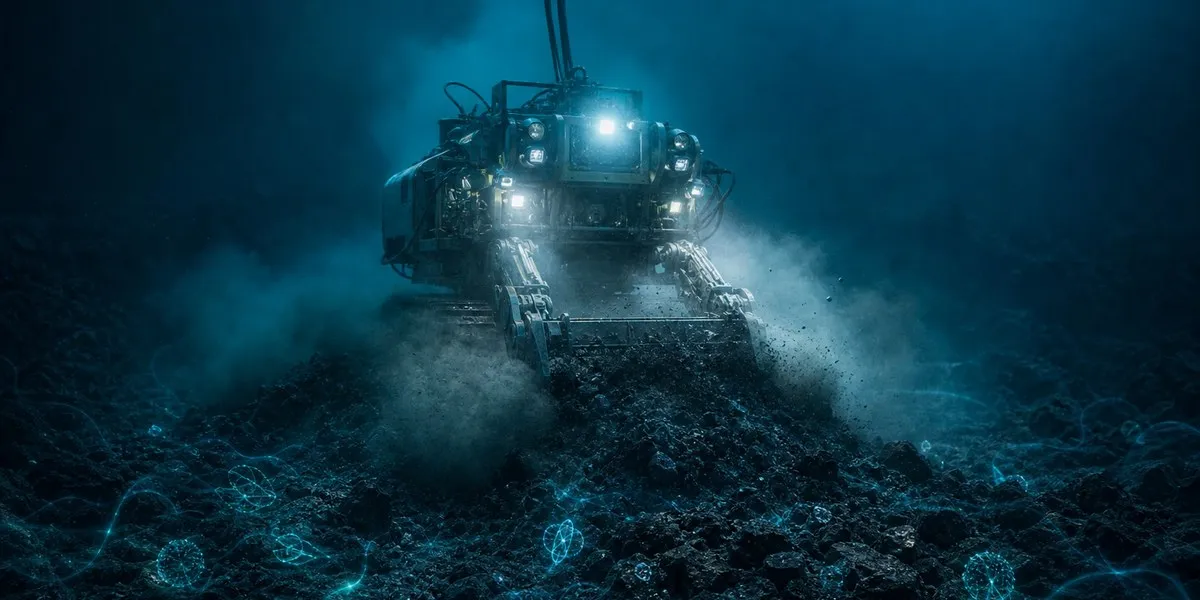
During a trial to extract cobalt-bearing rocks in the South China Sea, researchers recorded changes in microbial processes associated with nutrient cycling on the seafloor. The work was conducted in 2020 at a depth of about 1,300 meters, ScienceAlert reports, citing a study published in the journal Total Environment Microbiology.
Changes in near-bottom water
During the test, cobalt-bearing rocks were crushed and lifted to the surface. According to the study’s authors, this caused large volumes of sediment and other particles to be stirred up, directly and indirectly affecting the local microbial ecosystem.
A crewed submersible collected water samples before and during the work — directly above the seabed and at heights of 30 and 50 meters. The scientists found that mining significantly affected the distribution of inorganic nutrients in the 50-meter near-bottom water layer, including nitrogen compounds and silicate.
More current news is available on the UA.News Telegram channel Telegram.
Analysis of microorganism DNA
The team also examined DNA from water samples and scrapings from the upper and lower layers of rocks. In samples collected during mining, the abundance of genes associated with nitrogen fixation and other transformations of nitrogen into forms available to living organisms decreased. This effect was most pronounced in samples collected closest to the seafloor.
At the same time, the abundance of genes associated with denitrification — the conversion of nitrogen compounds into gaseous forms — increased in samples from the seabed and rock surfaces. The abundance of genes for dissimilatory sulfate reduction, an anaerobic process, also increased. The authors suggest that the suppression of nitrogen fixation and nitrite reduction may be linked to increased turbidity and particle deposition. In their view, the increase in denitrification genes in the water may indicate more oxygen-depleted conditions due to seafloor disturbance.
Full-scale commercial extraction of minerals from the seabed has not yet begun. At the same time, the International Seabed Authority has issued 31 exploration contracts, five of which are held by China.




