
Traces of 115-million-year-old dinosaur blood found in Brazil — Asharq Al-Awsat
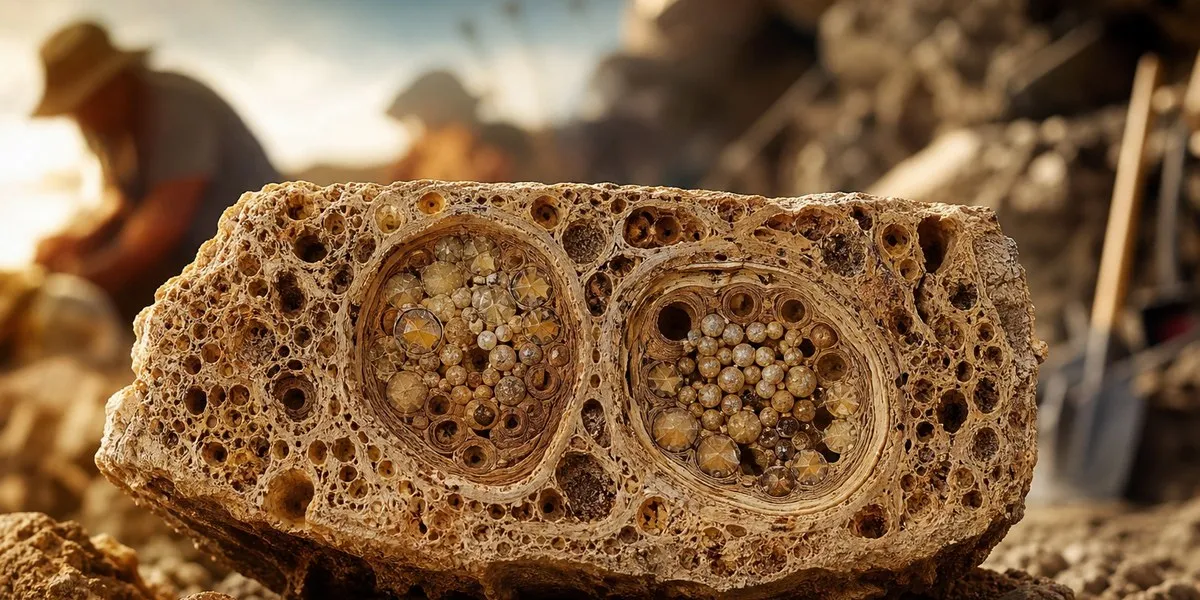
An international group of researchers has discovered fossilized red blood cells, hemoglobin-derived compounds and collagen-related amino acids in the bones of a dinosaur that lived about 115 million years ago in Brazil. Asharq Al-Awsat reports. The remains belonged to the theropod Aratasaurus museunacionali, whose fossils were found in the country’s northwest.
Chemical confirmation
The study was led by scientists from Australia’s Curtin University. Its results were published in the journal Proceedings of the National Academy of Sciences. Analysis of the bones showed the presence of a large number of preserved red blood cells in vascular channels.
Heme, a component of hemoglobin that binds and carries oxygen, was detected in the cells. According to the researchers, this made it possible to chemically confirm the presence of fossilized blood remains. Previous studies found structures resembling red blood cells in fossils, but their chemical nature had not been definitively established.
More current news is available on the UA.News Telegram channel Telegram.
Mineral capsule
The study’s authors explained the exceptional preservation of the cells by mineralization with hausmannite. According to their conclusions, this mineral stabilized cellular structures and biological components, including collagen-related amino acids, and protected them from degradation over millions of years.
The scientists believe that rapid burial of the dinosaur’s body after death in an environment with low oxygen levels and a large number of microorganisms may also have contributed. The discovery of such molecules calls into question established ideas about how long hemoglobin and other biomolecules can persist on geological timescales.
The team noted that the finding could help study the evolution of blood, metabolic processes and the physiology of extinct animals. These approaches may also potentially be useful for searching for traces of ancient life beyond Earth.




