
Dianjunus rex mushroom up to 50 cm tall discovered in China — ScienceAlert
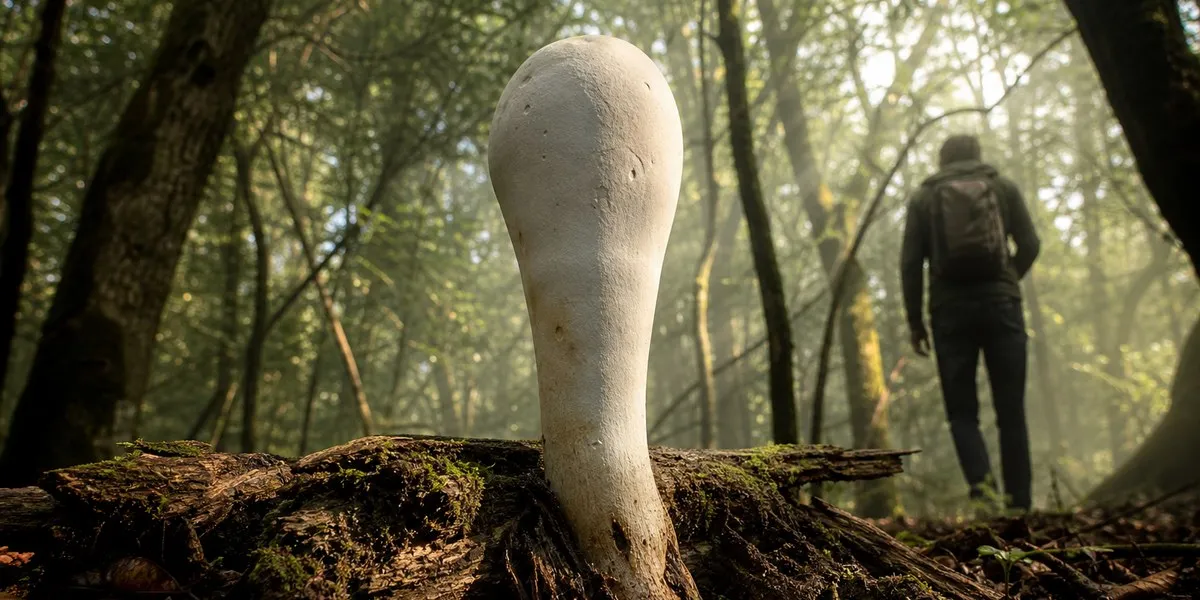
Scientists have described a new mushroom species, Dianjunus rex, in the forests of Yunnan Province in southwestern China. Its white club-shaped fruiting bodies can reach 50 centimeters in height — about the size of a traffic cone. Some collected specimens weighed up to 2.2 kilograms, ScienceAlert reports.
The only known representative of the family
The new species was described by Chinese Academy of Sciences mycologist Indunil Senanayake and colleagues in an article published in the journal Frontiers in Fungal Biology. Dianjunus rex is the only known representative of the Dianjunaceae family.
The mushroom belongs to the ascomycetes, a group that also includes morels, truffles and cordyceps. The studied specimens were found near the bases of oak trees, including the Chinese cork oak Quercus variabilis. They grew on the decaying roots or stumps of these trees.
More current news is available on the UA.News Telegram channel Telegram.
A possible adaptation for spore dispersal
During reproduction, Dianjunus rex produces large white fruiting bodies called stromata. They release spores into the air. According to Senanayake, the tall fruiting structure may help wind carry spores over vegetation and forest litter in dense forests. At the same time, its formation requires significant energy expenditure.
By comparing DNA with hundreds of other fungi, researchers found that the Dianjunaceae family diverged from its closest known relatives about 65 million years ago. This occurred approximately one million years after the Chicxulub asteroid impact, which caused a mass extinction.
Scientists suggest that, after this event, changes in forests and the large amount of dead plant material may have created new ecological opportunities for wood-decaying fungi. At the same time, the reason for the extraordinarily large size of Dianjunus rex stromata remains unknown.




