
Gas knots discovered in Pa 30 linked to the supernova of 1181 — Live Science
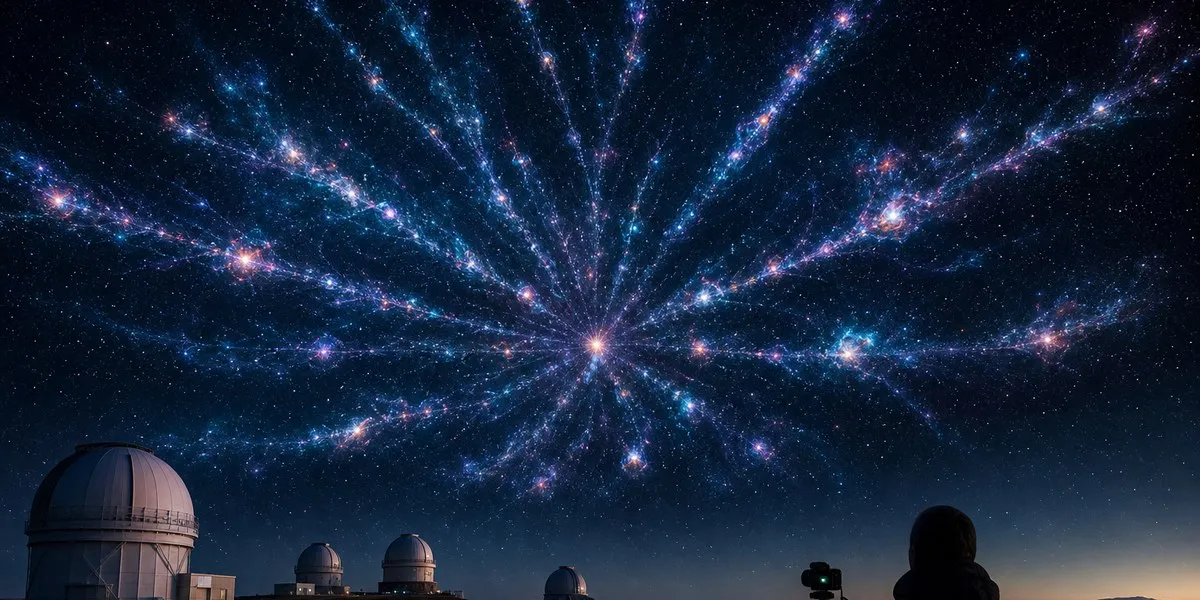
The Gemini North telescope on Mauna Kea in Hawaii, U.S., has obtained the most detailed image of Pa 30 — a supernova remnant associated with the historical SN 1181. It shows that the firework-like filaments of ejected material are not continuous streams of gas, but chains of small gas knots, Live Science reports.
More detailed structure of the remnant
Pa 30 is located about 7,500 light-years from Earth in the constellation Cassiopeia. The new images revealed about ten times more filamentary structures than were previously visible. A team of astronomers led by University of Warwick astronomy and astrophysics lecturer Timothy Cunningham published the research findings in The Astrophysical Journal.
According to the researchers, the knotted structure may have formed because of differences in the temperature or density of matter around the star as the explosion debris expanded. Such details provide new constraints for explaining the properties of the environment surrounding the star before the explosion and the processes that affected the ejected material.
More current news is available on the UA.News Telegram channel Telegram.
Observations of the supernova in 1181
SN 1181 was named after the year when astronomers in China and Japan recorded its appearance. They observed the object with the naked eye in the constellation Cassiopeia. Eight surviving texts date its appearance to between August 4 and 6, 1181, and it remained visible for 185 days.
SN 1181 is one of five supernovae in the Milky Way that people observed from Earth before the invention of the telescope. A star that survived the explosion is also located at the center of Pa 30. Researchers note that its position almost exactly at the center of the remnant may indicate a highly symmetrical explosion. The explosion that formed Pa 30 is considered a Type Iax supernova — a less energetic and incomplete explosion of a white dwarf, after which a remnant of the star may remain.




