
First working nuclear clocks created in Vienna and Beijing — Cyprus Mail
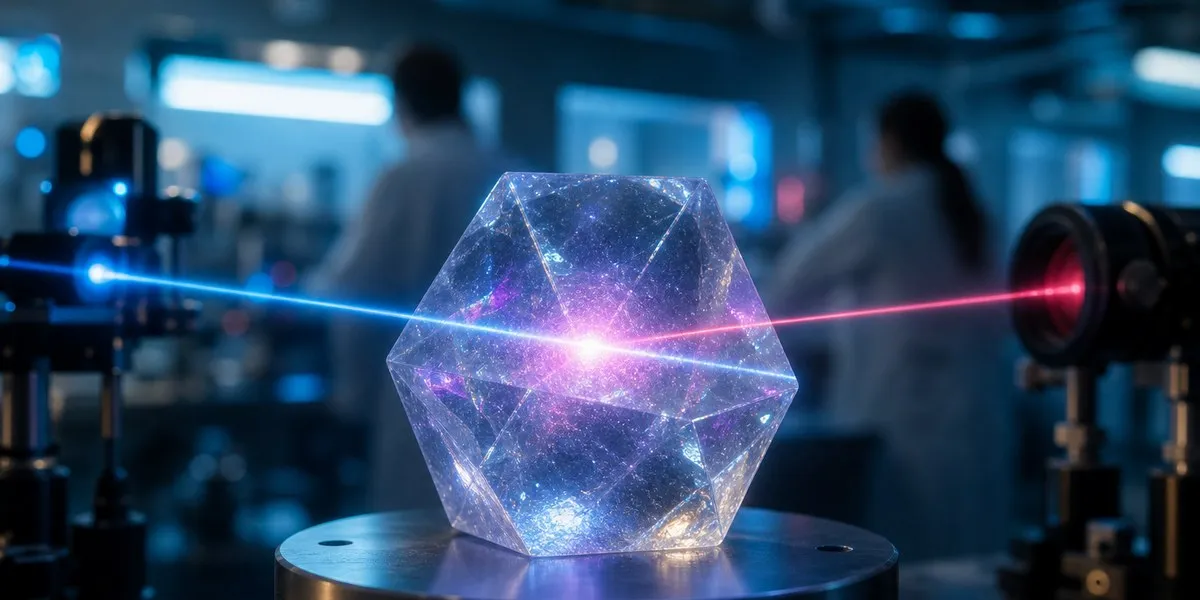
Research groups in Vienna, Austria, and Beijing, China, independently created the world’s first two working nuclear clocks. The devices are based on the thorium-229 isotope, which was placed in solid-state calcium fluoride crystals, Cyprus Mail reports.
Two independent approaches
The teams described their results in scientific papers published in the journal Nature. Physicist Shiqian Ding of Tsinghua University, who helped lead the Beijing group, said that researchers simultaneously obtained working thorium-229 nuclear clocks using different experimental approaches. In his view, this demonstrates the reliability of the concept itself and its independence from a single technical solution.
Physicist Thorsten Schumm of the Vienna University of Technology, who was among the leaders of the Austrian team, said that creating such a clock had remained a goal for physicists for nearly 50 years. His group had been working on the task since 2008.
More current news is available on the UA.News Telegram channel Telegram.
How the new technology works
Nuclear clocks do not use nuclear fission or fusion as an energy source. They measure time by tracking the interaction of a powerful laser with an atom’s nucleus. In conventional atomic clocks, lasers or microwaves cause electrons to transition between energy levels in an atom’s electron shell, including those of cesium or strontium. The new devices track transitions of protons and neutrons between energy levels inside the thorium-229 nucleus.
Researchers believe that, due to the smaller size of the atomic nucleus, this method could potentially provide greater accuracy. At the same time, Schumm stressed that nuclear clocks are still far from their target performance. The best modern atomic clocks can operate for billions of years while losing or gaining only one second.
According to Schumm, the technology could be used for satellite navigation, data transmission synchronization, geodetic measurements, and metrology. The Vienna team also used its device in a high-precision physics experiment searching for dark matter: it was not detected, but the clock demonstrated a level of performance comparable to the best atomic clocks.




