
UAE finds rocks to simulate lunar and Martian soils — The National
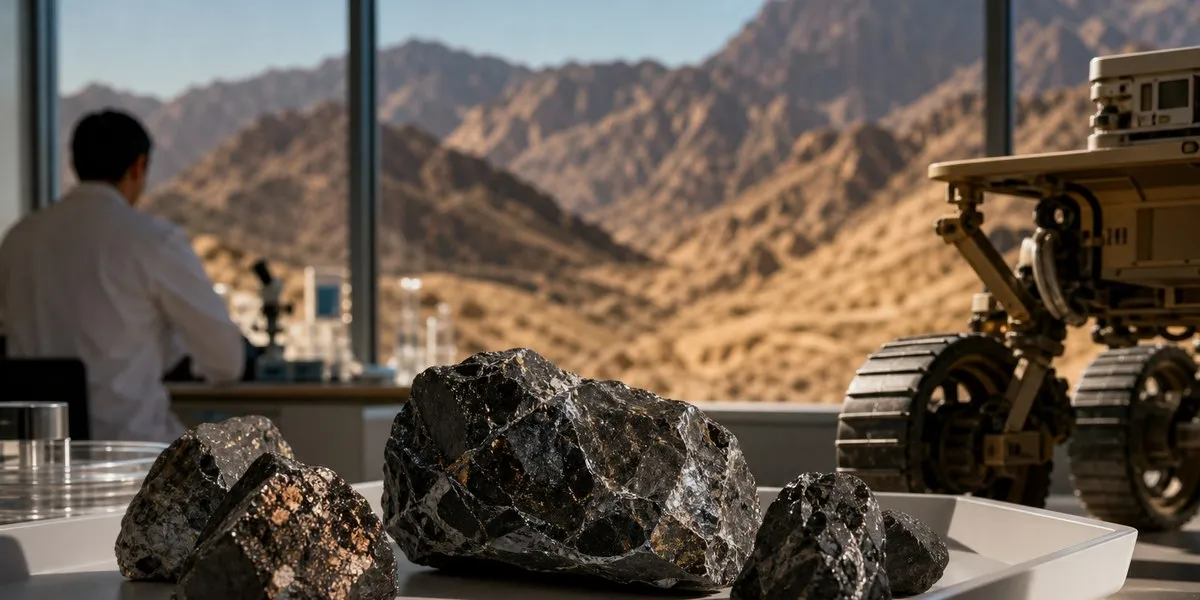
In the Hajar Mountains in the United Arab Emirates, researchers have identified geological sites whose rocks and soils can be used to produce materials that simulate the surfaces of the Moon and Mars. Such materials are needed to test lunar rovers, drilling equipment and other technology intended for space missions.
As The National reports, remote sensing helped identify promising extraction areas in the emirates of Ras Al Khaimah, Fujairah, Ajman and Dubai. Sorbonne University Abu Dhabi professor of environmental geomorphology Kosmas Pavlopoulos called the findings “extremely promising,” noting that these areas have elevated concentrations of the required minerals and are located near existing transport and processing infrastructure.
Rocks containing magnesium and iron
Scientists focused on the northern part of the Hajar Mountains, where the Semail Ophiolite is located — a large and well-preserved exposure of Earth’s oceanic crust and upper mantle. This geological formation contains significant reserves of mafic rocks rich in magnesium and iron.
More current news is available on the UA.News Telegram channel Telegram.
According to Pavlopoulos, these rocks contain primary minerals that are components of lunar mare basalts — dark rocks that cover the impact basins of Earth’s satellite — as well as rocks on the surface of Mars. However, the terrestrial raw materials need additional processing to obtain materials with properties close to extraterrestrial soil.
Need for space programs
Actual samples of the lunar and Martian surfaces are extremely limited: less than 400 kilograms of material have been brought back from the Moon, while samples from Mars have not yet been delivered to Earth. Therefore, they cannot be used for destructive testing. Simulant materials can also help study methods of extracting oxygen or producing construction materials from lunar or Martian rock.
Pavlopoulos believes that local production will reduce the UAE’s space programs’ dependence on foreign suppliers and provide universities with affordable materials for test sites. Scientists from the University of Sharjah, Sultan Qaboos University in Oman and the University of Lorraine in France also took part in the study, published in the journal Planetary and Space Science. Further work includes a more detailed study of the raw materials, the development of mixture formulations and an assessment of the resulting simulants.




