
Artemis II launch caused ionospheric disturbances and GPS errors of several meters — Space.com
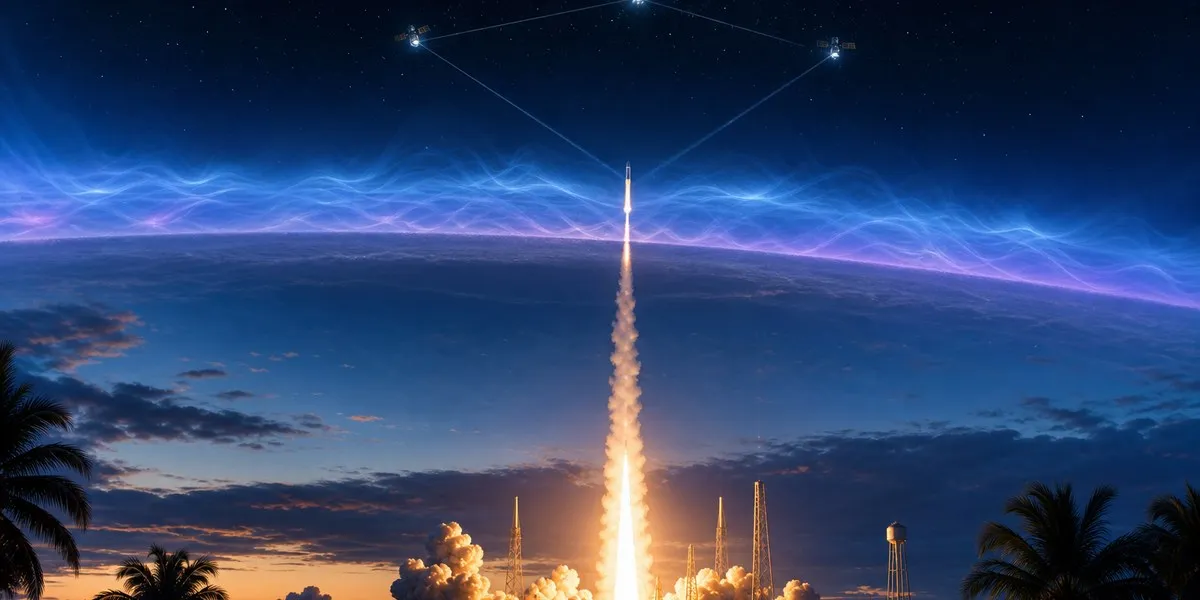
The launch of the Space Launch System rocket as part of NASA’s Artemis II mission in Florida caused significant disturbances in Earth’s ionosphere, which may have temporarily produced local GPS errors of several meters. This is stated in a study by a team from National Cheng Kung University in Taiwan, Space.com reports.
Data from ground-based GPS receivers
Scientists analyzed data from networks of high-precision stationary GPS receivers in the United States, which are used to measure slight movements of tectonic plates. Based on the signal travel time from satellites to ground stations, they reconstructed changes in the concentration of free electrons in the ionosphere, an electrically charged layer of the atmosphere at an altitude of more than 50 kilometers.
According to the measurements, ionospheric disturbances after the Artemis II launch were stronger than those recorded after other rocket launches. They were also up to ten times more intense than disturbances following SpaceX’s Starship test launches, although Starship’s thrust at launch is approximately twice that of the SLS.
More current news is available on the UA.News Telegram channel Telegram.
Two disturbance areas
During the launch, ground stations detected changes in electron density equivalent to positioning errors of several meters. GPS receivers determine location by measuring the distance to four satellites. A change in electron concentration in the upper atmosphere can speed up or slow down signal transmission, leading to inaccuracies.
The researchers identified two large disturbance areas: one was linked to the passage of the rocket’s 65-meter-long core stage, while the other was linked to two firings of the upper-stage engines. Both areas stretched over the American continent from east to west for approximately 5,000 kilometers. The most pronounced changes were caused specifically by the engine firings at an altitude of around 185 kilometers, which occurred more than an hour after launch.
Study co-author, Earth sciences professor Charles Lin, noted that an error of even several meters can affect autonomous transport systems and drone positioning. The study was posted online as a preprint in the journal Geophysical Research Letters.




