
Healthy coral triggered recovery of a bleached fragment within a week — ScienceAlert
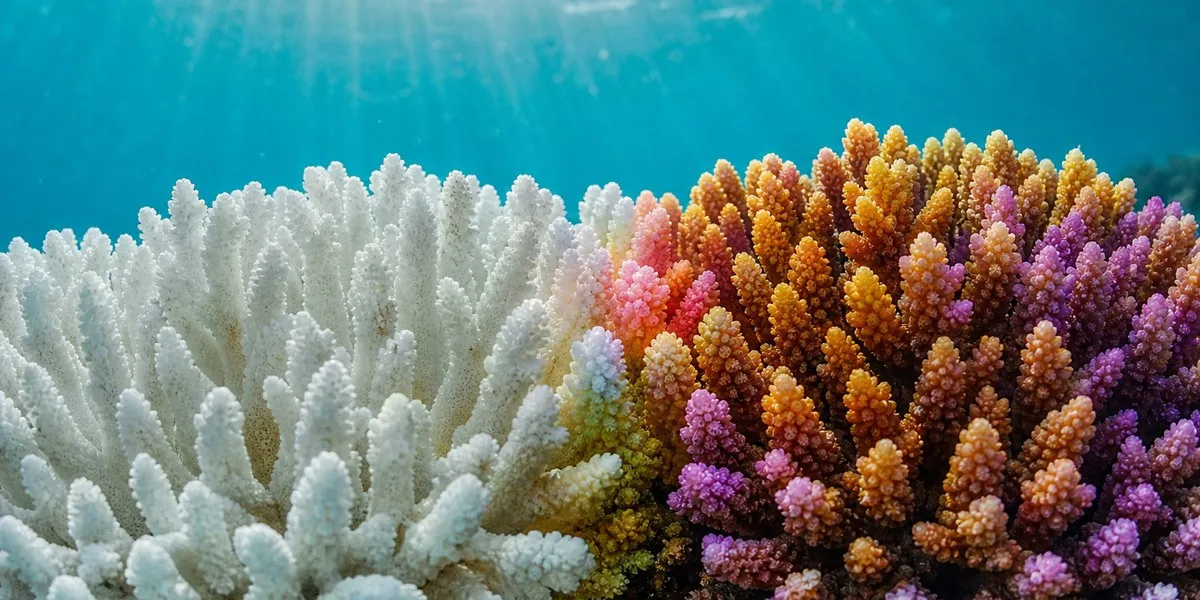
Stanford scientists found in laboratory experiments that a healthy coral fragment can transfer symbiotic algae and nutrients to a bleached neighboring fragment. One week of direct contact was enough to start the process of full coral recovery, ScienceAlert reports.
Algae transfer through tissue fusion
Researchers observed two fragments of the coral species Pocillopora damicornis taken from the same colony. One fragment was healthy, while the other was bleached. When they touched each other, color began returning to the bleached part precisely at the point of contact.
According to marine research specialist Danny Collins, corals fuse their tissues and form a nutrient bridge through which nutrients and symbiotic algae move between cells. In the experiments, even a distance of several millimeters between the fragments completely blocked this exchange.
More current news is available on the UA.News Telegram channel Telegram.
Full recovery took up to seven weeks
After the initial contact, the healthy coral could be removed: the algae were already reproducing inside the recovering fragment. The recovery rate was the same in corals that remained connected for all seven weeks and those that were separated after the first week.
Full recovery of the bleached fragments took up to seven weeks. This is approximately an order of magnitude faster than the recovery periods observed in wild populations after bleaching. Without symbiotic algae, corals lose their color and have limited time to acquire new symbionts; otherwise, they may die from a lack of nutrition.
The method was tested in the laboratory on genetically identical fragments from one colony. Whether it will work in the sea on naturally bleached reefs remains unknown. The study results were published in the journal Science Advances.




