
On November 11, the martyrs Mina, Victor, and Vincent are commemorated
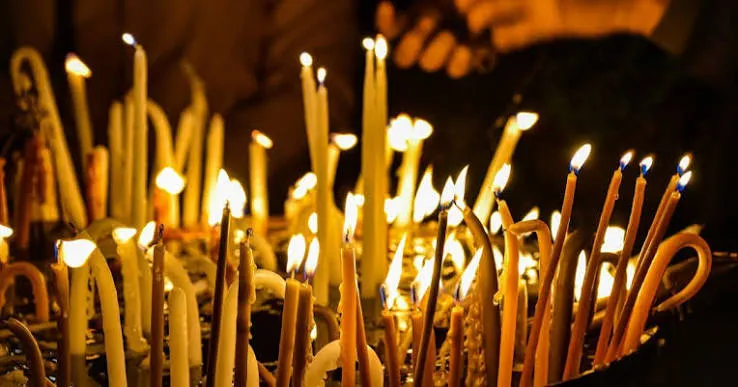
On Wednesday, November 11, 2026, the Orthodox Church of Ukraine, following the New Julian calendar, commemorates the martyrs Mina, Victor, and Vincent, as well as the martyr Stefanida. Also on this day, the church commemorates St. Theodore the Studite—a church leader who defended the veneration of icons and suffered persecution for his beliefs. Here’s a look at who these saints were, what folk traditions are associated with this date, and what you can pray for.
According to the New Julian calendar, November 11 is dedicated to the memory of several Christian saints. Among them are the Great Martyr Mina, the Martyrs Victor and Vincent, the Martyr Stephanida, and the Venerable Theodore the Studite. Their stories span different eras, but they are all united by their devotion to the Christian faith.

Saint Mina lived during the early centuries of Christianity. According to church tradition, he was born in Egypt and served in the Roman army. When the persecution of Christians began, Mina left military service and withdrew to the desert. Eventually, he openly opposed pagan rituals and declared his faith in Christ. For this, he was arrested and executed around the year 304.
In popular religious tradition, Saint Mina is considered the patron saint of people with eye diseases. People turn to him with prayers for healing, improved vision, and help for those with vision problems.
Saint Victor also suffered for his Christian faith during the persecutions. According to legend, he was a soldier who refused to carry out orders that contradicted his religious beliefs. He was tortured in an attempt to force him to renounce Christianity, but he remained steadfast.
Alongside him, church tradition mentions Saint Stephania. She witnessed Victor’s sufferings and openly supported him. For this, she was also arrested and executed. The Church honors her memory together with that of the martyr Victor.
Saint Vincent was a Christian deacon from the city of Zaragoza in Spain. He lived during the persecutions under Emperor Diocletian. For refusing to renounce his faith, Vincent was tortured and later executed. In the Church’s tradition, he is remembered as an example of courage and fidelity to his convictions.
Who Is Theodore the Studite
November 11 also honors the Venerable Theodore the Studite, who lived from 759 to 826. He was a monk, theologian, and abbot of the Studite Monastery in Constantinople. Theodore is known primarily for his struggle against iconoclasm. At that time, some members of the Byzantine authorities opposed the veneration of icons, and monks and clergy who defended this tradition were persecuted. Theodore openly opposed the bans and defended the right of the faithful to venerate icons.
Because of his convictions, he repeatedly fell out of favor with the authorities and was subjected to exile and imprisonment. Despite this, he continued to write theological works and support like-minded individuals. He is considered one of the most important figures in Orthodox monasticism and a defender of church tradition. Theodore also left a significant mark on the history of monastic life. He emphasized discipline, communal prayer, work, and the education of monks. His rules and teachings influenced the development of monastic communities throughout the Orthodox world.
Folk Traditions for November 11
In the folk calendar, this day was associated with the approach of winter cold. Our ancestors closely observed the wind, precipitation, and the behavior of birds, trying to predict the weather for the coming weeks. Among the signs preserved in folk traditions are the following:
- if a strong wind blows on November 11, the bad weather may linger for a long time;
- if snow has fallen and does not melt, an early and cold winter was expected;
- if sparrows gathered in large flocks and chirped loudly, this was considered a sign of a rapid warming;
- if windows fog up for no apparent reason, a cold snap was expected.
These signs are based on folk observations and have no scientific basis. Similarly, the belief that Saint Mina offers special help to people with eye ailments is part of religious tradition, not a substitute for medical treatment.
What Not to Do on This Day
According to folk customs, November 11 was considered a day when one should avoid arguments and bad behavior. In particular, it was advised not to:
- argue, use foul language, or insult loved ones;
- gossip, spread false rumors, or judge others;
- refusing to help people in need;
- to mistreat or be cruel to animals;
- being lazy or unnecessarily postponing important tasks.
At the same time, it’s important to remember that these prohibitions are folk customs, not specific church rules for November 11. In the Christian tradition, the main focus of this day is on prayer, charity, self-restraint, and good deeds.
Prayer on November 11
On the day commemorating the saints, believers may turn to them with requests for health, protection, support in difficult circumstances, and spiritual strength. People with vision problems traditionally pray to Saint Mina, while those seeking strength of spirit and endurance turn to the martyrs Victor, Vincent, and Stefanida. Separately, one can turn to the Venerable Theodore the Studite with a request to help preserve one’s faith and not lose courage in the face of difficulties.
Here is an example of a short prayer in your own words: “Holy Martyrs Mina, Victor, Vincent, and Stefanida, and Venerable Theodore, pray to God for us. Help us to keep the faith, find strength in difficult times, not lose hope, and treat our neighbors with love. Ask the Lord for health for the sick, protection for those in danger, and peace in our hearts. Amen.” This is an original prayer text, not a verbatim quote from a liturgical book.
When this holiday is celebrated according to the Old Style
The Orthodox Church of Ukraine switched to the New Julian calendar for fixed feasts in September 2023. Therefore, believers who follow the new calendar honor these saints on November 11.
Congregations that continue to follow the Julian calendar commemorate them on November 24. The difference between the dates is 13 days.




