
November 20 is the day to honor Gregory of Decapolis—what is known about this day
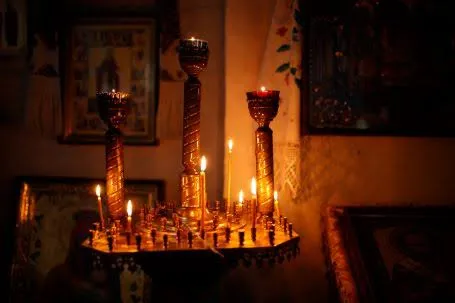
On Friday, November 20, 2026, the Orthodox Church of Ukraine, following the New Julian calendar, honors the Venerable Gregory of Decapolis and Saint Proclus, Archbishop of Constantinople. This day also marks the beginning of the vigil for the Feast of the Entry of the Most Holy Theotokos into the Temple, which is celebrated on November 21. We’ll tell you who these saints were, what people pray to them for, and what folk customs are associated with this date.
According to the New Julian calendar, November 20 is the day of remembrance for the Venerable Gregory of Decapolis and Saint Proclus of Constantinople. In addition, the Church observes the eve of the Feast of the Entry of the Most Holy Theotokos into the Temple.
A vigil is the day preceding a major church feast. During this time, the divine services already include themes and prayers dedicated to the event that the faithful will celebrate the following day. The Presentation of the Most Holy Mother of God itself falls on Saturday, November 21. It is one of the twelve greatest feasts of the Orthodox liturgical year.
Commemoration Day of St. Gregory the Decapolite
St. Gregory of Decapolis lived in the 8th–9th centuries. He was born in Decapolis of Isauria—a historical region in present-day Turkey. From childhood, he was interested in Christian teachings, loved church services, and read the Holy Scriptures. Later, Gregory chose the monastic life. He traveled extensively, visited monasteries, and preached the Christian faith. According to tradition, the saint also possessed the gifts of healing and prophecy.

The struggle against iconoclasm held a special place in his life. At that time, a movement had spread throughout the Byzantine Empire whose adherents opposed the veneration of icons. Gregory disagreed with these views and openly defended the right of Christians to venerate sacred images.
His stance put him in danger, but he did not renounce his convictions. Later, the saint traveled to Constantinople, where he continued to oppose iconoclasm. Gregory died around 842. In the Church tradition, he is remembered as an example of steadfastness, devotion to the faith, and courage in the face of trials.
Saint Proclus of Constantinople
November 20 also honors Saint Proclus, Archbishop of Constantinople, who lived in the 5th century. He is known as a church preacher and theologian. According to church tradition, Proclus was a student of Saint John Chrysostom and inherited from him a love of preaching and a deep knowledge of the Holy Scriptures.
Proclus became Archbishop of Constantinople and led the Church during a difficult period for the Byzantine Empire. He defended Christian doctrine, cared for the spiritual life of the community, and supported those in need.
The saint also left behind theological sermons. Among them is a sermon dedicated to the Most Holy Mother of God. That is why his name is mentioned on the eve of the Feast of the Entry of the Mother of God into the Temple. For the faithful, this saint is associated with wisdom, mercy, and care for others.
What Does the Eve of the Feast of the Entry of the Most Holy Mother of God into the Temple Signify?
The Presentation of the Most Holy Mother of God is celebrated on November 21. According to church tradition, on this day we commemorate how Mary’s parents—the righteous Joachim and Anna—brought their three-year-old daughter to the Temple in Jerusalem.
The couple had long been childless and had prayed for a child. They vowed to dedicate her to God if their prayer were answered. When Mary grew up, her parents fulfilled their promise and brought her to the temple. According to tradition, the girl was met by the high priest Zechariah. He blessed her and led her into the Temple. This event became a symbol of Mary’s devotion to God, her trust, and her spiritual journey.
It is important to note that the story of the Presentation is not described directly in the canonical Gospels. It is known from church tradition and ancient apocryphal texts. For Christians, this feast holds special significance. It serves as a reminder of faith, family love, and raising children in the ways of goodness. That is why, on the eve of the Presentation of the Virgin Mary, believers devote more attention to prayer and spiritual preparation.
Folk Traditions and Superstitions for November 20
In the folk calendar, November 20 was associated with the approach of winter. Our ancestors observed the weather, the wind, and frost, trying to predict what the coming months would be like. The following folk signs were associated with this day:
- If it’s cloudy but warm on St. Gregory’s Day, winter may be mild and snowy.
- Snowfall on this day was considered a sign of a good harvest the following year.
- If there was a lot of frost on the trees, people expected cold weather.
- Strong winds were seen as a sign that cold weather was approaching.
In some regions, the day was also associated with preparing the home for winter and the upcoming Feast of the Presentation. Housewives cleaned their homes, did laundry, and tried to finish their main household chores by evening. However, these customs and omens are part of folk tradition. They are not mandatory church regulations, and weather observations have no scientific basis.
What Is Not Recommended on November 20
The church calendar does not specify a separate list of prohibitions specifically for November 20. At the same time, the Christmas Fast is underway, having begun on November 15 according to the new style. Therefore, believers are advised to observe the fasting restrictions according to their abilities and church guidelines. During this period, people are also encouraged to practice self-restraint, prayer, good deeds, and helping those in need.
Traditionally, on the eve of the Presentation, people were advised to avoid quarrels, insults, foul language, and loud entertainment. But the true meaning of the day lies not in strict prohibitions, but in peace, good deeds, and spiritual preparation for the holiday.




