
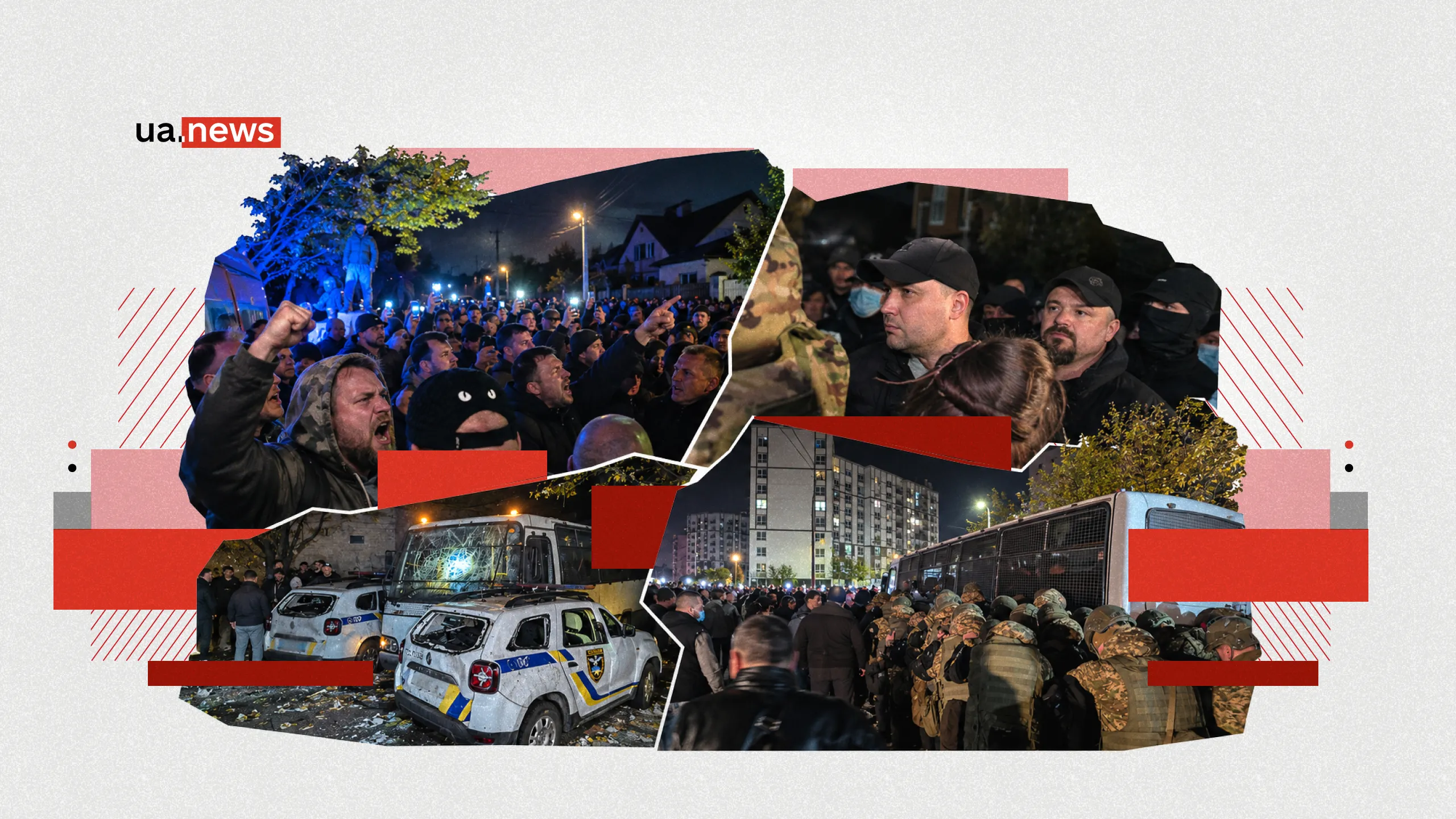
On the evening of November 2, 2026, in Petropavlivska Borshchahivka, near Kyiv, large-scale clashes and protests broke out near a private home. Officials stated that it was a “temporary deployment site” for one of the National Guard’s military units. Protesters, however, claimed that it was a place where men were being illegally detained and was, in fact, a torture chamber.
The spontaneous protest began after information began circulating on social media and local Telegram channels—including from a woman who identified herself as a doctor—that mobilized men and soldiers were being illegally detained and tortured in the building. It was alleged that people were brought in with bags over their heads, and that more than 40 people with severe injuries were inside. A video of one of the soldiers, who complained of pain and showed signs of possible beatings, added fuel to the fire.
Outraged relatives of the soldiers and local residents blocked the exits and began breaking down the building’s gates. Clashes with the police ensued. In response, foam and tear gas were fired from inside the compound; later, gunshots rang out and smoke grenades exploded. Protesters completely smashed a National Guard bus and several police cars.
Major General Oleksandr Pivnenko, commander of the National Guard, arrived at the scene. Later that night, Kyrylo Budanov, head of the Office of the President, arrived to resolve the situation. As expected, law enforcement officials deny reports of a “secret torture chamber” or the illegal detention of civilian hostages. According to a statement by representatives of the National Guard’s “Azov” Corps, the building housed mobilized personnel and military personnel who had left their units without authorization (i.e., gone AWOL) and were waiting there for further assignment. At the same time, Budanov acknowledged that “there are many such buildings,” hinting that the problem is widespread and that the authorities are well aware of it. As of now, criminal cases have been opened, and investigations are ongoing.
What happened yesterday in Petropavlivska Borshchahivka, how acute is the problem of secret detention centers (most likely illegal) for men, why did Budanov actually come to the scene, and what key conclusions should be drawn from this story? UA.News reached out to experts for comment. Read more in our article.
Society is in an extremely dire state, in a depressive and aggressive psychosis: Ruslan Bortnik, director of the Ukrainian Institute of Politics
I think that in this situation in Petropavlivska Borshchahivka, a spark simply landed on spilled gasoline, and then various people rushed to the fire. Some to warm themselves, and others trying to put out the fire. Society has accumulated a huge, extremely aggressive, negative potential regarding abuses by the TCC, forced mobilization, as well as abuses by individual generals and unit commanders. We see a great many videos of unlawful conduct, beatings, and so on. And society fiercely hates this category of people and the very nature of such activities.
This is the general backdrop—spilled fuel that still lies at our feet. And superimposed on this situation is, apparently, the specific personal story of some of the people who were detained, whose relatives arranged for a private ambulance to arrive. Compounding this is the story of deepening depression within Ukrainian society due to the attacks on Kyiv. We see that people are often left without electricity or heat and live under constant threat. This situation could also lead to a riot, and it, too, played a role in what was happening. All of this coincided—and we saw fights, riots, and, in fact, a pogrom. We also saw the inaction or inefficiency of the National Police, which proved incapable of restoring order.
Since Budanov is responsible, in particular, for internal security, this has even led to a certain degree of rivalry with the leadership of some agencies—specifically, the unit that occupied that building. As a result, we essentially have no idea what actually happened there. There are serious grounds to believe that people were being held illegally. And once again: as a result, the reputation and trust in the state, as well as the authority of some law enforcement agencies and security forces—including those fighting on the front lines—have been undermined. Furthermore, this has provided “fabulous” fodder for Russian propaganda to intensify its information attacks on Ukraine.
What conclusions should we draw from this situation? First, a full audit of the army must be conducted. Drapaty has already begun this work, but it must be carried out in all military units. Second, military justice must be restored. We currently have a military police force with limited authority, but we need a fully-fledged military penal system—special facilities where individuals convicted of security offenses or military crimes will be held separately from others. Military prosecutors and military courts—this is a world of its own. We need to fully restore the system that was once destroyed—the system of military justice. Because civilians cannot judge military personnel from either a legal or a political standpoint.
What happened during the riots indicates violations of human rights and Ukrainian law: clashes with law enforcement occurred due to unlawful restrictions on freedom and beatings. This is a very alarming sign. But I don’t think this incident in Petropavlivska Borshchahivka will turn into a systemic uprising. However, we are walking a very fine line when it comes to public patience. Society is in an extremely dire state, in a depressive and aggressive psychosis caused by the war and the Russian invasion.

If the state treats its citizens like serfs, the citizens will have no desire to defend that state: Andriy Zolotaryov, director of the “Third Sector” Center
The case of the uprising in Petropavlivska Borshchahivka is indeed very telling. Remember Vradiyivka? It was in Vradiyivka that the big troubles for Yanukovych’s regime began. Although back then, the Party of Regions reassured themselves that “we have everything planned out for the next 10 years.” But the damage was already done. Unfortunately, these events—no matter what anyone says about a provocation, or that the doctor isn’t real, and so on—have a very specific meaning. This woman has a medical degree; she works at a plastic surgery clinic, but as a doctor, she took the Hippocratic Oath. And according to the investigation, the claims that this was a provocation and that the ambulance crew were imposters are not true.
Even if there were elements of a setup, the fact remains that citizens were unlawfully detained, beaten, subjected to abuse, and extorted for money. And this fact requires a legal assessment. What’s the bottom line? The fact is that people were detained. No one will dispute this—that’s the first point. Second, it is necessary to investigate exactly what happened there. Were there really fatalities, and where did the bodies go? These questions must be answered by the State Bureau of Investigation (DBR) investigators. But I have serious doubts.
The main threat posed by what happened in Petropavlivska Borshchahivka lies elsewhere. Undoubtedly, this tactical crisis will be resolved just as the situation in Lviv was a few months ago. But this shows that a major explosion could occur at any moment. The issue is that the country has turned into what is known in academia as the “criminalization of the state”—when state institutions begin to operate like a mafia syndicate. And no one wants to do anything about it.
We must give Budanov credit for coming to the scene. But we heard nothing sensible that could steer the situation toward a genuine dialogue between the state and society regarding mobilization methods or their relationship. Just the usual, routine rhetoric… This is particularly telling, given that Budanov has political ambitions. That’s understandable. But it’s just as clear that he’s a member of Zelenskyy’s team and must toe the line, just like everyone else.
What conclusion can we draw from this? Sooner or later, this situation could lead to events that are fatal for the state. People see everything and understand everything. If the state treats its own citizens like serfs, the citizens will have no desire whatsoever to defend this state with weapons in their hands. They will have no desire to risk their own lives without understanding what they are fighting for. And in the near future, this could come back to haunt many in our country like a very powerful boomerang.

The
situation in Petropavlivska Borshchahivka came as a surprise to the security services: political analyst Andriy Vihirinsky
Regarding the events in Petropavlivska Borshchahivka—we must proceed from the premise that the nature of the times in which we live requires a comprehensive assessment of events. Everyone is in their own information bubble and picks up on whatever information catches their eye. Some saw a boy being led away, half-alive. Some saw Budanov. Some saw young men with tools for physical coercion. And some saw veterans. And everyone formed their own impression. That’s why the full picture usually isn’t provided by what we call an internal investigation, but rather by a version of events that has been thoroughly investigated and verified by testimony and evidence—and that takes time.
Now, regarding the incident itself. We can say that such places—which the media refer to as “underground prisons for the mobilized”—could have been registered as official premises of certain military units. What can we state as fact? We saw that there were people there. It has been confirmed that these were individuals who were either subject to mobilization or had previously been mobilized and had left their military units without authorization. Their appearance was likely such that it could be described as that of people living in substandard conditions. Can we say that there are many such buildings and that every person held there looks the same? We do not know that. But if these people are not allowed to contact their families and their communication is restricted, then that alone is grounds for opening a criminal investigation. And, most likely, these people are in a situation that can be characterized as mistreatment—as individuals who possess dignity and rights.
Everything that happened afterward most likely came as a surprise to our counterintelligence agencies. And if we consider the possibility that the events were not entirely spontaneous but merely gave the impression of being so, then perhaps this was part of a preparation for subsequent stages. The security services are currently investigating this incident. As for us, we only saw what made it into the public domain. An ambulance arrived. There was a lawyer present, and apparently also a woman who had turned to him for help—the common-law wife of one of the detainees. TikTokers and the media showed up, and the story began to spread. And this woman—to be honest, I don’t often come across a nurse who gets down on her knees, talks about the executive branch, records videos—in short, acts so actively in every sense of the word. And then, of course, later that evening, a report came out claiming that she wasn’t actually a nurse and that no such ambulance service existed. But at the moment the information was received—given how the media presented it—it all sounded completely different: an ambulance had arrived, people were being held back—40 men, all injured—medical personnel weren’t being allowed in, and people were in shock. Consequently, a crowd began to gather around the scene. The incident itself spread across the information landscape, while refutations or clarifications regarding the individual’s identity appeared only later.
Then a boy appeared in the story. This already resembled a compilation of all the tropes that Ukrainian society had once experienced: the image of the “crucified boy,” a child being led out, with whom Budanov was speaking. And then it turns out that the boy had climbed in there on his own, supposedly acting defiantly, swearing, and likely not staying there for very long. But the narrative had already taken shape: a child and a woman—elements that stir up society. Then another element appears—videos of the child circulating online. In them, she looks as if she had been held there longer than the adult men who were led out earlier.
The crowd continues to gather. It’s nighttime, people are worked up, and it all goes on for a long time. The only thing missing was a spark. And such sparks did appear—specifically, the throwing of eggs at police officers and the use of force against military personnel. So if we look at each stage of how this event unfolded, I think that over time we’ll find a significant number of people who may have acted with a specific purpose in mind. Sometimes just a few such individuals are enough for a crowd that is simply standing by to gradually become drawn into the events. Theories of protest, as well as the methods and practices for coordinating them, involve a leadership role, after which the crowd and the clash begin to take on a life of their own.
It seems that the very existence of the building where people were held is quite real. And, most likely, there are signs of criminal offenses there that law enforcement must prove. But everything related to media coverage, drawing attention, disseminating information, commenting, and so on, could have been of a different nature: coordinated, planned actions that were intended to—or could have led to—clashes on a much larger scale, including loss of life. Because if law enforcement officers had been attacked, if their lives had been in danger, it is entirely possible that the situation could have escalated into a clash involving the use of weapons in the literal sense of the word.
Now, regarding the head of the Office of the President and his authority in this situation. In my opinion, the issue is not so much about his authority. The issue is that the other participants in the process—the head of the National Guard and other officials who arrived at the scene—were unable to calm the situation. That is why someone with authority had to step in, even if they were not formally vested with the relevant powers. This person arrived at the scene to figure out what was happening. And it was fortunate that this person arrived. In this context, formal powers were not particularly important. What matters is that both the protesters and the officials perceived Budanov’s arrival and his appeals as authoritative enough to prevent further escalation.
Everything regarding further actions, legal assessment, classification of the events, and investigation into who was involved and how—that’s a separate story. Was this woman a nurse or not? Who were those young men who showed up? Who was spreading the information? All of this still needs to be clarified.
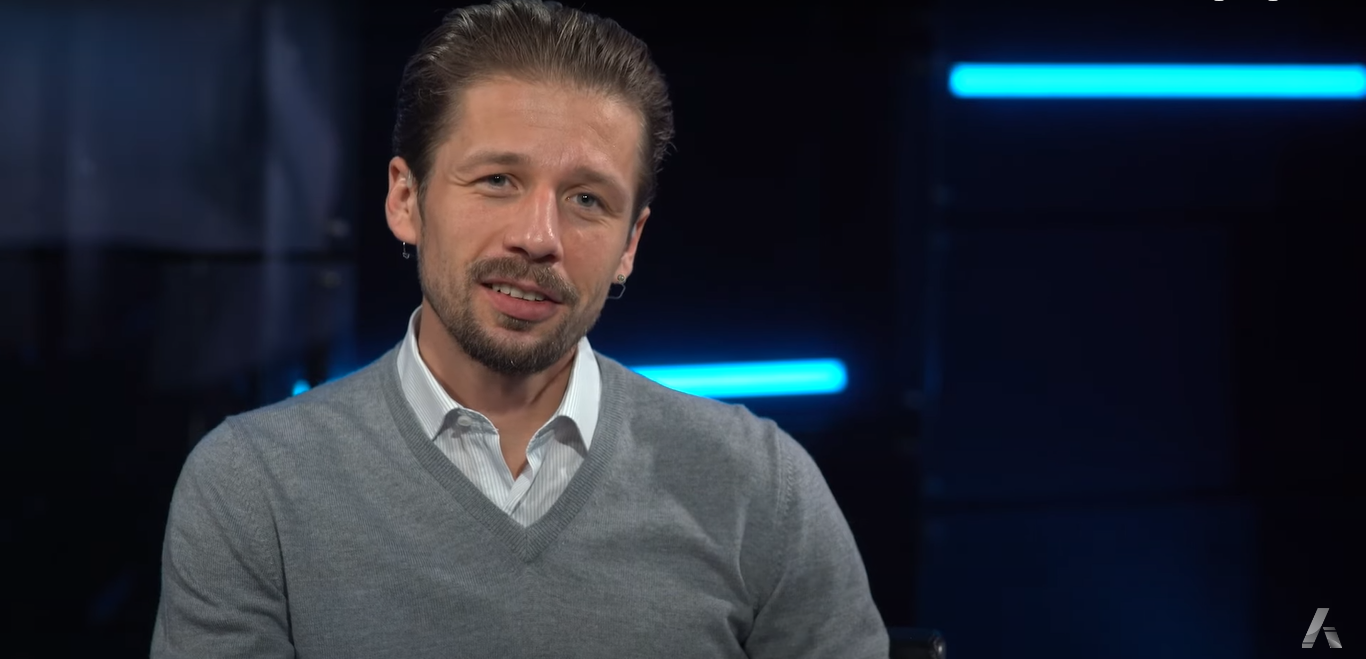
Martial law does not suspend the rule of law or human rights: political analyst Maksym Honcharenko
The events in Petropavlivska Borshchahivka are an alarming sign for society, but it cannot be fully characterized as an organized riot or a planned provocation. The facts are clear: confirmed clashes with law enforcement, hospitalizations, and the authorities’ response. Claims of “torture” and the very existence of such facilities on Ukrainian territory still require legal assessment. The most fundamental and resonant issue for society right now is the rule of law, the conditions and reasons for people’s detention at such facilities, and the respect for their rights. Martial law does not override the requirements of legality and respect for human rights as a core value for the state. Such cases, due to their lack of transparency and the absence of adequate communication from the outset, divide society along “military versus civilian” lines. And the grievances here are mutual: on the part of civilians—outrage over the system’s impunity; on the part of the military—an erosion of trust in the armed forces. Of course, such situations play into the hands of both enemy propaganda and domestic political opponents.
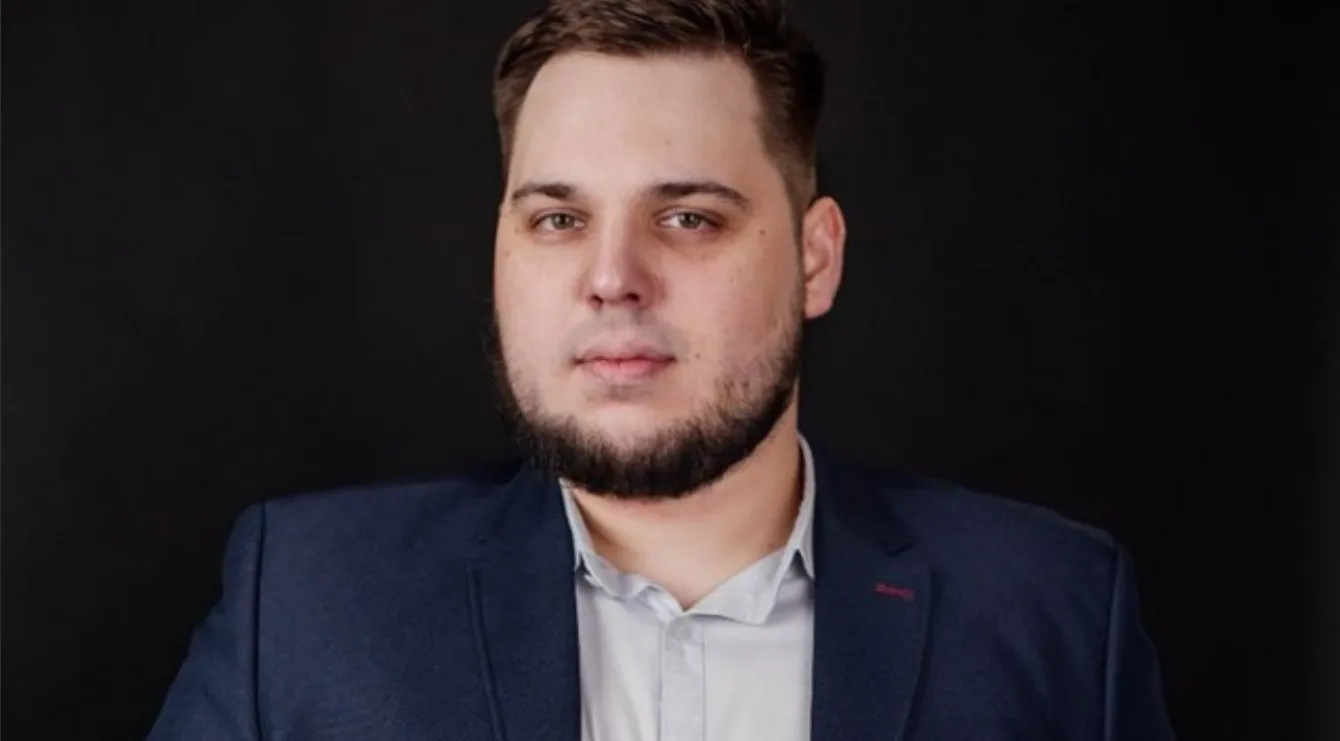
The political sensitivity of the incident is evidenced
by the arrival of Presidential Office Head Kirill Budanov at the scene. Choosing him as a mediator in this situation is one of the best decisions, as he is both a government official (associated with the civilian sphere) and a former head of the Main Intelligence Directorate (associated with the military). Beyond his mere presence, he can call for an investigation into this incident, but what will be key for us are the results of the investigation and accountability for the violations.
Parallels with the protests in Vradiyivka can be drawn in one respect: the public’s perception of systemic impunity, distrust of the justice system, and attempts to resolve matters on their own. The parallel could become complete if the public perceives an attempt to cover up the offense, or to whitewash or protect those involved because of their status. However, given the public outcry, such a scenario is unlikely at this time.
The incident itself is not the main risk to the state. The worst-case scenario is the resulting loss of public trust in the state. If the authorities initiate an independent investigation, conduct a rigorous legal assessment of the facts, and make the results public, the crisis can be contained. If, however, the public receives only accusations instead of answers, such incidents will have a significantly greater potential to destabilize the country.




