
European Solidarity has expelled Goncharenko from its parliamentary group
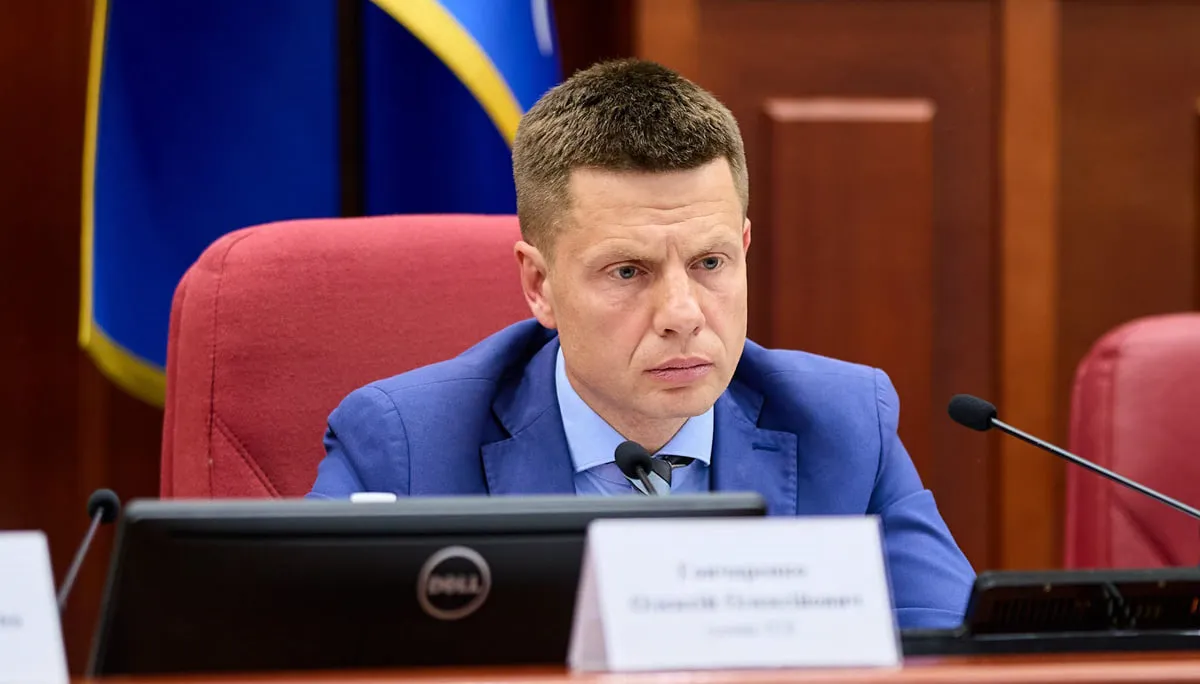
The “European Solidarity” faction has decided to end its political partnership with People’s Deputy Oleksiy Honcharenko. The decision was prompted by ideological differences and divergent positions on ending the war and Ukraine’s future security framework.
“European Solidarity” stated that there have always been differing views and discussions within the party, but emphasized the distinction between disagreements over political tactics and differences in fundamental values and Ukraine’s strategic course.
The faction noted that its principles include a strong Ukrainian army, the Ukrainian language, an independent Ukrainian church, as well as Ukraine’s membership in the European Union and NATO.
Oleksiy Goncharenko’s public positions on ending the war and Ukraine’s future security architecture diverged from those of “European Solidarity” and its ideological foundations, the statement reads.
The faction emphasized that the decision to end their joint political path does not negate the years of collaboration. At the same time, they stated that party unity cannot be a mere formality given fundamentally different views on the future of the state.
Separately, “European Solidarity” noted that responsibility for Ukraine’s negotiating position and diplomatic strategy now lies with the government. The faction called for a public discussion on a realistic path toward a ceasefire, a just peace, and security guarantees.
Compromises may be part of the path to ending the war. But Ukraine’s independence, its European future, issues of national identity, and the right to determine its own security system are not subject to compromise, the faction stated.
It was previously reported that in his article, Goncharenko proposes not attempting to conclude a single major peace agreement immediately, but rather moving toward it through a series of smaller agreements with various guarantors. Among the priorities, he cites maritime security, energy, infrastructure protection, and the gradual narrowing of hostilities to the Donbas region. According to his plan, each agreement should involve Ukraine, Russia, and a third-party guarantor with a stake in the agreement’s implementation. The MP considers it acceptable to lift sanctions against Russia in stages in exchange for an end to long-range strikes, the unblocking of the Black Sea, and the restriction of hostilities in the Donbas. Separately, the lawmaker admits that Ukraine may begin discussing neutrality.
The terms can be negotiated. Cooperation with NATO would continue as it does now. Re-armament would continue. And a joint European budget would be created to fund the army, with the guarantors being those countries that need our army to defend their own borders,” he notes.
At the same time, he calls the Donbas issue “the most difficult.” And he suggests discussing options only after the main negotiations have taken place.
“I often hear that Russia doesn’t want to negotiate. Right now, it really doesn’t. They have the upper hand with drones, a more stable economy, and they haven’t even declared a general mobilization yet. But it’s never the case that someone wants absolutely nothing.” Everyone has their own interests,” Goncharenko believes.
At the same time, he calls peace the “main goal” of all the proposed options.
This is stated in a statement by the faction released on October 5.
Goncharenko is demanding that the National Agency for Corruption Prevention (NAZK) conduct a thorough audit of the assets of former Deputy Prosecutor General Verbytsky.
In addition, on February 25, 2026, the Kyiv District Administrative Court dismissed Verbytsky’s lawsuit against the NACP. The former prosecutor filed an appeal, but the mere filing of the appeal does not overturn the lower court’s decision nor does it render the agency’s findings “invalid.”
UA.NEWS previously published the results of an independent appraisal of the value of a business center in Odesa linked to the Verbytsky family. According to that appraisal, the property’s value could have been higher than what was stated in the documents. Apparently, independent experts aren’t always convincing—only when their conclusions please the author of the column.
But for now, instead of facing trial, the controversial former official is calmly sipping coffee and building his political career, lamenting to the cameras of investigative journalists: “I don’t live a lavish life, but I don’t live poorly either.”




