

Ukrainian men between the ages of 17 and 60 are facing yet another challenge. The Cabinet of Ministers adopted Resolution No. 1466 of November 25, 2026, instructing a large-scale verification of the data in the Unified State Register of Conscripts, Persons Subject to Military Service, and Reservists. That is, the very same “Oberig” registry, which in recent years has become synonymous with the state’s record-keeping of every man of draft age. This is not about spot checks or selective campaigns, but rather a comprehensive cross-check of information on all men in the specified age group against data from the State Migration Service and the Unified State Demographic Registry.
Formally, the goal of this verification appears to be purely technical: to ensure the integrity, completeness, and accuracy of the registry data. But behind this complex bureaucratic wording lies much more — an attempt by the state to finally get a clear picture of how many men in Ukraine are registered, where they live, how many have left the country, and what mobilization reserve remains at its disposal.
What exactly will be verified, how will this affect ordinary Ukrainian men of draft age, and what does such a large-scale campaign indicate overall? UA.News political analyst Mykyta Trachuk looked into the issue.
What exactly will be checked and why
According to the decree, the State Migration Service must provide the Ministry of Defense with up-to-date data on all men aged 17 to 60 within 30 calendar days. This involves a fairly extensive list of information: taxpayer identification number, details of the Ukrainian passport, the unique record number in the Unified State Demographic Register, last name, first name, and patronymic, date and place of birth, gender, address of the declared or registered place of residence, information on citizenship, and so on.
In addition, the Ministry of Defense will receive data from the Unified State Demographic Register: specifically, foreign passport details, information regarding the processing of documents for emigration for permanent residence abroad or return to Ukraine, and even digitized images of citizens’ faces. Formally, such over-centralization and such comprehensive data collection are already legal in Ukraine; however, many lawyers, legal experts, and ordinary citizens still have serious concerns regarding the conflict between the legality and legitimacy of such practices.
The Ministry of Defense will then have 30 calendar days to verify the received information against what is already contained in the “Oberig” registry. Once verification is complete, the ministry will have an additional 120 calendar days to update the data—that is, to make changes to the registry either automatically or manually. Information that is not subject to entry into the database will be used exclusively for verification purposes, after which the Ministry of Defense is required to destroy it in accordance with the procedure established by law. However, whether this will actually be done remains an open question.
Why is this being done? There are several answers, and they are logically interconnected.
First, the government wants to automatically collect up-to-date information on those subject to military service without requiring them to visit the Military Registration and Enlistment Offices.
Second, the government remains determined to identify those who are not registered or who are evading registration. There may be several million such people in Ukraine.
Third, there will be an attempt to update contact information and “propiska” (residence registration) on a massive scale. If a person has officially changed their place of residence or obtained a new passport but has not reported this to the Military Registration and Enlistment Office, the system will update these changes automatically.
Fourth, the authorities want to see who is in Ukraine and who is abroad, and thus finally calculate the actual mobilization potential—that is, to do what this whole process is actually intended to achieve.
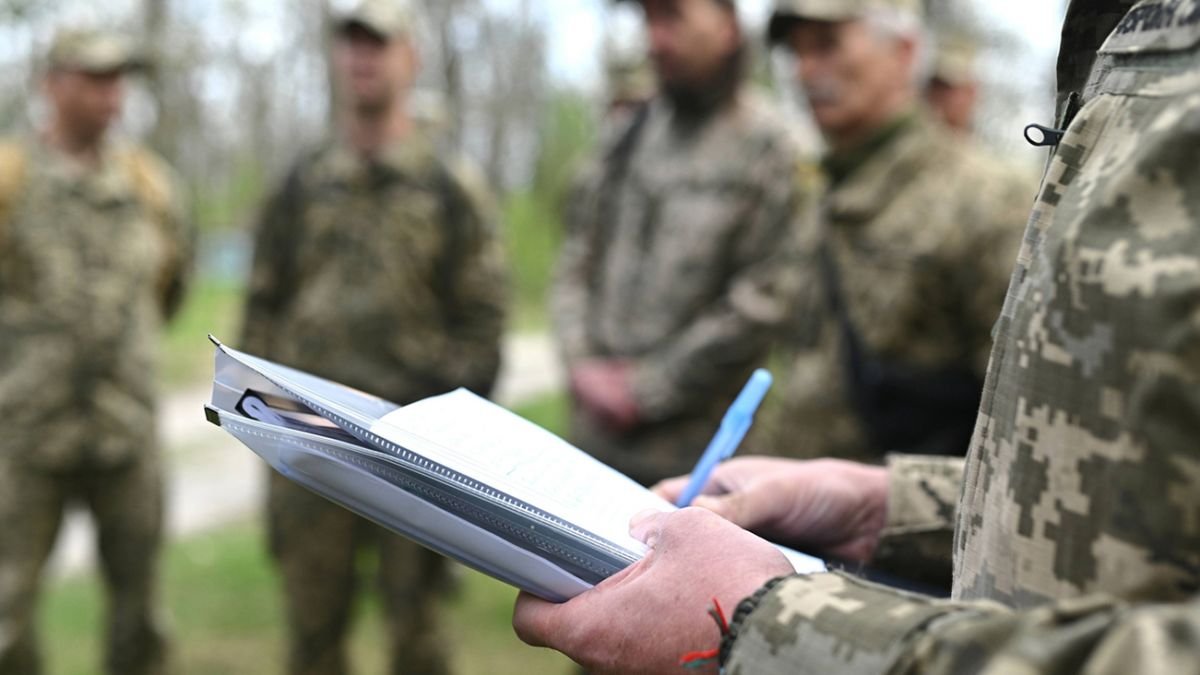
How this will affect Ukrainian men: life will become more difficult
For the average man of draft age (if he hasn’t updated his information yet), this verification means one thing above all else: it will become harder to “dodge” the draft. Whereas before one might have hoped that the Military Registration and Enlistment Office (MREO) lacked up-to-date information on one’s place of residence, phone number, or passport updates, these gaps will now most likely be filled by automatic cross-checking. The government will gain a much more complete picture of every person subject to military service: from their tax ID number to a digitized facial image.
This does not mean, however, that tomorrow everyone who has not updated their information will automatically be found and sent to the front lines. But it certainly means that the room for maneuver is shrinking.
If a person has changed their address and failed to notify the Military Registration and Enlistment Office, the system will detect it. If they have moved abroad and obtained documents there, that will also come to light. If they do not appear in the “Oberig” registry at all, they will be identified and registered. In other words, the state is building not just a registry, but a system of total tracking of men, which makes any attempt to slip under the radar as difficult as possible.
At the same time, other processes are underway that increase the pressure on those subject to military service. Reservations and deferments are being reduced, lists of those with deferrals are being scrutinized, special attention is being paid to “suspicious” marriages involving elderly people for whom guardianship is being established (the legality of this and why the state should concern itself with marriages are also open questions), and so on. All of this is a sign that the country is methodically “tightening the screws” when it comes to military service. Verifying the registries is just one—albeit a very important—element of this broader campaign.
What the large-scale checks reveal: the war is far from over
The most important conclusion to be drawn from this story does not lie in the technical details of the verification process or anything of that nature. It is that such a large-scale audit of the mobilization reserve can only mean one thing: the war is far from over, no one seriously expects it to end anytime soon, and no one believes in the success of peace talks. At least not the authorities—that much is certain.
If Kyiv were truly counting on the rapid signing of a peace treaty in the near future—or at least on a ceasefire—it is unlikely that anyone would spend considerable resources on a comprehensive verification of the registries, updating the data, and building a system that won’t be operational for another 3–4 months. These actions make sense in only one scenario: if the state is preparing to continue fighting—at least through 2027, if not longer.
Most likely, this is precisely why they’re conducting the most thorough checks on those subject to military service, why they want to determine the actual mobilization reserve, and this is why deferments and exemptions are being reduced, lists of those exempted are being reviewed, attention is being paid to schemes involving sham marriages and guardianship, and much more. All of this is not a series of isolated local campaigns, but pieces of a single mosaic. The state wants to understand how many people it can still send to the front, and is doing everything it can to find them.
For men of draft age, this is clearly rather pessimistic news. It means that mobilization—including forced mobilization—will continue, and that the reduction in exemptions and deferrals will also continue. Nothing lies ahead but war. And although formally no one has called off either peace talks or diplomatic efforts, the government’s practical steps indicate that it continues to prepare for a protracted war, not for a quick peace.
To sum up, this new large-scale verification of all data on men aged 17–60 subject to military service is not just another bureaucratic procedure, but a signal. The signal is that the state takes the issue of the mobilization reserve seriously and is prepared to invest resources to get a clear picture of the situation. Controls will clearly become stricter, and it will become harder to avoid military service. And—most importantly!—this is a signal that the war will not end anytime soon.
For Ukraine as a whole, this is rather grim news. It means that at least one more year of war lies ahead—one more year of mobilization, one more year of losses, destruction, injuries, and deaths. And for men of draft age, it’s a reminder that the state remembers each and every one of them, even if they’d rather be forgotten. And although few speak about it openly, everyone probably understands that this large-scale data verification is only the beginning. There’s more to come.




