
Former executives of the Pavlograd Chemical Plant avoided punishment due to the statute of limitations
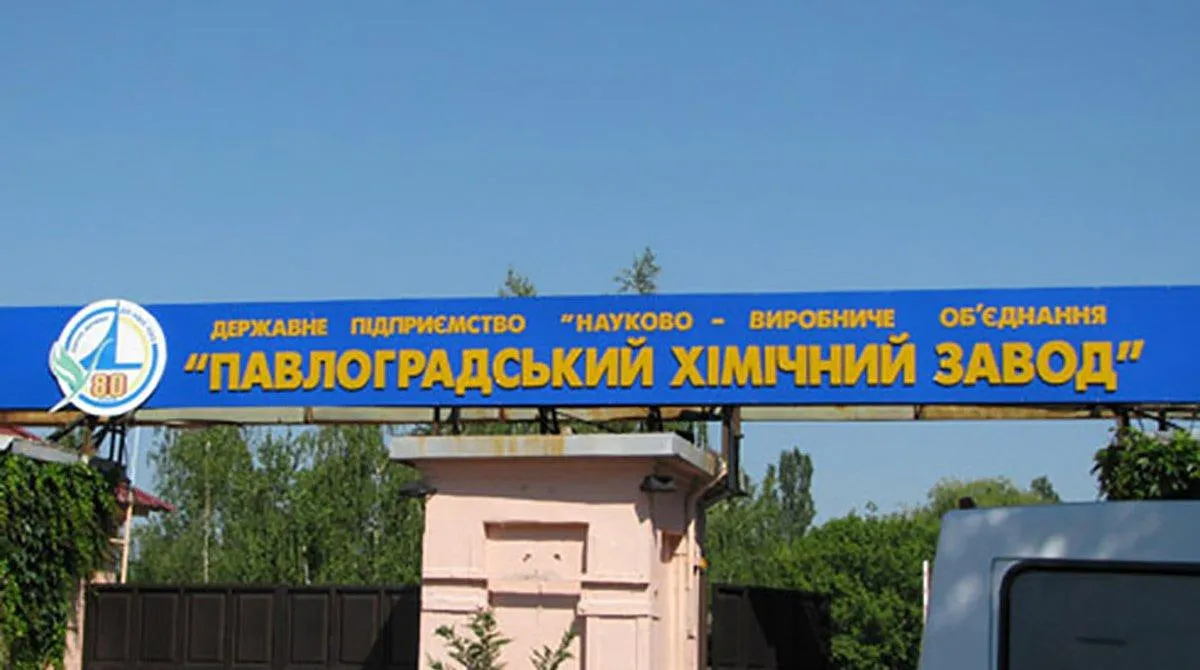
On October 12, 2026, the Appeals Chamber of the High Anti-Corruption Court considered appeals against the High Anti-Corruption Court’s verdict of August 12, 2026, regarding the former general director and commercial director of the state-owned enterprise “NVO “Pavlograd Chemical Plant,” V. Kirilov and L. Shiman.
They were accused of abuse of office as part of a premeditated conspiracy by a group of individuals. This constitutes an offense under Part 2 of Article 28 and Part 2 of Article 364 of the Criminal Code of Ukraine. The former executives were exempted from punishment due to the expiration of the statute of limitations.
The court of first instance ruled that the scheme involving intermediaries and the “hoarding” of state funds by them without performing the functions of a supplier was illegal. Thus, the High Anti-Corruption Court found the individuals guilty and sentenced them to 5 years and 4 years and 3 months of imprisonment, respectively.
The court also fully granted the civil claim filed by the prosecutor on behalf of the state (represented by the Ministry of Strategic Industries) in the amount of over 36.2 million hryvnias.
What exactly did the High Anti-Corruption Court’s appellate panel change:
- It excluded from the indictment the circumstances regarding the plant’s relationship with LLC “NVP ‘Zorya’” for the years 2015–2016;
- Pursuant to paragraph 4 of Part 1 of Article 49 and Part 5 of Article 74 of the Criminal Code of Ukraine, both convicted individuals were released from serving their sentences due to the expiration of the statute of limitations;
- the portion of the judgment granting the prosecutor’s civil claim for 36.2 million hryvnias was overturned, and the claim was denied.
Why will the convicted individuals not serve their sentences?
The trial court found that between 2011 and 2016, the defendants acted with a single intent, committing a continuing offense: they did not sell the state-owned factory’s products directly to end consumers, but through three intermediary firms that resold it at a higher price. The last shipments considered by the court were dated November 21, 2016, so the statute of limitations had not expired at the time of the verdict.
After the appellate court excluded the circumstances related to LLC “NVP ‘Zorya’,” the period covered by the charges was shortened—ending in early 2015. The ten-year statute of limitations from that date had expired, so the appellate court acquitted the defendants.
Once they receive the full text of the ruling, prosecutors from the Specialized Anti-Corruption Prosecutor’s Office (SAPO) will decide whether to file a cassation appeal against the ruling of the High Anti-Corruption Court (HACC).
This was reported by the Specialized Anti-Corruption Prosecutor’s Office.
A chemical plant in Pavlohrad knowingly supplied over 233,000 defective mines.
The case involving the embezzlement of 102 million hryvnias from tank armor contracts will be sent to court.
Law enforcement officials have filed an indictment against the company’s director—a member of the Bohodukhiv City Council—who embezzled equipment for wastewater treatment facilities worth over 14.79 million hryvnias.
A scheme to embezzle nearly 3 million hryvnias during the renovation of four parks was uncovered in Kyiv.




