
Koretsky Alleged Misuse of Employee Reservations
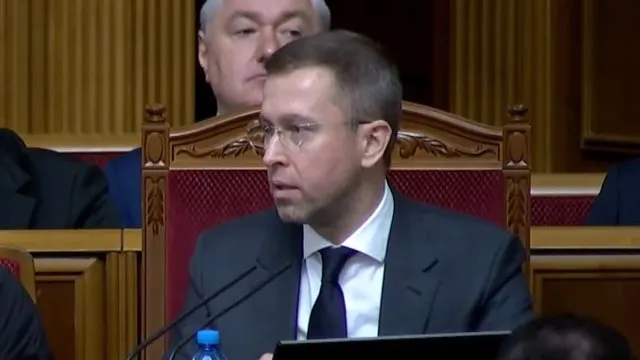
Ukrainian Prime Minister Serhiy Koretsky stated that the ability to exempt 100% of employees from mobilization creates opportunities for abuse. According to him, some companies may exempt their entire workforce, even if some employees do not actually perform critical tasks. The government is working on changes to the exemption system, but the final rules have not yet been published.
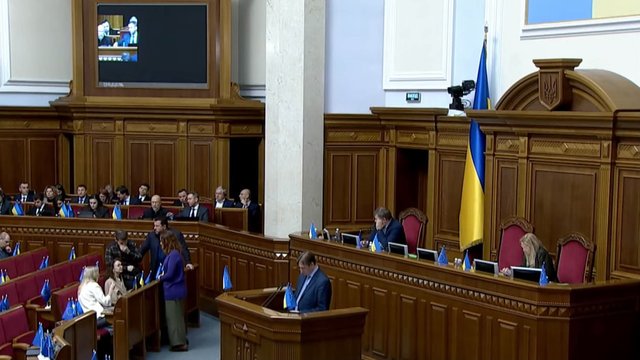
Serhiy Koretskyi raised concerns about employee exemptions during question time with the government in the Verkhovna Rada on Friday, October 16. He said that the ability to exempt 100% of employees subject to military service gives companies room for manipulation. In particular, a company can increase its workforce and register all employees for exemption, even if not every one of them is directly involved in critical work. “A 100% exemption quota opens the door to significant manipulation. If you have 100%—that means you can increase your workforce indefinitely and reserve people: it doesn’t matter whether they’re repair workers or not, or whether they’re energy sector workers or not,” the prime minister said.
He added that, in his opinion, the problem has reached a significant scale. According to Koretsky, every month, such enterprises continue to reserve positions for tens of thousands of employees. It is precisely this issue that the government cites as the reason for the need to revise the current rules. At the same time, the prime minister did not specify what the final changes would be or whether certain categories of enterprises would retain the right to reserve their entire workforce.
Critical status should not depend solely on wages and taxes
Koretsky also emphasized that when determining which enterprises are critical, it is necessary to consider more than just their financial indicators. According to him, wage levels and the absence of tax arrears do not in and of themselves mean that an enterprise is critical to the state. “We need to distinguish between criticality and economic factors. Because wages and the absence of tax arrears do not always mean that an enterprise is critical. Critical means the state’s defense capability and life support,” the prime minister stated.
In other words, according to his logic, when making decisions, one must assess a company’s actual contribution to the country’s defense and to meeting its basic needs. This applies, in particular, to the defense and energy sectors, as well as other industries vital to the state.
Koretsky cited the example of a contractor for an energy company
The prime minister explained potential abuses using the example of a company that performs work for an energy company.
According to him, a contractor may have 100 employees, but only 20 of them actually perform work for that company. Despite this, all 100 employees may be granted exemption from military service.
Thus, the right to full furlough may extend to people whose work is not directly related to fulfilling a critically important contract.
It is precisely these situations, according to Koretsky, that are forcing the government to reconsider its approach to the reservation system. At the same time, the example he cited does not mean that all companies are abusing this opportunity.
What Changes to the Reservation System Is the Government Preparing?
Koretsky previously stated that changes to the reservation system should not result in radical changes for critically important enterprises in the defense and energy sectors. According to him, the relevant resolution is still being finalized. Once the work is complete, the document is to be adopted and made public. “The resolution is currently being drafted; it will definitely be finalized, adopted, and published. There is no betrayal here. All the details will be available once they are made public and all relevant decisions have been made,” the prime minister said.
On October 13, the Cabinet of Ministers adopted a resolution on the organization of exemptions for those subject to military service during mobilization and wartime. It provides for changes to the current system; however, as of the time of Koretsky’s statement, the document had not yet been made public. Therefore, the final terms of the reservation and the procedure for their application remain unknown for now.
What the Published Draft Resolution Envisioned
Earlier, People’s Deputy Yaroslav Zheleznyak published a draft government resolution proposing changes to the reservation limits for certain categories of enterprises. Specifically, the document provided for:
- a reduction in the reservation limit for enterprises in the defense-industrial complex and the energy sector from 100% to 85%;
- a reduction in the limit for utility companies from 75% to 60%;
- a change in the basis for calculating the 50 percent quota;
- the establishment of a Coordination Center for Reservation Issues under the Cabinet of Ministers.
According to Zheleznyak, the new body could have consisted of 17 members, including representatives of the Security Service of Ukraine, the Main Intelligence Directorate, the Foreign Intelligence Service, and the National Police. The draft also stipulated that without a positive recommendation from the Coordination Center, enterprises would not be able to obtain “critically important” status or a reservation quota exceeding 50%. Additionally, the body could recommend revoking such status.
At the same time, the document published by the lawmaker did not clearly define the timeframes for consideration, the criteria for decision-making, or the mechanism for appealing decisions. It is important to note that this refers specifically to the provisions of the published draft. Since the final text of the resolution has not yet been published, it cannot be asserted that all these proposals will remain in the document unchanged.
Lawmakers Opposed the Creation of a Coordination Center
Plans to create a new body sparked objections among members of parliament. Representatives of various parliamentary factions appealed to Koretsky, demanding that he abandon the idea of establishing a Coordination Center for booking arrangements. MP Oleksandr Fedienko, who chairs the subcommittee on cybersecurity, highlighted the risks associated with introducing an additional layer of approval.
In his assessment, the new procedure could delay the mobilization of employees at defense enterprises, energy companies, and critical infrastructure facilities. This, in turn, could affect the fulfillment of government contracts. Thus, the debate concerns not only the percentage of employees who can be reserved but also the decision-making mechanism itself. The government emphasizes the need to prevent abuse, while some lawmakers warn of potential delays for enterprises critical to national defense and the functioning of the state.
The final rules will become clear once the government resolution is published. Until then, the proposed limits and powers of the Coordination Center should be viewed as draft provisions rather than definitively approved regulations.




