
A plant associated with the world of Harry Potter has been found in the Odesa region

In the Odesa region, within the Lower Dniester National Nature Park, researchers spotted black elderberry—a plant that has not only culinary and botanical significance but also a literary history. According to author J.K. Rowling, one of the most powerful wands in the Harry Potter universe was made from elderberry.
“Did you know that the name of a very real plant is behind the design of the magic wand from the beloved Harry Potter series?” the post reads.
According to expert Natalia Tovstukha, in late summer and early fall, the black elderberry (Sambucus nigra L.) catches the eye with its clusters of shiny black-purple berries.
According to her, this shrub—familiar to many and sometimes growing into a small tree—hides quite a few interesting facts. Elderberry has long been used in folk medicine, and its flowers and berries are also used in cooking.
The plant’s fragrant flowers are used to make tea, while the berries are used to make jam, preserves, fruit drinks, and juices.
Black elderberry has also left its mark in literature. Natalia Tovstukha mentioned Hans Christian Andersen’s fairy tale “The Elderberry Mother,” in which an ordinary plant becomes a symbol of a magical world where memories come to life and fairy tales are born.
Fans of the Harry Potter stories may also recognize the elderberry thanks to the Elder Wand—one of the most powerful wands in J.K. Rowling’s fictional universe.
“This plant also has a literary history. Do you remember Hans Christian Andersen’s fairy tale ‘The Elderberry Mother’? In it, an ordinary elderberry bush becomes a symbol of a magical world where memories come to life and fairy tales are born. And Harry Potter fans will surely recall the Elder Wand—one of the most powerful wands in J.K. Rowling’s world. “However, the magic of this wand is part of the magical universe, not the botanical properties of the plant,” the expert noted.
Despite the widespread use of elderberry in cooking, one must be careful with this plant in the real world.
Natalia Tovstukha emphasizes that raw berries, leaves, bark, and other parts of the plant can cause poisoning. Only properly identified ripe fruits that have undergone proper heat treatment should be used in cooking.
Thus, the black elderberry, which researchers observed in the Lower Dniester National Nature Park, combines natural beauty, culinary traditions, and an interesting literary history. However, its connection to the magic of Harry Potter remains part of the fictional world, whereas in nature, it is important to remember the rules for safely handling the plant.
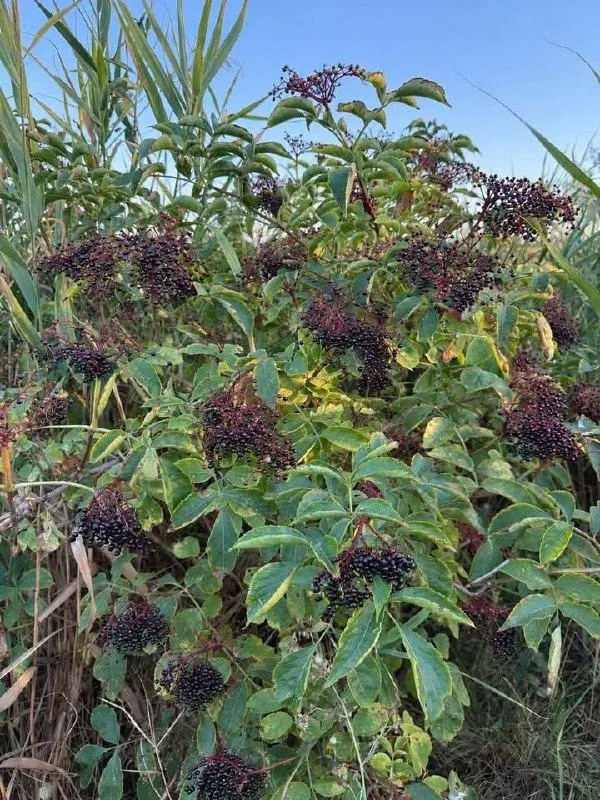
Park researchers reported the discovery by publishing photographs of the plant.
A rare wood-boring bee was spotted in the Chernobyl Radiation and Ecological Biosphere Reserve. The insect is called a “carpenter” because of its ability to gnaw tunnels in dry wood, and because of its unusual method of extracting nectar, it is also known as a “flower thief.”
In the Chernobyl Radiation-Ecological Biosphere Reserve, scientists have documented rare fish species listed in Ukraine’s Red Book. Among them are the ide and the snout-nosed ruff. The research was conducted on the Pripyat and Uzh rivers.




