
Sanctions in Exchange: Was Pukish Saved at the Cost of Sanctions Against Bereza?
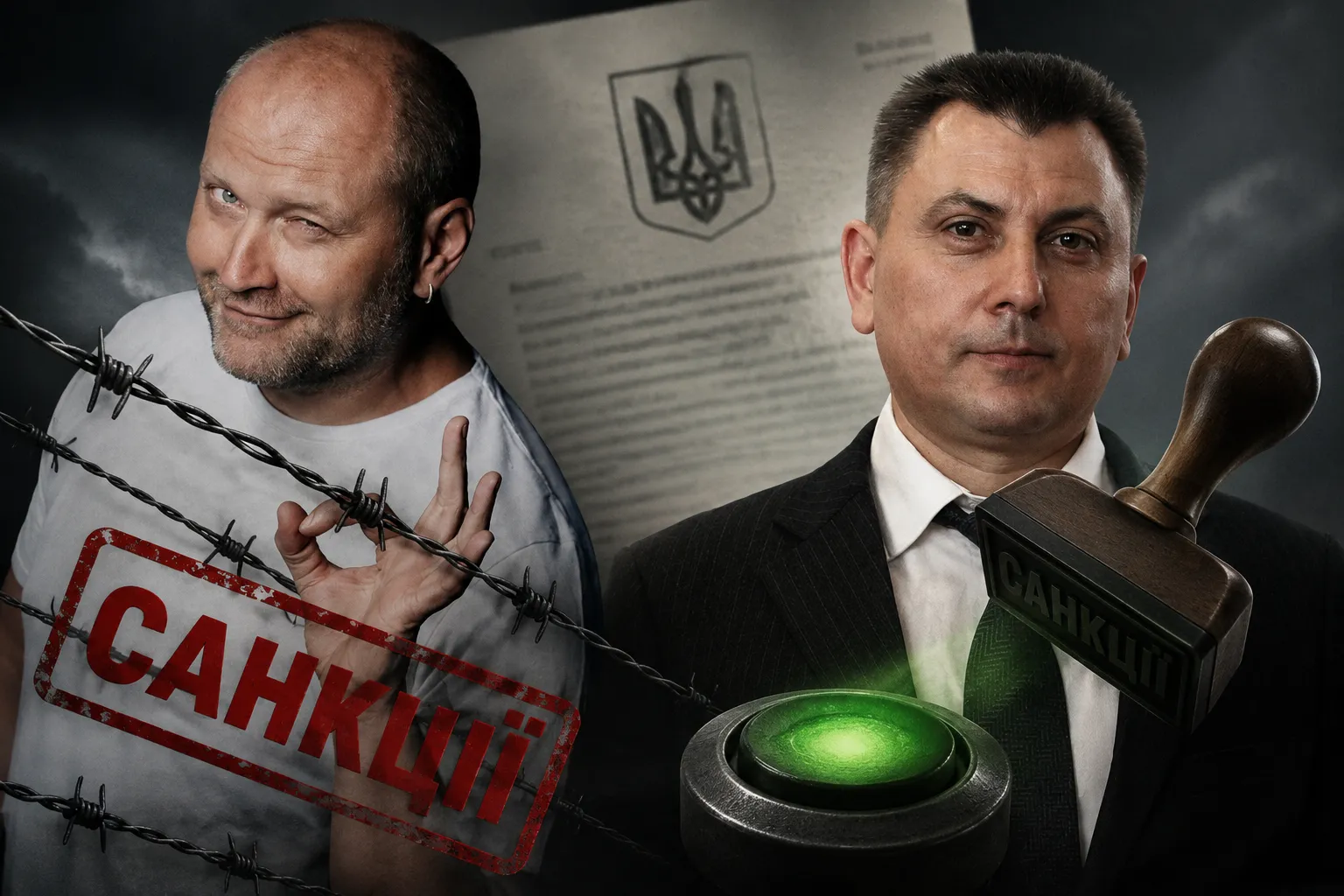
Sanctions were imposed on Boryslav Bereza to spare Bogdan Pukish—a Russian passport holder whose company allegedly supplied defective mortar rounds to the Ukrainian Armed Forces worth hundreds of millions of hryvnias—from restrictions — Former Member of Parliament Boryslav Bereza stated that, according to his sources in the Office of the President, the sanctions against him may have been part of an agreement to lift restrictions against Bohdan Pukish.
Berezha himself published details of this secret operation on his Facebook page. According to him, his own sources—insiders at the Presidential Administration—provided him with comprehensive evidence and a timeline of the conspiracy.
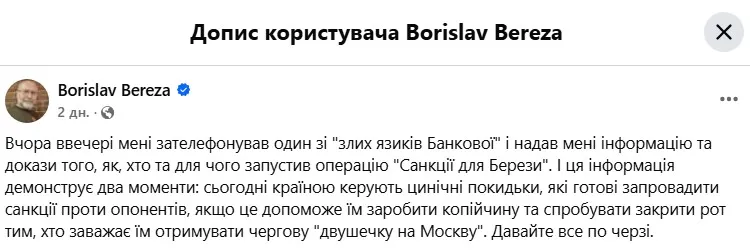
As Bereza notes, the story began in early May 2026, when, on the orders of Volodymyr Zelenskyy, the National Security and Defense Council (NSDC) imposed sanctions against former Presidential Office head Andriy Bohdan. In an effort to demonize Bohdan in the media and add him to the list of individuals with “Russian ties,” Bankova hastily added Bohdan Pukish to that list, whom the Office of the President directly and officially identified as a “partner and associate of sanctioned Viktor Medvedchuk.” Pukish’s assets were frozen for a period of ten years. However, this move by officials at the Office of the President derailed the large-scale financial plans of entirely different influential groups that profit from defense contracts.
What Made Bohdan Pukish Famous
Bogdan Pukish’s name became widely known following a scandal involving 120,000 Ukrainian-made 120-mm mortar rounds, which, according to investigations, were found to be unfit for use and could pose a danger to Ukrainian troops.
In May 2025, journalists published an investigation into substandard ammunition allegedly manufactured at the Pavlohrad Chemical Plant. Following this, law enforcement officials reported the arrest of company officials and representatives of the Ministry of Defense who were responsible for accepting the products.
According to journalistic investigations, among the suppliers of components for this ammunition was the private enterprise “Vestkhim,” which is linked to Bohdan Pukish. It was reported that the company allegedly supplied casings and other components for mortar shells.
It was also noted that “Westhim” had been involved in fulfilling defense contracts for several years, and the total value of its deliveries could have reached 667 million hryvnias.
Open sources also contain information that in 2012, Bohdan Pukish allegedly coordinated the activities of the “Ukrainian Choice” movement in Ivano-Frankivsk Oblast, which was founded by Viktor Medvedchuk.
In addition, information circulated in the public sphere that Pukish held a Russian passport, which, according to the authors of these reports, could indicate his citizenship of the Russian Federation.
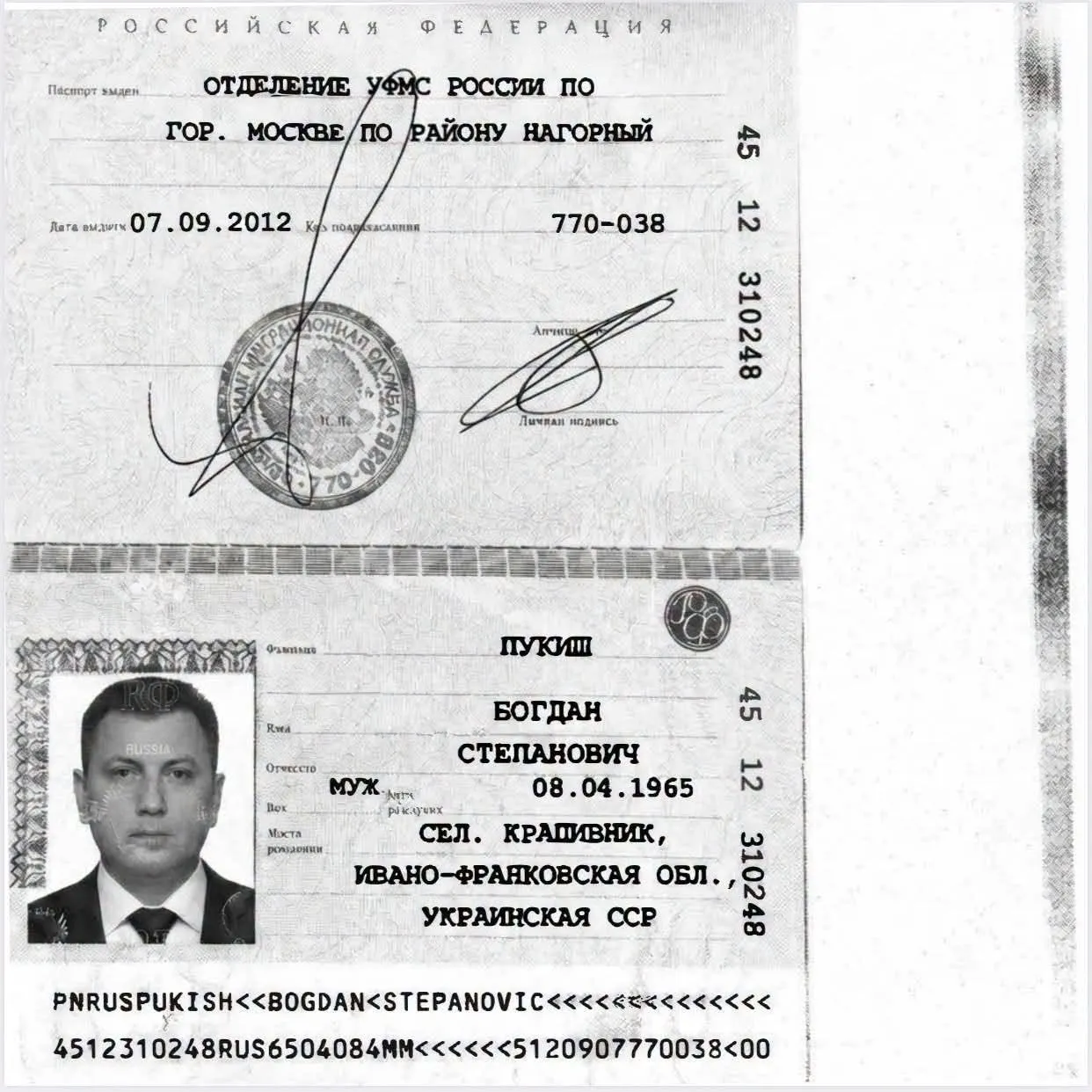
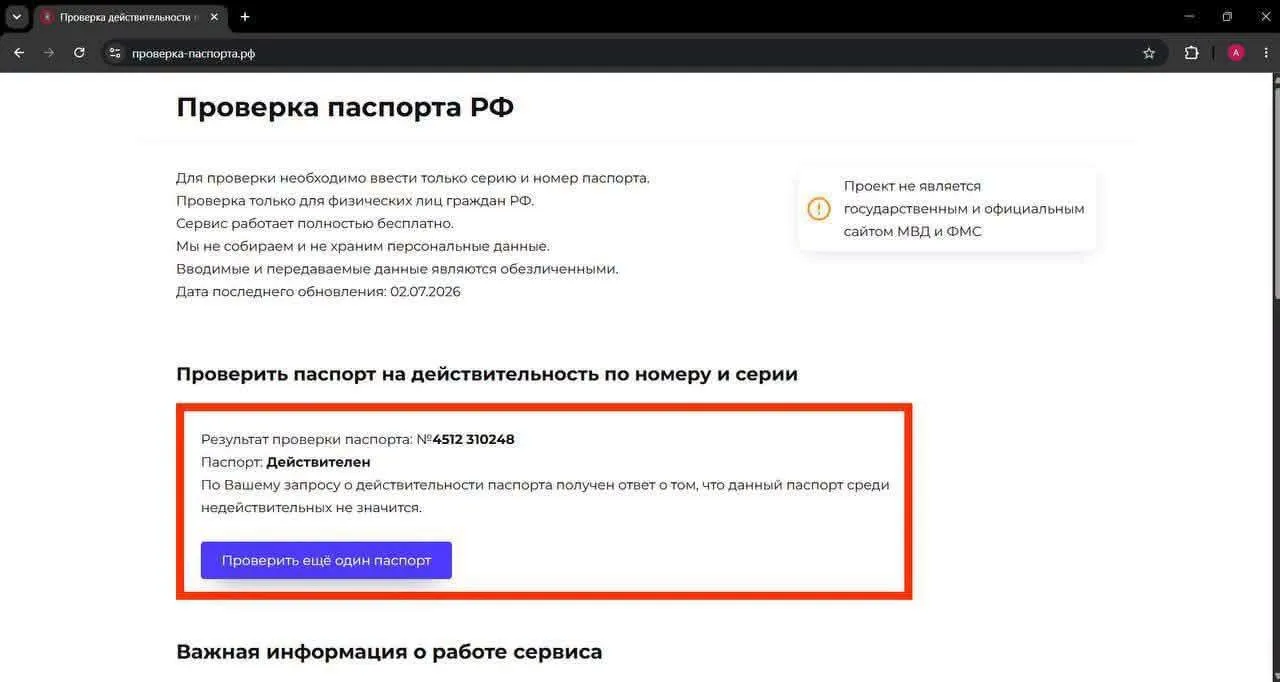
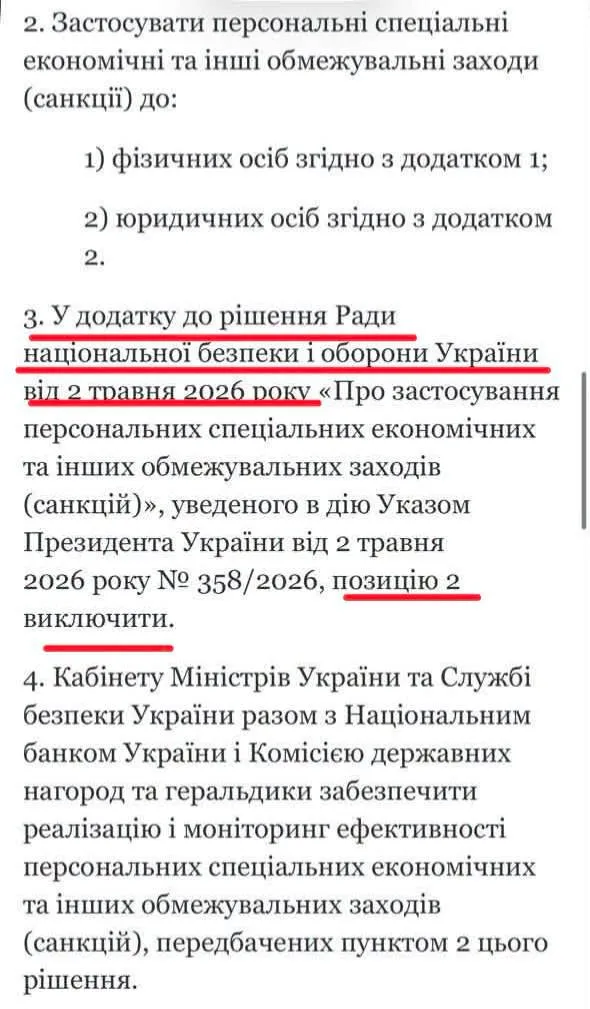
Photos and screenshots from Boryslav Bereza’s Facebook page
Despite this “flurry” of compromising material, in June 2026, information leaked to the media that there were plans to lift sanctions against Pukish due to the interests of businessman Stilerman and his company Firepoint, as well as Defense Minister Rustem Umerov, both of whom are linked to the “Midas” case. Informal control over these companies is attributed to “Servant of the People” MP Fedir Venislavskyi, who had previously actively defended the manufacturers of defective mines and accused Ukrainian Armed Forces soldiers of “clumsiness.”
The Sanctions Gambit
Berez claims that, according to his sources, a conversation took place after one of the meetings of the Supreme Commander-in-Chief’s Headquarters, during which the issue of sanctions was allegedly discussed. There is currently no independent confirmation of this information. Allegedly, the final agreement to save Pukish was reached directly during a private conversation between Volodymyr Zelenskyy, Umerov, and Stilerman. To lift sanctions against the holder of a Russian passport and avoid a barrage of public criticism, lobbyists allegedly proposed a diversionary tactic to Zelenskyy—simultaneously imposing sanctions against Bereza, who had long irritated the Presidential Office with his criticism. The main argument that supposedly convinced Zelenskyy was that such a blow against Bereza on the eve of former Commander-in-Chief of the Armed Forces of Ukraine Valery Zaluzhny’s birthday would serve as a painful “greeting” for the general.
The result of this conspiracy was the decree of the President of Ukraine dated July 7, 2026, by which Volodymyr Zelenskyy lifted the sanctions against Medvedchuk’s ally Pukish and imposed them on Boryslav Bereza.
Why would long-range weapons manufacturer Denis Shtilerman personally intervene in the matter of sanctions against Bohdan Pukish—a man linked to Viktor Medvedchuk and accused of holding a Russian passport? According to Boryslav Bereza’s account, the answer is simple: money and business interests.
According to this version, FirePoint needed specific chemical products and production facilities controlled by companies linked to Pukish. After the NSDC imposed sanctions, any legal transactions with these entities became virtually impossible. That is precisely why, Bereza claims, the issue was resolved not at the level of business negotiations, but at a much higher level.
Organizing such a large-scale exchange and lifting restrictions on a person with a Russian passport directly through the Supreme Commander-in-Chief’s Headquarters is no simple task, but it is entirely within the capabilities of the Umerov-Shtilman duo, who oversee the country’s most expensive defense programs.
A Close Look at “Elektronika”: How Bankova’s Chief Designer Got Tangled Up in Billions, Offshore Accounts, and His Own Explanations
However, the story of Denis Shtilerman himself raises just as many questions as that of Bohdan Pukish.
At meetings of the parliamentary Temporary Investigative Commission, the head of FirePoint—known in the defense sector by the call sign “Electronics”—presented his company as one of the driving forces of the Ukrainian defense industry. He spoke about the “Freya” missile defense system, the long-range FP-1 missiles, cooperation with European partners, and successful tests attended by representatives of the U.S. Embassy.
However, when representatives of anti-corruption organizations, members of parliament, and heads of government agencies took the floor, entirely different claims were made about FirePoint.
The Anti-Corruption Action Center’s take: billions in funding without the promised results
Vitaliy Shabunin, head of the Anti-Corruption Action Center, questioned the effectiveness of state support for FirePoint.
According to him, this particular company received funding that exceeded the combined budgets of several of its closest competitors. At the same time, the country never saw the publicly announced result—the mass production of Ukrainian ballistic missiles.
“The President of Ukraine publicly declared that by the end of last year, the army was supposed to receive 3,000 domestically produced ballistic missiles. The army does not have these missiles. Specialized defense publications have documented only three or four confirmed instances of their combat use,” Shabunin stated.
According to him, at the same time, FirePoint was negotiating the sale of a stake in the company to an investment fund from the UAE for approximately $300 million.
NABU: $60,000 Drones and the “Midas” Case
Equally high-profile questions arose following the release of materials from a NABU criminal investigation known as the “Midas” case.
In particular, recordings of conversations discussing the financing of FirePoint projects surfaced in the public domain.
Shtilerman himself explained the high cost of the long-range FP-1 by citing its expensive imported components, claiming that a single antenna alone costs about $16,000.
However, as participants in the TSK meeting claimed, the investigation materials indicate a completely different cost estimate—about $10,000 per unit. There were also allegations that the number of drones produced had been overstated and that the contracts were exceptionally profitable.
It was also mentioned that FirePoint voluntarily returned 20 million hryvnias to the state, which was described as excess profit.
AMCU: Why the Deal with an Arab Investor Was Blocked
Another incident involved the sale of a stake in FirePoint to an investor from the United Arab Emirates.
Shtilerman publicly stated that the Antimonopoly Committee was unjustifiably blocking the investment.
However, AMCU Chairman Pavlo Kyrylenko explained a different position. According to him, FirePoint had previously acquired a Ukrainian company that manufactures unique engines for military equipment. Therefore, the sale of the entire company to a foreign investor would automatically mean the transfer of control over these technologies as well.
“I asked directly: if a foreign entity were to buy the entire company tomorrow, what guarantees are there that these technologies would serve Ukraine’s interests rather than being diverted to other markets?” Kirilenko noted.
According to him, after the AMCU requested additional guarantees to protect national interests, the investors did not pursue the deal further.
A Past That Also Raised Questions
At the TSC meeting, questions were also raised about Denis Stilerman’s background. In particular, representatives of the Center for Political and Constitutional Reforms stated that until 2008, he held Russian citizenship, worked in Russia, and had been attempting to reinstate his Russian passport for a long time.
Another issue concerned the meetings of the National Security and Defense Council (NSDC). After Stilerman claimed to have participated in them, the NSDC officially stated that he had not attended its meetings.
If the facts disclosed by Boryslav Bereza are confirmed, this would mean that Ukraine’s sanctions policy could be used not only as an instrument of national defense but also as a mechanism to serve private interests. And then the main issue will no longer be the names of Pukish, Stilerman, or Bereza, but rather the question: who actually makes the decisions that the President merely formalizes into an official decree?


