
The family of a fallen soldier won a court ruling awarding them 15 million hryvnias
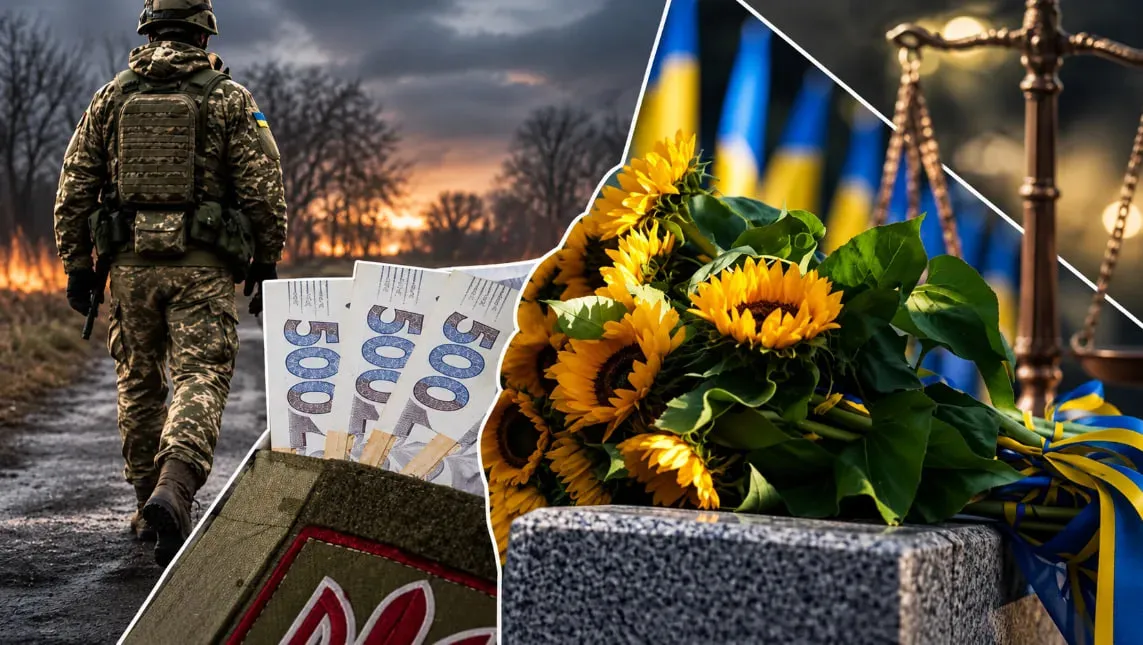
The family of a soldier who died from carbon monoxide poisoning while on a combat mission had to go to court to secure a payment of 15 million hryvnias. The Ministry of Defense refused to grant compensation, arguing that the soldier died as a result of an accident, not a combat injury.
However, the courts ruled in favor of the family. The decisive argument was that the soldier died while carrying out a combat mission, and the connection between his death and the defense of the homeland had been officially established.
The Eighth Administrative Court of Appeals upheld the decision to award the family a one-time financial benefit of 15 million hryvnias, taking into account previously paid amounts. Subsequently, the Ministry of Defense attempted to challenge the decision in the Supreme Court, but cassation proceedings were never initiated.
A servicemember died from carbon monoxide poisoning at a stronghold
As established by the court in Case No. 460/20045/25, the man was mobilized into the Armed Forces of Ukraine. He served as a platoon commander in an infantry company and participated in operations to defend Ukraine in the Bakhmut district of Donetsk Oblast.
The servicemember died while performing his military duties near the village of Kalynivka in the Bakhmut district.
According to the forensic medical examination, the cause of death was carbon monoxide poisoning.
An official investigation established that the soldier, along with other service members, was in the basement of a private home within the company’s strongpoint. They died as a result of poisoning from the exhaust fumes of a self-contained diesel heater.
Based on the investigation’s findings, the unit’s command recognized as proven the fact that the servicemen died while performing a combat mission and defending their homeland. The accident was also recognized as related to the performance of military duties.
In addition, the 16th Regional Military Medical Commission determined that the injury sustained as a result of accidental carbon monoxide poisoning, which led to the servicemember’s death, and the cause of his death were related to the defense of the homeland.
The family received financial assistance, but not 15 million hryvnias
Following the servicemember’s death, his wife, minor daughter, father, and mother submitted applications to the Ministry of Defense of Ukraine requesting a one-time cash benefit.
The ministry granted them the payment in accordance with the general procedure provided for by the Law of Ukraine “On Social and Legal Protection of Servicemembers and Members of Their Families” and Cabinet of Ministers Resolution No. 975.
The amount of the benefit was 750 times the subsistence minimum for able-bodied persons, as established as of January 1 of the year of the servicemember’s death. The funds were distributed equally among the four recipients.
However, the family members believed they were entitled to a larger amount—15 million hryvnias—as provided for by Cabinet of Ministers Resolution No. 168 for the families of military personnel killed during martial law.
They submitted the relevant applications to the Ministry of Defense.
However, the ministry’s commission denied the request for assistance under Resolution No. 168.
Disagreeing with this decision, the family members appealed to the administrative court.
Why the Ministry of Defense Refused to Pay 15 million UAH
The Rivne District Administrative Court ruled in favor of the family. It found the Ministry of Defense commission’s decision to be unlawful and ordered that 15 million hryvnias be granted and paid to the family members of the deceased in equal shares, taking into account amounts previously paid.
The Ministry of Defense appealed this decision.
The ministry’s main argument was that the soldier’s death resulted from accidental carbon monoxide poisoning.
The Ministry of Defense acknowledged the existence of a military medical commission’s conclusion regarding a causal link between the injury and the defense of the homeland. At the same time, the ministry insisted that accidental poisoning does not constitute a wound or combat injury within the meaning of Resolution No. 168.
For this reason, in the defendant’s view, the family was not entitled to benefits in the amount of 15 million hryvnias.
The Ministry considered that it had properly fulfilled its obligations by awarding the family a payment in accordance with the general rules—in the amount of 750 times the subsistence minimum.
Why the Court Disagreed with the Ministry of Defense’s Position
The Eighth Administrative Court of Appeals, upon reviewing the case, rejected the Ministry’s arguments.
The court noted that, in connection with the imposition of martial law, the legislation established special guarantees of social protection for military personnel and their family members.
In particular, paragraph 2 of Cabinet of Ministers Resolution No. 168 provides for the payment of a one-time cash benefit of 15 million hryvnias to the families of deceased military personnel.
In addition, Part 3 of Article 16-2 of the Law “On Social and Legal Protection of Military Personnel and Their Families” stipulates that the amount of the one-time benefit in the event of the death of a military servicemember during a period of martial law is established by the Cabinet of Ministers of Ukraine.
The court also drew attention to the practice of the Supreme Court.
In particular, in cases No. 160/20229/22 and No. 440/3321/23, the Supreme Court formulated a legal approach regarding the circumstances under which family members of a deceased military servicemember are entitled to benefits under Resolution No. 168.
The following factors are particularly relevant:
- the death of a service member during martial law;
- the connection between the death and direct participation in combat operations or in measures to ensure national security and defense, repel and deter armed aggression;
- the military personnel’s presence directly in the area where the relevant measures were carried out during the period they were in effect;
- or death resulting from a wound, concussion, injury, or disability sustained under such circumstances during martial law, no later than one year after they were sustained.
In the case considered by the appellate court, it was documented that the second lieutenant participated in measures to ensure Ukraine’s defense, was present in the area where the combat mission was being carried out, and died while performing his military duties.
Furthermore, based on the results of an official investigation, the command recognized the fact of death while performing a combat mission as proven, and the military medical commission established a causal link between the injury that led to death and the defense of the homeland.
The court also noted that the servicemember’s death was not related to his commission of a criminal or administrative offense, actions while intoxicated, or the intentional infliction of bodily harm upon himself.
Thus, the established circumstances refuted the Ministry of Defense’s arguments that the family had no right to receive assistance under Resolution No. 168.
In fact, the court reasoned that the death of a servicemember as a result of an accident does not in itself preclude the family’s right to 15 million hryvnias, provided that the circumstances of the death as prescribed by law and its connection to the defense of the Motherland have been established.
At the same time, this does not imply an automatic right to such a payment in the event of any accident during military service. The specific circumstances of the death and their documentary evidence remain decisive.
What the Court of Appeals Decided
The panel of judges concluded that the Rivne District Administrative Court correctly established the factual circumstances of the case and provided them with the appropriate legal assessment.
The Ministry of Defense’s arguments did not refute the findings of the trial court.
Therefore, the Eighth Administrative Court of Appeals dismissed the Ministry of Defense’s appeal and upheld the decision of the court of first instance.
Thus, the court decision remained in force, whereby:
- declared unlawful the Ministry of Defense commission’s refusal to grant assistance under Resolution No. 168;
- the Ministry of Defense was ordered to grant and pay a one-time benefit in the amount of 15 million hryvnias to the wife, minor daughter, father, and mother of the deceased servicemember;
- stipulated that the amount be distributed among the beneficiaries in equal shares, taking into account funds previously paid.
The Supreme Court denied the Ministry of Defense’s request to open cassation proceedings
The Ministry of Defense attempted to appeal the decisions of the lower courts to the Supreme Court; however, the Administrative Court of Cassation refused to open cassation proceedings.
In rendering this decision, the Supreme Court noted that the dispute regarding the award of social benefits falls under cases of minor complexity, which may be reviewed on cassation only in exceptional cases provided for in Article 328 of the Code of Administrative Procedure of Ukraine.
The Ministry of Defense cited the fundamental importance of the case for establishing uniform judicial practice and the significant public interest involved. However, the Supreme Court found that the ministry had not adequately substantiated the existence of such circumstances.
Consequently, cassation proceedings were not initiated, and the decisions of the lower courts remained in force. At the same time, the Supreme Court did not review the dispute on its merits but rather ruled on the admissibility of the cassation appeal.
This was reported by a legal and judicial newspaper.
Marchenko stated that no delays in payments to military personnel are expected by the end of the year.
Ukrzaliznytsia explained the payments to management in light of cuts to personnel expenses.
Heating season subsidies for 2026–2027: to whom the Pension Fund of Ukraine will automatically transfer payments.




