
Ukraine could receive €17 billion from the EU by the end of the year, provided it implements reforms
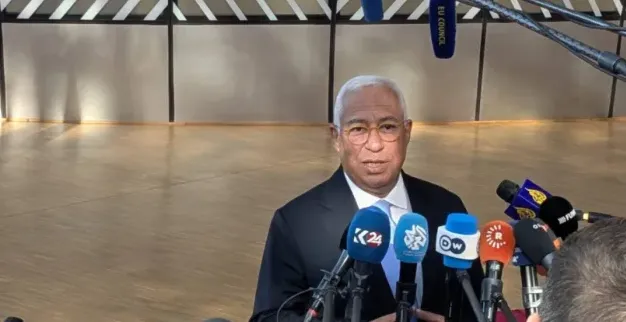
Ukraine is set to receive 17 billion euros in budgetary support from the European Union by the end of 2026, but these funds will be contingent on the implementation of necessary reforms. This was stated by European Council President António Costa during a speech at the European Parliament in Strasbourg. He also assured that the EU would participate in financing Ukraine’s needs in 2027 and called on international partners to increase their assistance.
European Council President António Costa addressed the European Parliament in Strasbourg, where he summarized the results of the recent European Council meeting. During his speech, he reaffirmed the European Union’s readiness to continue providing financial support to Ukraine and to help it counter Russian aggression.
According to Costa, Ukraine has already received 16 billion euros this year as part of the defense component of the loan. The EU plans to provide an additional 17 billion euros in budget support. This money is intended to help Ukraine cover government expenditures, but its disbursement is contingent on the implementation of necessary reforms. “Our determination to support Ukraine and its people is stronger than ever,” Koshta stated.
He did not specify in his speech a complete list of reforms on which the disbursement of funds will depend. Therefore, this refers to a general condition for financial support, rather than confirmation that Ukraine has already met all the necessary requirements to receive the funds.
The EU promises to continue helping Ukraine in 2027
Kosta also stated that the European Union will actively participate in financing Ukraine’s needs next year. According to him, European institutions and member states must continue to provide Ukraine with the necessary support.
The President of the European Council noted that Europe and its member states currently account for about 80% of external aid to Ukraine. At the same time, he called on other countries and international partners to become more actively involved in providing funding. “International partners must also step up and intensify their efforts,” Koshta emphasized.
The need for foreign aid remains critical for Ukraine, which continues to resist the Russian invasion. Financial support from partners allows Ukraine to cover government expenditures and direct its own resources toward the country’s priority needs. At the same time, Koshta’s statement regarding the EU’s readiness to provide funding to Ukraine in 2027 does not mean that all future payments have already been finalized. Their amounts and mechanisms will depend on further decisions by European institutions and member states.
Koshta called for increased pressure on Russia
Koshta devoted a separate part of his speech to Russian aggression and European security. He stated that the pursuit of peace must be accompanied by pressure on Moscow, since Russia’s actions, in his assessment, indicate further escalation. “Any sincere efforts aimed at achieving peace are important. However, Russia’s actions, on the contrary, indicate an unacceptable escalation,” said the President of the European Council.
He also mentioned Russia’s hybrid operations, acts of sabotage, and violations of European airspace and territorial waters. According to Koshta, these threats demonstrate how closely the security of Ukraine is linked to the security of other European states. “Ukraine’s security is Europe’s security. They are inextricably linked,” he emphasized.
In this context, the European Union will continue to implement its defense strategy. It aims to strengthen European countries’ ability to protect their citizens and critical infrastructure from external threats.
The EU supports Ukraine’s accession to the Union
Cošta also confirmed that the European Council is committed to supporting Ukraine on its path to EU membership. He emphasized that the EU’s goal remains to achieve a just and lasting peace that respects Ukraine’s sovereignty and security. “Our goal remains unchanged—a just and lasting peace on terms that respect Ukraine’s sovereignty and security,” said Costa.
Thus, the European Council President’s speech conveyed three key messages for Ukraine: financial support, the continuation of aid through 2027, and the EU’s readiness to strengthen its own defense and increase pressure on Russia. At the same time, part of the funding depends on the implementation of reforms, and future disbursements will require further decisions by European institutions. This was stated by European Council President António Costa while speaking at the European Parliament in Strasbourg, where he summarized the results of the recent European Council meeting.
Hungarian Prime Minister Péter Magyar stated that negotiations on Ukraine’s accession to the European Union could take 15–20 years.
President Volodymyr Zelenskyy signed a decree approving the National Human Rights Strategy, which takes into account Ukraine’s course toward European integration. The document is intended to help the state fulfill its obligations within the framework of negotiations on accession to the European Union.




