
Communities may run out of money for medicine, salaries, and heating
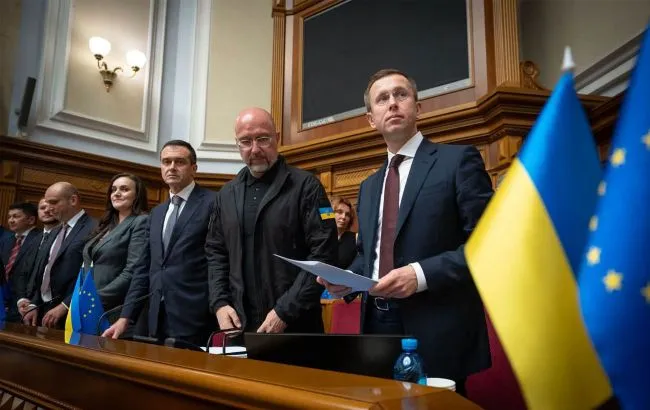
In 2027, nearly 22 billion hryvnia may be withdrawn from local budgets, while spending on certain Cabinet of Ministers agencies is set to increase, according to former official Heorhiy Tuka. He also states that the suspension of payments is already creating problems for communities—ranging from the purchase of medicines and the payment of salaries to preparations for the heating season. Tuka believes that such decisions threaten the financial independence of local self-government.
Georgiy Tuka, former head of the Luhansk Regional Military-Civilian Administration and former Deputy Minister for Temporarily Occupied Territories, has criticized the government’s budget policy. According to him, communities are already facing restrictions on making payments, and the draft state budget for 2027 calls for the withdrawal of 21.95 billion hryvnias from local budgets.
He noted that he has been monitoring the situation surrounding so-called “budget optimization” for quite some time. “I have been observing the situation surrounding so-called ‘budget optimization’ for quite some time,” he wrote.
According to Tuka, the government first restricted critical payments to local communities and now plans to cut the financial resources available to them next year. At the same time, he asserts, the draft budget provides for increased spending on certain agencies of the Cabinet of Ministers.
Expenditures for one of the Cabinet’s departments could rise by 6 billion hryvnias
Tuka drew attention to the funding of the Economic and Financial Department of the Cabinet Secretariat. According to the data he provided, its expenditures in the draft budget are set to increase by 6 billion hryvnias—nearly one and a half times the current amount. In total, the draft budget allocates 83.3 billion hryvnias for the maintenance of government agencies, excluding law enforcement agencies.
Tuka believes that, given the challenges in funding local needs, such priorities raise questions. He also mentioned the government leadership’s public activities and the renovation of the Cabinet’s offices. “This results in a strange set of priorities: when it comes to the survival of cities, the state demands that we tighten our belts, but when it comes to the comfort of officials and their public image—budget constraints suddenly take a back seat,” the former official stated.
At the same time, the amounts cited relate to the draft budget. By themselves, they do not mean that all planned expenditures have already been approved or that funds have already been withdrawn from local budgets.
What problems, according to Tuka, are arising in communities
The former official asserts that communities in various regions of Ukraine are feeling the effects of financial constraints. According to him, this involves delays in payments needed to keep hospitals, utility services, and public transportation running. Tuka highlighted the scale of the problem and cited the figure of 218 communities which, he claims, have faced such difficulties. “Just think about it—218 communities. Behind these dry figures lies the daily lives of hundreds of thousands of people who, on the eve of winter, are left without water, medicine, and heat,” he wrote.
Among the examples Tuka cited was Nizhyn, where, he said, intensive care units cannot purchase critically needed medications due to blocked payments. In Ternopil and Kalush, he claims, there are risks regarding preparations for the heating season. In Lviv, he said, payments for gas to the heating utility are being delayed.
Tuka also reported problems with public transportation. According to him, buses have stopped running in Ivano-Frankivsk, Kropyvnytskyi, and Kamianets-Podilskyi. In Bila Tserkva and Lviv, he said, salary payments to critical infrastructure workers are being delayed. He specifically mentioned the Zhvanets community, where, according to the former official, problems have arisen with garbage collection.
Another problem concerns the cleanup following Russian attacks. Tuka stated that Konotop and Lviv lack the funds to clear debris after missile strikes and repair the roofs of damaged buildings. The examples cited are Tuka’s assertions. His post does not include separate comments from all the communities mentioned that would allow for independent verification of each of these cases.
Tuka questioned the government’s explanation
According to the former official, the government explains financial constraints by the need to save funds for the army’s needs. However, Tuka believes this does not explain the increase in spending on the maintenance of state agencies amid difficulties in funding local needs.
“But it seems strange: they’re taking money away from communities for their most basic needs, using the front lines as an excuse, while at the same time increasing funding on Hrushevsky Street, furnishing offices, and creating comfortable conditions for officials. As we know, even during a plague, not everyone gives up feasting,” he wrote.
According to Tuka, the problem lies not only in the total amount of funding but also in whether communities can access their own funds in a timely manner. Even if the money is in the accounts, delays in processing payments can prevent them from paying for medicine, utilities, salaries, and other necessary expenses.
Tuka warned of a threat to decentralization
Tuka paid particular attention to how decisions regarding local budget payments are made. He claims that critical payments may depend on manual approval by officials. “First, the country saw the ‘Mindich barrier,’ and now it seems the ‘Koretsky barrier’ has emerged. When critical payments by local communities depend on the manual decision of an official who, at his own discretion, determines what to approve and what to block, this is no longer simply budgetary policy,” he stated.
According to Tuka, local authorities must fulfill specific obligations to residents. These include purchasing medicines for hospitals, paying salaries to utility workers, supporting public transportation, preparing for the heating season, and repairing buildings damaged by Russian strikes. “And none of this can wait until someone in the capital decides whether to authorize the next payment,” the former official emphasized.
He believes that communities’ dependence on decisions by the central government could weaken local self-government. If local authorities cannot independently cover even urgent needs, it becomes more difficult for them to fulfill their obligations to residents. “Because when money is available, but the ability to use it depends on manual approval from above, local self-government turns into a beggar. And communities that cannot independently fulfill even critical obligations lose their independence in making decisions for which they are accountable to their residents. In effect, this amounts to the destruction of decentralization in the country,” Tuka concluded.
Thus, Heorhiy Tuka links budget constraints and payment delays to risks for the functioning of communities and their financial autonomy. At the same time, the estimates and examples he provided need to be compared with official data from the government, the Treasury, and local government bodies. Tuka wrote about this on Facebook.
On the night of October 23, drones attacked occupied Luhansk. After the attack, the city experienced power outages.
Dozens of explosions were heard in the temporarily occupied city of Luhansk during the drone attack. According to reports, the building of the former “Ukrtelecom” was hit.




