
85 young flamingos flew from Turkey to the Odesa region
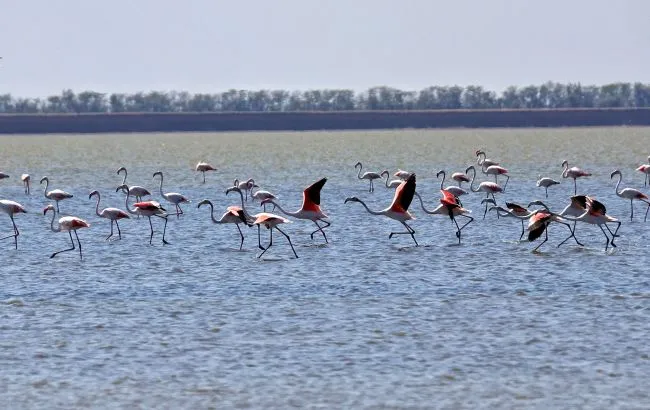
A flock of 85 young pink flamingos has arrived at the Tuzly Estuaries National Nature Park in the Odesa region. The birds arrived from Lake Tuz in Turkey, where approximately 12,800 chicks were born in 2026—the highest number in the last five years. Park officials hope the flamingos will be able to find food here and rest peacefully during their migration.
85 young pink flamingos were spotted in mid-October in the Tuzlivski Limany National Nature Park. The birds flew in from Lake Tuz in Turkey and are currently in the protected area. Ivan Rusev, head of the national park’s research department, reported their arrival. According to him, the flock may have been led by adult flamingos that had previously visited the Ukrainian coast. They may have remembered the area as a place where they can find food and rest. However, this is the scientist’s assumption, not a confirmed migration route for each bird.
The arrival of such a flock also attracted attention because, in recent years, flamingos have been unable to successfully raise their young in the Tuzly Estuaries. The birds continue to arrive on the Ukrainian coast, but conditions for their breeding remain challenging. Park experts attribute this, in particular, to the noise from the war, which may disturb the birds during nesting. Therefore, this latest arrival does not indicate that flamingos have already begun breeding in Ukraine, but rather marks a new encounter with young birds that have arrived here from Turkey.
12,800 flamingos were born at Lake Tuz in Turkey
Lake Tuz in central Turkey is the home of this flock. It is known as one of the most important nesting sites for greater flamingos. In 2026, approximately 12,800 chicks were born there—the highest number in the last five years, according to data cited by the national nature park. The first chicks hatched in early June, and by late August, the young birds had already begun to fly and leave the nesting site. Some of them headed north and eventually reached the Ukrainian coast.
Abundant spring rainfall contributed to a successful breeding season on Lake Tuz. Thanks to the rain, the lake maintained sufficient water levels, and the flamingos had more food. One of the main food sources for these birds is the small crustacean Artemia, specifically Artemia salina. They live in saltwater bodies and are part of the flamingos’ diet. When there is enough water and food, the birds have more favorable conditions for raising their chicks. At the same time, the success of nesting is also influenced by measures to protect the areas where the birds raise their young.
Why Flamingos Cannot Regularly Raise Chicks in the Odesa Region
The Tuzly Estuaries are an important natural area in the south of the Odesa region. This system of estuaries, shallow waters, and wetlands serves as a stopover for various species of migratory birds. For flamingos, such places can be ideal for feeding and resting during migration. However, the availability of food and water alone is not enough for the birds to successfully raise their young: they also need relative tranquility and safe nesting sites. According to national park staff, the noise associated with Russia’s war against Ukraine is preventing flamingos from breeding in this area.
In 2023, the situation was different: at that time, flamingos successfully raised about 200 chicks in the Tuzly Estuaries. According to the national park, this was the only year since the start of the full-scale war when the birds were able to breed there. In subsequent years, this result could not be repeated. In 2024, in particular, the destruction of about 400 nests was reported, and in 2025, the birds were also unable to successfully raise their young. These circumstances demonstrate just how significantly changes in environmental conditions and human activity can affect the lives of wild animals.
Can the flamingos stay in the Tuzly Estuaries?
So far, there is no reason to believe that all 85 birds will remain in the Odesa region for long. Their appearance may be part of a migration during which young flamingos seek suitable places to feed and rest. If conditions are favorable, they may remain in the protected area for some time. However, their subsequent movements will depend on the weather, food availability, and other natural factors. Scientists speculate that adult flamingos who have previously visited this area may have shown the young birds the way to the Ukrainian estuaries. However, this is only a possible theory at this point, not a definitively established fact.
Why It’s Important Not to Disturb Pink Flamingos
The appearance of flamingos in the Tuzly Estuaries draws attention to the natural wealth of the Ukrainian coast. At the same time, it serves as a reminder that wild birds need safe conditions, especially during migration and nesting. People observing them should keep their distance, avoid trying to get close to the flock just to take photos, and refrain from making unnecessary noise. You should also avoid chasing the birds with boats or entering areas where they feed or rest. These simple rules help reduce stress for the animals and allow them to rest and regain their strength before continuing their flight.
The arrival of 85 young flamingos provided yet another opportunity to highlight the importance of protecting the Tuzly Estuaries. The birds reached the Ukrainian coast after a successful breeding season in Turkey, but their continued stay here will depend on conditions in their natural habitat. For scientists, this is also an opportunity to observe the migration and behavior of flamingos. And for everyone else, it serves as a reminder that even under challenging conditions, Ukraine’s natural world remains part of the wider world traversed each year by migratory birds. This information was reported by the Tuzly Estuaries National Nature Park.




