
The Kremlin is laying the groundwork for the collapse of negotiations with Ukraine
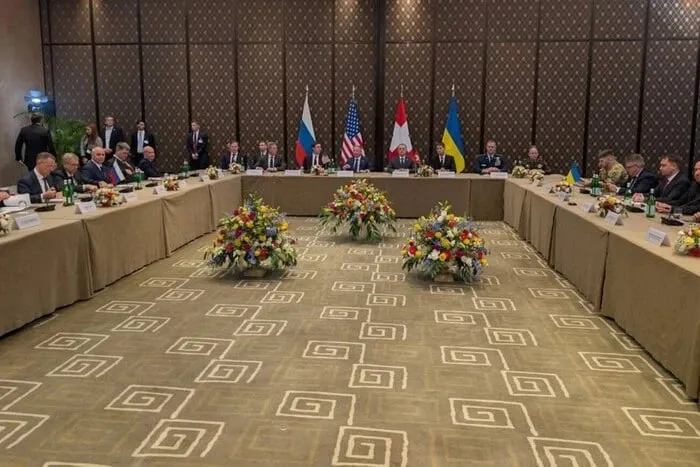
Analysts believe that Moscow is seeking to shift responsibility onto the United States if peace talks regarding Ukraine were to fail. In particular, the Kremlin is using tensions in the Middle East to shape a narrative that would allow it to portray the United States as responsible for the breakdown of negotiations and the obstruction of efforts to end the war.
This is reported with reference to a report by the Institute for the Study of War (ISW).
Experts drew attention to a statement by Russian Foreign Minister Sergey Lavrov, who sharply criticised United States policy following American‑Israeli operations against Iran. According to the Russian minister, Washington is allegedly trying to destabilise the Middle East and create divisions between Iran and the Gulf states. Lavrov also stated that Moscow is concerned that the United States is conducting military operations against countries with which it is simultaneously holding negotiations.
In this context, he mentioned strikes on Iran and Venezuela, as well as the war between Israel and Iran in 2025. In addition, the Russian diplomat claimed that the so‑called “spirit” of the United States–Russia summit in Alaska, which took place in August 2025, is gradually weakening.
Analysts from the Institute for the Study of War note that the Kremlin is using this vague term to create the impression that certain agreements exist between the United States and Russia. According to researchers, Lavrov is attempting to present himself as a relatively moderate voice within the Russian government. Experts say this rhetoric is aimed not only at an international audience but also at Russian society and Moscow’s allies.
The ISW emphasises that the Kremlin has long been trying to delay the negotiation process aimed at ending the war against Ukraine. At the same time, Moscow is forced to balance this tactic with the risk of new sanctions from the United States or other Western steps that could push Russia toward genuine negotiations.
According to analysts, the intensification of criticism of the United States by Russian officials after the start of American‑Israeli operations against Iran on 28 February may indicate that it is becoming increasingly difficult for the Kremlin to maintain a balance between relations with the United States and its own partners.
Experts believe that Moscow may use its current rhetoric to shift responsibility for a possible failure of negotiations on the war in Ukraine onto Washington in the future.
Earlier, analysts from the Institute for the Study of War also reported that the Kremlin plans to continue the war in Ukraine at least until September.
On the morning of 4 March, Russian occupying forces carried out a drone attack on Mykolaiv. According to preliminary data, one of the drones struck near a passenger railway carriage.
Over the course of the day, Russian troops attacked more than ten times with drones and artillery in the Dnipropetrovsk region, targeting the Kamianske, Synelnykove, Samarivskyi and Nikopol districts. Civilian infrastructure was damaged as a result of the strikes.
During the same period, Russian forces carried out 624 strikes on 36 settlements in the Zaporizhzhia region. Two people were injured following attacks on the Zaporizhzhia and Polohy districts.
In addition, Russian occupation forces struck the city of Chuhuiv in the Kharkiv region with a Geran‑2 type drone on the afternoon of 3 March.
It should also be recalled that Russia attacked Ukraine’s energy facilities, causing power outages.
In addition, Russia launched a drone attack on the Odesa region, damaging port infrastructure.




