
First impressions of residents of occupied Crimea following the fire at Wildberries
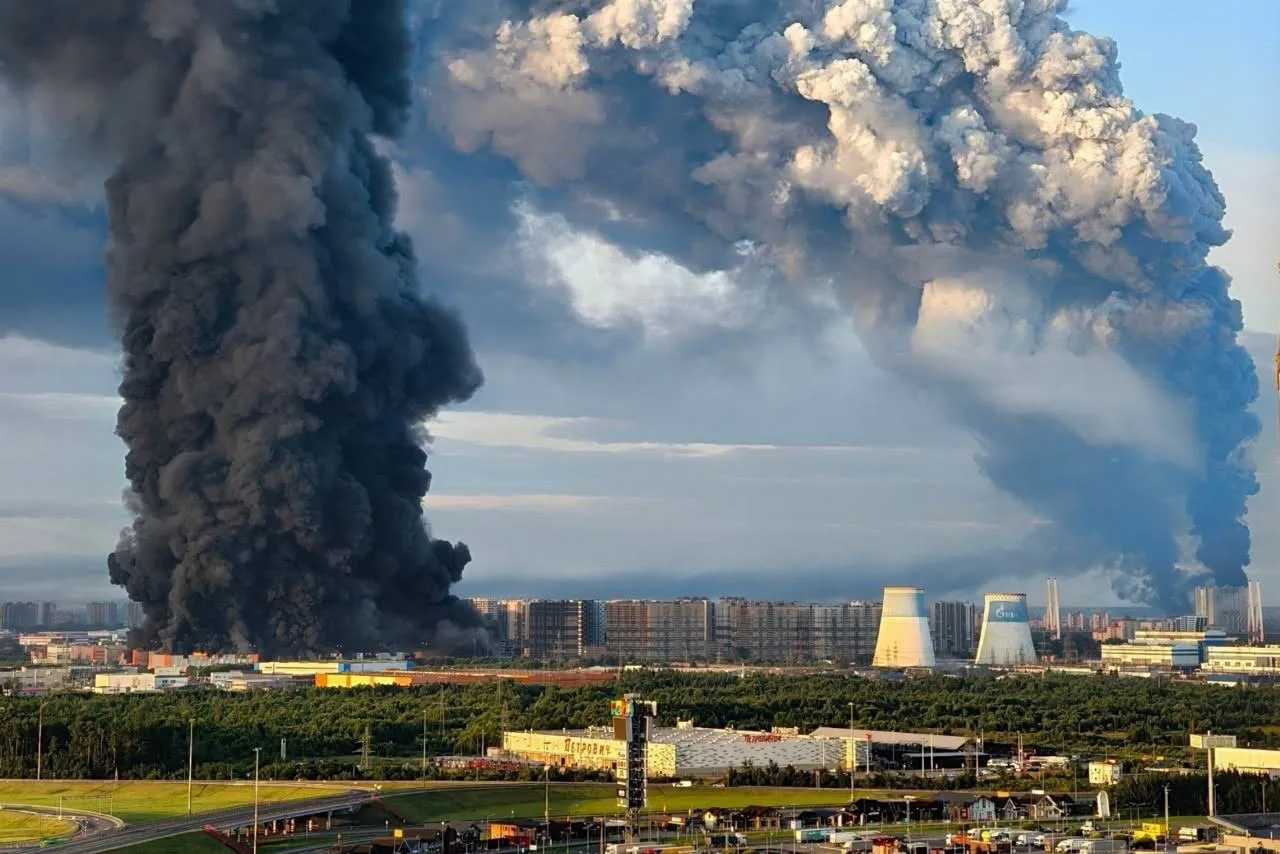
Crimeans viewed the first photos and videos of buildings engulfed in flames and panicked shopkeepers more as a spectacular sight—Moscow and Tambov are far away. The fires in Krasnodar and Nevinnomyssk made some people wary. And it was only the burned-down warehouse in Simferopol that brought many back to reality.
This is reported by journalists who gathered information from the Russian-occupied peninsula.
“I placed an order today; delivery is supposedly in three days. I don’t know how realistic that is: the Simferopol sorting center is still smoldering. So I find it hard to believe that it will actually take just three days. It’s clear that customers are leaving, so they won’t want to scare them away with long delivery times. But it’s precisely this unpredictability that’s stressful, because you can’t plan your next steps with any certainty,” complains a businesswoman from Sevastopol.
An employee at one of Wildberries’ pickup points in Kerch is also convinced that disruptions are inevitable. According to him, there used to be three large hubs serving the entire southern region, of which only the one in Rostov remains operational at this time. The Simferopol sorting center is a “second-tier” warehouse, but its shutdown will inevitably lead to disruptions throughout the entire system.
“In the south, the logistics network is currently operating under critical overload. Shoppers throughout Crimea should prepare for widespread delays, while sellers should brace for strict restrictions on receiving goods and rising logistics costs. After all, the Rostov hub isn’t elastic; many goods will be rerouted further into Russia,” the expert said, assessing the situation.
Further increases in logistics costs could be the last straw that breaks the camel’s back, sellers say. Because it’s simply becoming unprofitable to operate.
“First, they raised taxes. Then utility bills. In the spring, they nearly doubled the rent for production facilities. That’s the kind of support businesses get in Crimea. And it all started with fuel: raw material prices skyrocketed several times over. As for electricity, it’s a complete mystery—one minute it’s there, the next it’s gone. I’m left wondering whether to lay people off or pay them out of my own pocket now that production has stopped. And right at this wonderful moment, Wildberries comes along and says that I’ll be able to put half as much product up for sale, but I’ll have to pay almost twice as much to ship it to their warehouse. And this is despite the fact that even before the flights resumed, they had already started squeezing us with their extortionate fees for advertising and promotions,” complains a Simferopol entrepreneur who manufactures high-end furniture.
Another Crimean businessman notes that there is a problem more serious than rising production costs or limits on the amount of products accepted for sale. After all, no one guarantees compensation for losses to those whose goods burn up during yet another raid by Ukrainian drones.
“I have niche products that are difficult to sell offline. Natural herbal cosmetics aren’t the kind of thing you can find in just any supermarket, but people are eager to order them online. We stopped promoting our online store, social media, advertising, and customer support a long time ago because marketplaces are both cheaper and more convenient. “But if all of that goes up in smoke in a single day, I’ll be bankrupt. And now I have to choose—risk everything or go back to the old sales methods, which aren’t enough to cover my expenses,” laments the entrepreneur from Belogorsk.
However, not everyone has that choice. How many Crimeans have actually gone bankrupt or found themselves on the brink of bankruptcy following the fires in Simferopol, Krasnodar, and the Stavropol Krai remains a mystery. For many sellers, the remaining stock of “Wildberries” products is listed as out of stock in their personal accounts, and customer support provides no additional information. Many business owners say they’ve already mentally written off the products listed on the marketplace and are focusing all their efforts on minimizing losses.
“The losses are enormous. I had about three thousand items listed there, worth several million. And that’s just the cost of goods—there were also expenses for advertising, promotion, and credit obligations. Obviously, we won’t be working with ‘Wildberries’ anymore. Right now, we’re trying to ship out or sell off the remaining stock. But I have absolutely no idea where to go from here, because there definitely won’t be any compensation, and nobody cares about our problems. Thousands of people lost their capital, businesses, and jobs in a single day… And everyone acts as if that’s just the way it is,” says an indignant businesswoman from Feodosia, who lost more than half of her inventory in the July 22 fire in Krasnodar.
Pro-Russian Crimeans are genuinely surprised by their compatriots’ complaints and dismiss the burning warehouses as Ukrainian propaganda.
“Well, it’s a nice picture—plumes of smoke reaching the sky. So, a few metric tons of Chinese junk burned down—but what’s the point? Is that supposed to somehow stop the Russian missiles that are tearing Ukrainian cities apart day after day? Not a chance. They burned down ‘Wildberries’—we’ll just switch to ‘Ozon,’” says one of SEMAAAT’s interviewees from Simferopol.
The marketplace he mentions is the second-largest in Russia after “Wildberries.” However, there are issues with it in Crimea: “Ozon” doesn’t have its own sorting facility on the peninsula, and the fuel crisis and the risky route through the newly occupied regions have significantly increased delivery times that were already not exactly short.
“I ordered seeds at the very beginning of July. At first, the estimated delivery time was six days. Then they added five days on top of that. Then another five. Then five more. I checked today—they wrote that they’d added another five days. I’ve already missed the planting schedule. But if I’d ordered from ‘Wildberries,’ it probably wouldn’t have been any better,” says a farmer from the Krasnogvardeisky District.
Currently, 70 percent of all Crimean online sales take place through “Wildberries.” Most of the entrepreneurs surveyed by SEMAAT are convinced that as early as August or September, they’ll have to say goodbye to this marketplace.
Background
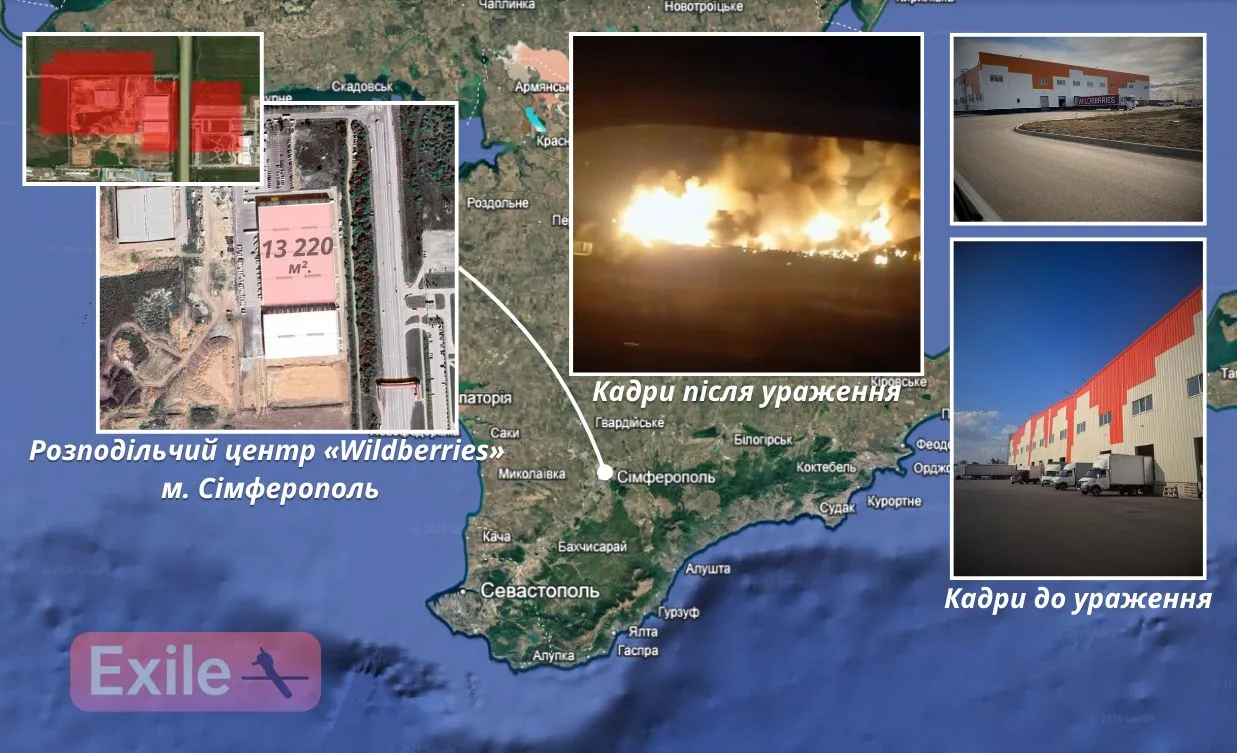
On the night of July 24, 2026, it was confirmed that Wildberries’ sole distribution center, located in the temporarily occupied Crimea in the city of Simferopol and covering an area of approximately 13,220 m², had been struck.
The attack caused a massive fire at the facility. Data from NASA’s FIRMS satellite system also indicates a fire. The company reported that personnel had been evacuated.
This is yet another blow to Wildberries’ logistics infrastructure over the past week, both in Russia and in the occupied territories.
The information was gathered by journalists from the Semaat.media project.
As a reminder, strikes by the Ukrainian Defense Forces on the warehouses of the Russian marketplace Wildberries could have caused Russia up to $2 billion in direct economic losses. This estimate was provided by the Estonian Defense Forces Intelligence Center.
The Russian marketplace Wildberries, which has recently come under attack by Ukrainian drones, has effectively become a platform for purchasing goods that can be used in warfare. The platform openly sells components for FPV drones, munition delivery systems, thermal imaging equipment, body armor, and other tactical gear.
St. Petersburg was attacked by drones, and Wildberries warehouses were set on fire.


