
The War Is Changing the Weather in Ukraine — Why Fire Clouds and Acid Rain Are Dangerous
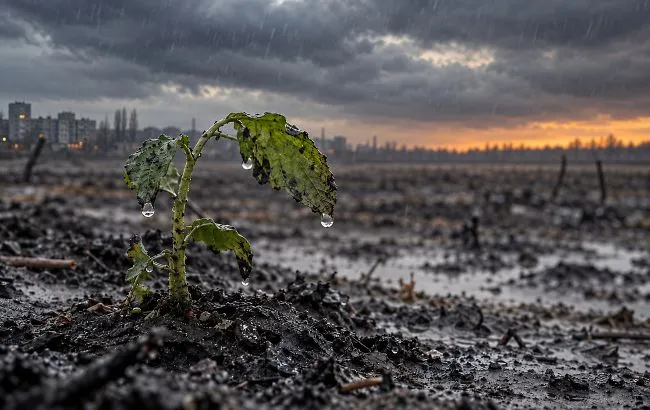
War affects not only people, cities, and infrastructure, but also the environment. Large-scale fires, explosions, and destruction pollute the air with hazardous substances. In addition, combat operations can alter the local microclimate, affect wind patterns, and even contribute to the formation of unusual clouds and acid rain.
The effects of war on the atmosphere are not limited to smoke from explosions or fires. Military operations create unique sources of pollution that differ from typical industrial and urban emissions. This refers to the composition of the pollutants, their temperature, and how quickly and over what distances they spread. Some of these harmful substances may remain in the air, settle on the ground, or end up in water.
The Dangers of Fires and Destruction
One of the greatest threats is large-scale fires that break out after strikes on oil depots, industrial facilities, and chemical warehouses. Such sites can burn for a long time, and hazardous compounds are released into the air along with the smoke. These include benzene, formaldehyde, and polycyclic aromatic hydrocarbons. Some of these substances are carcinogenic, meaning they can increase the risk of cancer with prolonged or significant exposure.
Another problem is the dust generated when buildings and infrastructure are destroyed. It may contain heavy metals, including lead, cadmium, and arsenic. Asbestos, which was previously used in building materials, also poses a danger. Its fine fibers can enter the lungs when inhaled and cause serious health damage.
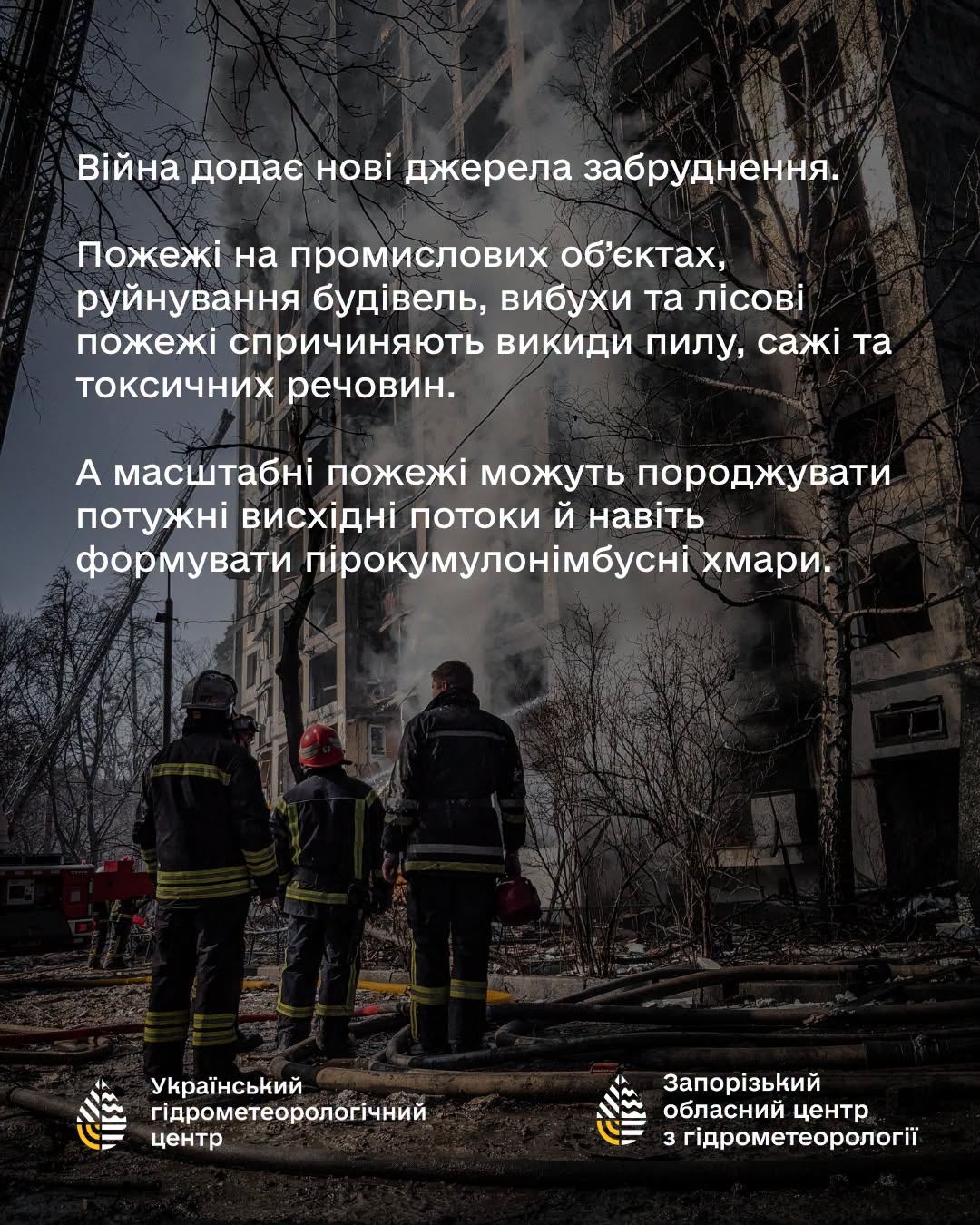
A separate source of pollution is the detonation of rockets, shells, and mines. During detonation, carbon monoxide, carbon dioxide, nitrogen oxides, sulfur dioxide, and fine soot particles are released into the atmosphere. Their quantity and composition depend on the type of munition, the location of the explosion, and the materials that burn after impact.
Forest fires caused by military operations are also dangerous. When trees and vegetation burn, carbon that has accumulated in forests over many years is released into the atmosphere. At the same time, trees that absorb carbon dioxide and trap dust are lost. As a result, the natural ability of these areas to purify the air is weakened.
How War Affects Clouds and Local Weather
According to meteorologists, large fires can alter not only air quality but also atmospheric processes. One such effect is called pyroconvection. It occurs when strong updrafts of hot air form above a massive fire. These currents carry smoke, ash, and moisture to significant heights. Under certain conditions, this leads to the formation of special clouds—pyrocumulonimbus clouds, also known as “fire” clouds.
Such clouds may resemble thunderclouds. However, their formation is not associated with the usual development of a thunderstorm, but rather with intense burning. Lightning can occur inside them, and strong air currents can carry smoke and ash over long distances.
Another danger is that such clouds can cause dry thunderstorms and gusty winds. New fire outbreaks caused by lightning or wind-borne sparks can complicate firefighting efforts. In particularly intense fires, smoke particles can rise very high—sometimes even into the stratosphere, from where they are carried over significant distances.
Why Soot Can Heat the Surface
Another consequence of the war is a shift in the radiation balance—that is, the ratio between the solar energy the surface receives and the heat it radiates. This effect can be particularly noticeable in winter. When black soot settles on snow, the snow’s surface darkens and begins to absorb more sunlight. As a result, the snow heats up and melts faster, and the near-surface layer of air in certain areas can become significantly warmer.
Thus, even pollution that at first glance seems to be merely an air quality issue can influence local temperature conditions.
How Development Changes Wind Patterns
Physical changes to the landscape also affect local weather conditions. For example, the destruction of forest belts, tree cutting, and the demolition of urban structures can alter airflow. Forest belts and buildings partially block the wind. When they disappear, air currents can flow differently and, in certain areas, become stronger. This also intensifies wind erosion: the wind picks up dry soil and carries it to other areas.
As a result, the risk of dust storms increases, especially where the ground has been stripped of vegetation. Such phenomena degrade air quality and can carry dust over significant distances.
Can the war cause acid rain?
Another possible consequence of atmospheric pollution is acid precipitation. It can occur when sulfur and nitrogen oxides—released into the air during combustion and explosions—react with atmospheric moisture. This results in the formation of compounds that increase the acidity of rain or snow. Such precipitation can alter the chemical composition of soil and water bodies, harm plants, and affect ecosystems. Similar processes can occur not only during rain but also in humid fog, when pollutants interact with tiny water droplets.
At the same time, the mere presence of fires or explosions does not mean that acid rain will necessarily fall in a given area. This requires specific atmospheric conditions and a sufficient concentration of pollutants.
Experts emphasize that the environmental consequences of war can be felt long after hostilities have ended. Air pollution, damage to forests, changes in soil, and disruptions to natural processes affect the state of the environment and the local microclimate. Therefore, the damage caused by the war must be assessed not only in terms of destroyed buildings and equipment, but also in terms of its impact on nature. This was explained by experts from the Zaporizhzhia Regional Center for Hydrometeorology.
On Sunday, November 1, emergency power outages were implemented in Kyiv. This was caused by the consequences of Russian strikes on energy facilities and ongoing attacks on the power grid. Energy workers are working to repair the damaged equipment, but they can only do so when the security situation allows.
On Sunday, November 1, nearly 100,000 consumers in the Dnipropetrovsk region remain without electricity due to Russian attacks. New strikes on energy infrastructure have caused repeated power outages in the Dniprovskyi, Pavlohradskyi, and Samarivskyi districts. More than 70 emergency crews are working to restore power.




