
US spy satellite USA 32 broke apart in orbit — Live Science
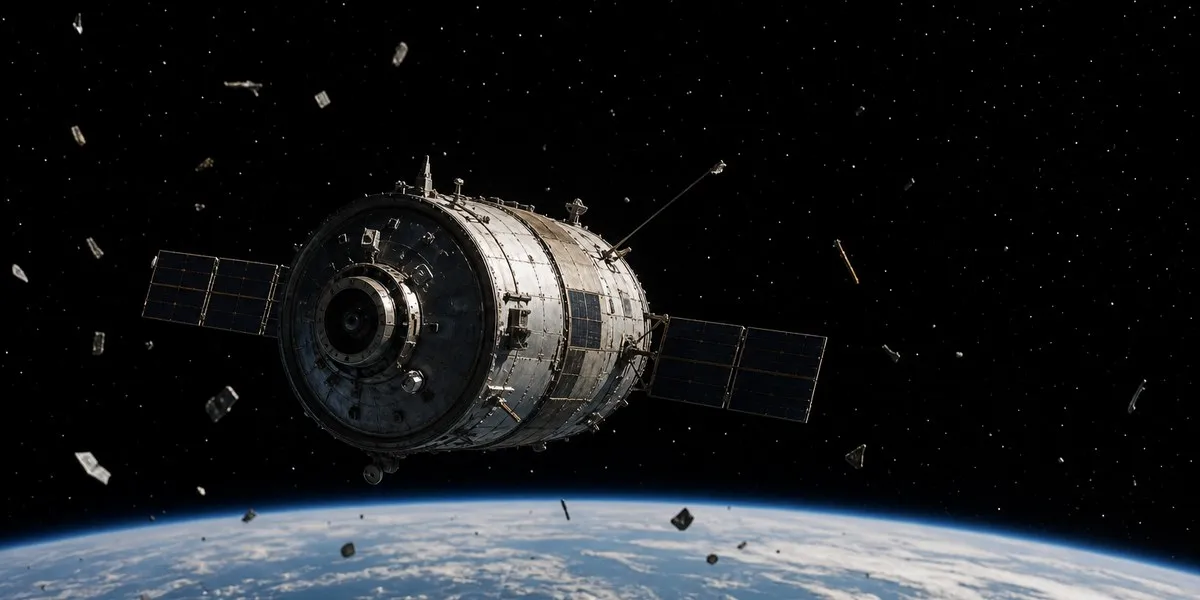
The American Cold War-era spy satellite USA 32, also known as Farrah III, suddenly broke apart in low Earth orbit at an altitude of about 775 kilometers on September 13. The cause of the spacecraft's fragmentation and the number of debris pieces produced have not yet been established.
As Live Science reports, on September 17, Space-Track, a US Space Force satellite-tracking unit, announced the sudden fragmentation of USA 32, which had occurred four days earlier. Private satellite-tracking company s2a systems also confirmed the incident and photographed the spacecraft's largest fragment in orbit.
The spacecraft was launched in 1988
The US National Reconnaissance Office launched USA 32 in 1988. According to Live Science, its mission was to intercept Soviet radio and radar signals from space, and information about this purpose was fully declassified only this year.
More current news is available on the UA.News Telegram channel Telegram.
The cylindrical satellite likely stopped operating many years ago. Spaceweather.com estimates that after nearly four decades in low Earth orbit, a pressurized tank or a battery component may have ruptured inside the spacecraft. Another possible version is an impact by an undetected small celestial body at high speed. There is currently no evidence supporting either explanation.
Risk to other spacecraft
Spaceweather.com modeling indicates that the debris could have spread along the satellite's orbital path within 24 hours after the breakup. At least 200 other satellites are located in the area where USA 32 broke apart; debris from the 2009 collision between an American and a Russian satellite is also already present there.
Experts note that the risk of collisions for spacecraft in this zone is real, as the parameters of the new debris field have not yet been determined. The International Space Station and China's Tiangong station are currently below this altitude, but the debris may change its orbits over time under the influence of gravity and atmospheric drag.




