
Israel’s Arab parties call for high voter turnout — Jerusalem Post
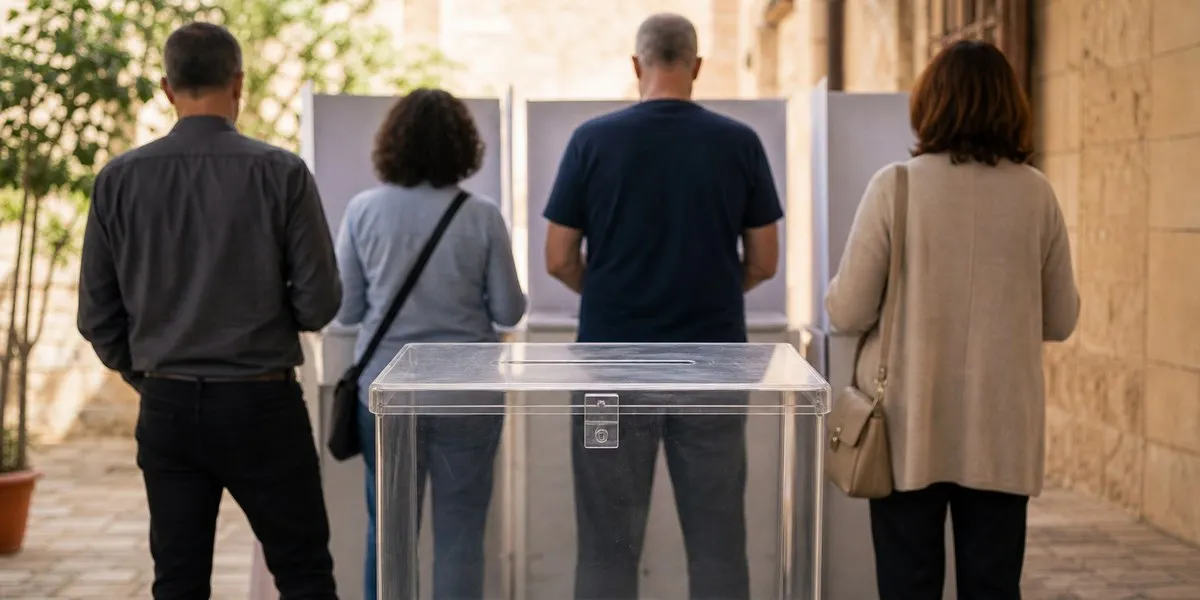
Leaders of Israel’s Arab parties are urging the community to vote actively in the parliamentary elections on October 27, hoping to strengthen the bloc of opponents of Benjamin Netanyahu led by Yashar party chairman Gadi Eisenkot. As The Jerusalem Post reports, Ra’am party chairman Mansour Abbas said that high turnout could help form a new government of change.
Arab support for Eisenkot’s bloc
Abbas said his party seeks to replace the right-wing government, end the wars and current policies, halt the expansion of settlements, and respond to settler attacks. According to him, the new government must ensure shared security and peace for Palestinians and Israelis.
At the same time, Eisenkot currently rejects forming a coalition with Arab parties, citing a lack of shared values. In an interview with The Jerusalem Post, he specifically mentioned these forces’ refusal to call Hamas a terrorist organization.
Recent polls indicate that Eisenkot’s bloc, which includes centrist, right-wing and left-wing parties, may win the most votes but fail to secure a majority. In that case, it may need support from Arab parties, either within or outside a coalition, to operate a minority government.
More current news is available on the UA.News Telegram channel Telegram.
Turnout forecast and the Joint List’s position
The Stat-Net Research Institute forecasts Arab voter turnout at 63%, compared with 56% in the 2022 elections. Ra’am is projected to win five seats in parliament, while the Joint List, which includes three Arab parties, is projected to win another eight.
Joint List leader Ahmad Tibi said his alliance is ready to support an Eisenkot government from outside as a bloc aimed at preventing the right-wing government from remaining in power. He also said that the Joint List is ready to vote together with an Eisenkot government to establish an official commission to investigate the events of October 7.
Abbas placed Jewish former police official Yoav Segalovitz second on the electoral list, calling it a signal of partnership with the Jewish community. Netanyahu’s campaign, according to Reuters, used edited images and videos created with artificial intelligence to portray his rivals alongside Arab leaders. Finance Minister Bezalel Smotrich also proposed a plan to Judaize areas near Nazareth and in southern Israel where the majority of the Arab population lives.




