
US Army plans to create a hub in South Korea — Defense News
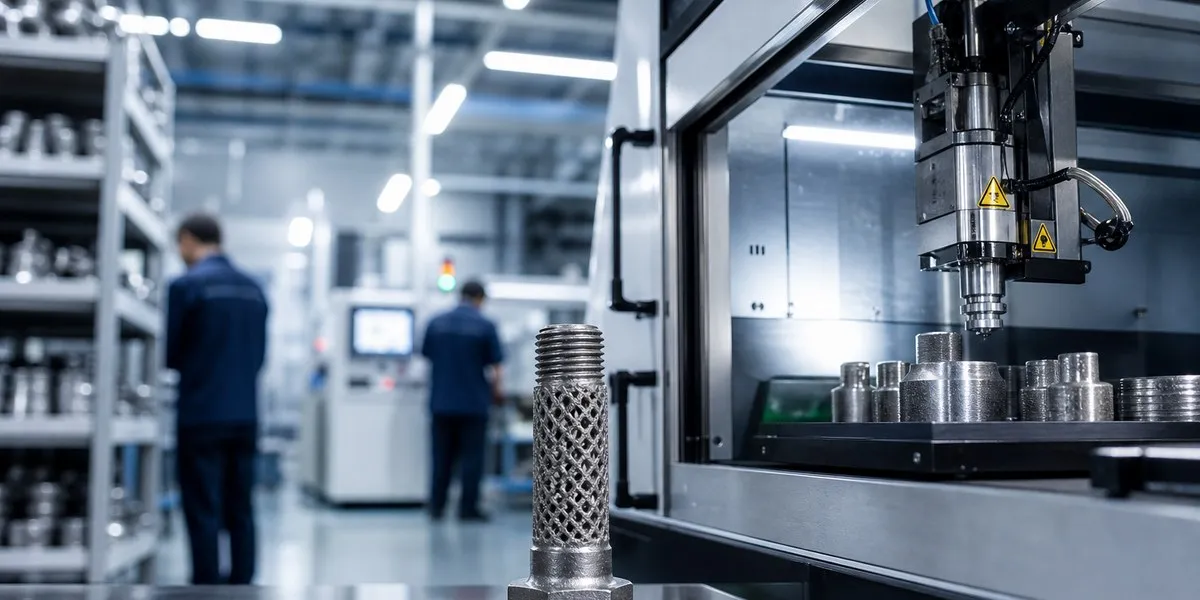
The U.S. Eighth Army is developing a regional center for logistics, repairs and spare-parts production in South Korea, intended to support not only local U.S. forces but also military personnel in other areas of the Indo-Pacific region. Col. Scott Carpenter, commander of U.S. Army Materiel Support Command-Korea, said he aims to turn the unit into an advanced manufacturing center for U.S. Indo-Pacific Command, Defense News reports.
On-site spare-parts production
The military is already using additive manufacturing, including 3D printing, and subtractive manufacturing — machining a part from a solid metal block. As an example, Carpenter cited a bolt for the Common Remotely Operated Weapon Station turret, the delivery of which has been delayed until February 2027. Service members in Korea produced the part for $1.27, avoiding a delay of several months and saving more than $300.
Materiel Support Command has already purchased a metal 3D printer and is preparing infrastructure to house it. According to Carpenter, the printer is expected in January or February, and the military later wants to print parts such as the aforementioned bolt as well. By next summer, the Eighth Army expects to receive $3 million worth of advanced manufacturing equipment. It also plans to request another approximately $10 million for equipment in the U.S. Army's fiscal year 2028 budget.
More current news is available on the UA.News Telegram channel Telegram.
Supporting forces in the region
Carpenter also said that the team in Korea manufactured, using subtractive manufacturing, an assembly ordered by a unit in Guam. Production cost $82, whereas ordering it through the regular supply system would have cost $36,000.
According to him, service members from joint forces can submit requests for needed parts through a special system, after which they are sent to the U.S. Army logistics hub in Daegu. Eighth Army repair teams have already deployed beyond the Korean Peninsula to support the III Marine Expeditionary Force in Okinawa, Japan, and rotational Army units in Hawaii.
Technical and legal obstacles
Eighth Army commander Lt. Gen. Joseph Hilbert noted that repairing equipment in Korea could make it possible to keep it from returning to the United States for major maintenance for longer. At the same time, he cited restrictions related to manufacturers' intellectual property rights, the exchange of technical data to verify that parts meet requirements, and the integration of new manufacturing processes into the U.S. Army's existing logistics systems among the challenges.




