
A 2,000-year-old wall from an ancient settlement was discovered near Notre Dame in Paris
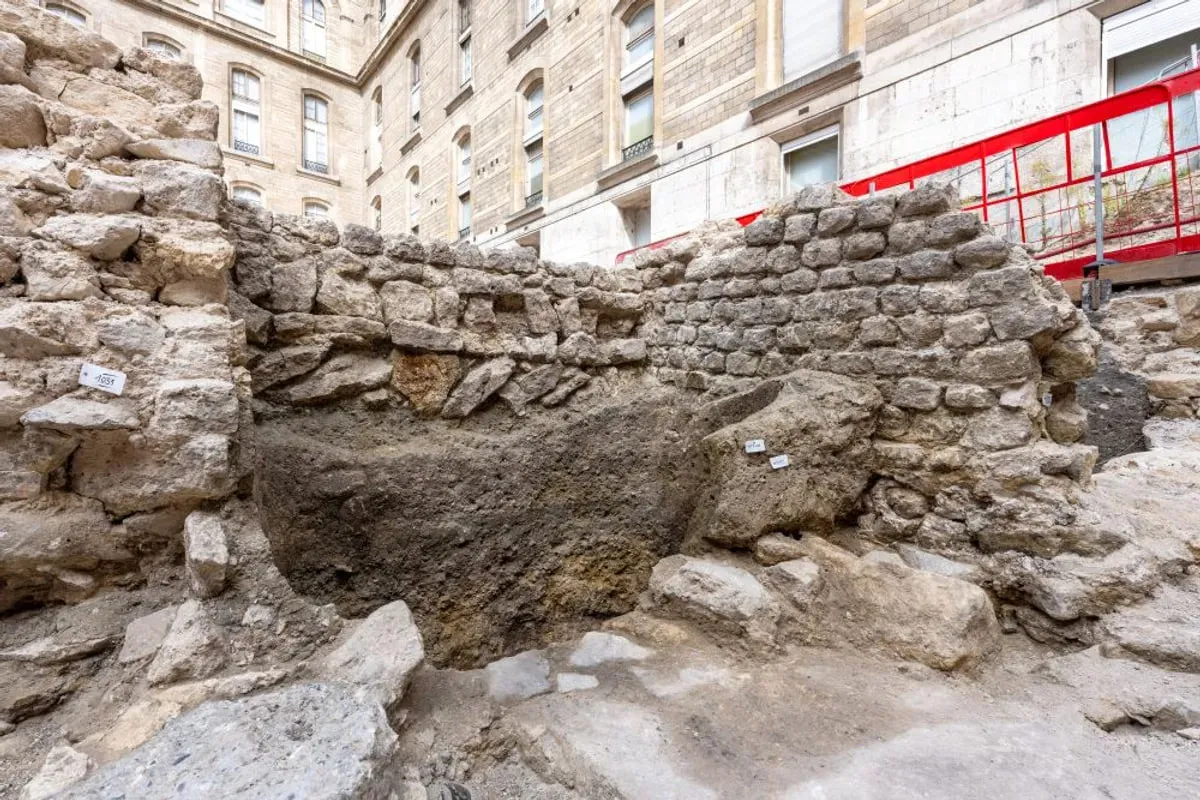
During archaeological excavations in central Paris, researchers discovered a section of wall about 20 meters long with traces of fire; the wall may be as old as 2,000 years. Scientists speculate that the structure may have been part of Lutetia—an ancient Gallic settlement on the site of which modern Paris later emerged.
The discovery was made in the inner courtyard of the Hôtel-Dieu hospital, near Notre Dame Cathedral. Nearby, archaeologists also found charred seeds and a Gallic spearhead.
“For centuries, the location of Lutetia has been a subject of debate. Due to the lack of physical evidence on the Île de la Cité, some even suggested that it might have been located in Nanterre. Today, with this wall and its context, we may have found the key to this mystery,” said Stéphane Desham, regional curator of archaeology.
Excavations began in February 2026 ahead of the hospital’s renovation. According to researchers, the large stone blocks and system of wooden beams are characteristic of Gallic fortifications.
The outer side of the wall was blackened by fire, and the wooden structure in front of it was destroyed by the fire. Behind it, archaeologists found a thick layer of sand and gravel, which may have reinforced the structure. This suggests that the wall served a defensive purpose.
Researchers believe it may have protected the oppidum—the fortified center of the settlement.
Julius Caesar wrote that in 52 B.C., when Roman troops approached Lutetia, the Gauls burned the city and destroyed the bridges to prevent the enemy from capturing it.
Radiocarbon analysis of the wall’s wooden elements dated them to the period between 200 and 10 BCE. Pottery found nearby also dates to Caesar’s time.
Previously, the assumption that Lutetia was located on the Île de la Cité was based primarily on descriptions by ancient authors.
Due to its fragile condition, the wall cannot be left in place. Before dismantling, it will be digitally documented in 3D, and part of the structure will later be reconstructed using the original stones for a museum exhibition.
Further research aims to determine exactly when the wall was built and abandoned, and whether it truly belonged to the Lutetia described by Caesar.
Source: Discover Magazine.
A shipwreck dating back 4,700 years was found off the coast of Turkey — Euronews.
Archaeologists in Israel have discovered the site where the Ark of the Covenant was kept.




