
Britain Wants to Strengthen Defense Cooperation with the EU Amid the Threat from Russia
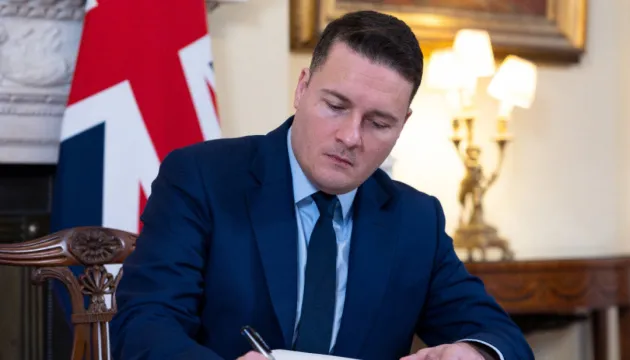
British Defense Minister Wes Streeting urged European countries to treat Vladimir Putin’s statements—that Russia has no intention of attacking Europe—with caution. He pointed out that the Russian military is already waging war on the European continent—against Ukraine. During a meeting in Brussels, Streeting also emphasized the need for closer cooperation between the UK and the EU on defense matters.
British Defense Minister Wes Streeting urged Europe not to unconditionally trust Russian leader Vladimir Putin’s statements that he has no plans to attack European countries. According to the British minister, it is difficult to take such assurances seriously while Russia continues its full-scale war against Ukraine.
Streeting made these remarks during a visit to Brussels, where he met with the European Union’s High Representative for Foreign Affairs and Security Policy, Kaja Kallas. The talks took place as part of the bilateral dialogue between the United Kingdom and the EU on security and defense issues. “We would all like to take President Putin at his word when he says he does not seek war with Europe. But we might take these assurances more seriously if he weren’t currently waging war in Europe,” Streating noted.
He reiterated that the United Kingdom and the European Union share a common understanding of the threats facing the continent. Among them are Russian aggression and the Russian Federation’s invasion of Ukraine, which the British minister called unprovoked and illegal.
Britain Wants to Be at the Center of European Security
Separately, Stritting emphasized that the United Kingdom is interested in further deepening its cooperation with the EU. In his view, countries must work together to protect the continent, rather than viewing security solely as the individual responsibility of each state. “The United Kingdom—we, too, are Europeans—and therefore we strive to be at the very center of ensuring the security and stability of our continent,” the minister stated.
He also called for defense to be viewed not only from a military perspective but also from an economic one. After all, protecting countries requires more than just missiles, aircraft, and other weapons. It is important to have sufficiently powerful industries capable of producing the necessary military equipment and ammunition. Streeting drew attention to a problem facing NATO countries. Even if all Alliance members decided tomorrow to double their defense budgets, that would not mean they could quickly turn those funds into new military capabilities.
“Even if every NATO member could afford to double its defense spending tomorrow, we wouldn’t be able to utilize those funds because the industrial base isn’t strong enough,” the British minister explained. In other words, he said, Europe needs not only to allocate more money to defense but also to develop its own production capabilities. Without this, additional funding will not yield the expected results.
Streeting warned against protectionism
Another important topic was cooperation between defense companies in different countries. Streeting cautioned that the desire to protect one’s own industry should not turn into protectionism, which hinders joint projects and weakens Europe’s defense capabilities. “We must avoid this danger, because the stronger we are together, the more likely we are to deter Russia and other threats,” he emphasized.
For her part, Kaja Kallas commented on the negotiations regarding the United Kingdom’s participation in the European defense program SAFE. The parties were unable to reach an agreement on the UK’s accession to this initiative. However, Kallas noted that this does not mean an end to defense cooperation. According to her, the United Kingdom remains part of Europe’s broader security framework. Therefore, the parties can explore other areas where they can deepen their cooperation.
Could the UK Rejoin the EU?
During the meeting, Stritting was also asked about the UK’s possible return to the European Union after Brexit. The minister replied that the country cannot simply leave the bloc and then expect to return quickly. “You can’t just leave the European Union and then expect to press a button and go back,” he said.
At the same time, Stritting noted that the UK and the EU are currently facing other, more pressing issues. First and foremost, these involve what closer cooperation might look like, what options are available to both sides, and what compromises they are willing to make. According to the minister, once these issues have been discussed, it will be possible to speak more substantively about future relations with the British public.
Streeting also drew attention to the economic consequences of Brexit for the country. In his view, the negative impact of leaving the European Union is now being felt by both those Britons who supported this decision and those who opposed it. Thus, during the meeting in Brussels, the British minister raised several issues at once: from the threat posed by Russia and joint arms production to the future of relations between the United Kingdom and the EU. His main message was that European countries need to act together to strengthen their own security.
The Royal Navy intercepted the Russian “Vishnya”-class reconnaissance vessel Viktor Leonov near the Outer Hebrides off the coast of Scotland. The vessel was monitoring NATO warships during the large-scale Strike Warrior exercises.




