
France has commissioned its fourth Suffren-class nuclear submarine
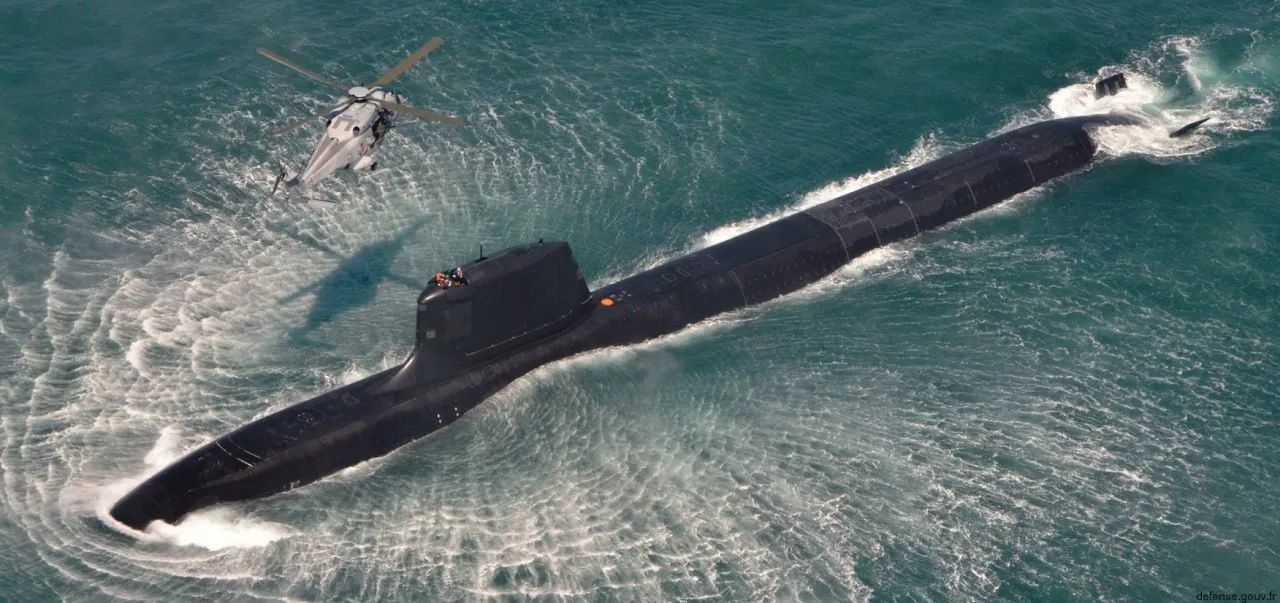
The French Navy has taken delivery of its fourth Suffren-class multipurpose nuclear submarine, the De Grasse (S638). Before being handed over to the military, the submarine underwent nine months of testing in Arctic and warm waters. It features an upgraded control system, modern electronic warfare equipment, and can remain at sea for up to 75 days.
The new submarine’s capabilities significantly exceed those of the previous Rubis-class submarines. The De Grasse’s submerged displacement is approximately 5,300 metric tons—nearly twice that of the older vessels. At the same time, thanks to automation, a smaller crew is required to operate the submarine: 65 people instead of 70.
The submarine’s capabilities have been expanded not only through new systems but also by increasing its weapons capacity and endurance.
More Weapons and Longer Endurance
While previous French submarines could remain at sea for up to 45 days, the new Suffren-class submarines are designed for 75 days of autonomous operation. This means they can carry out missions for significantly longer periods without returning to base. The weapons capacity has also increased. While Rubis-class submarines carried up to 14 weapons, the Suffren-class can carry up to 24 torpedoes and missiles. These include F21 heavy torpedoes, Exocet SM39 anti-ship missiles, and MdCN cruise missiles designed to strike land-based targets.
Another feature of the new submarines is their ability to operate alongside naval special forces units. Special compartments and equipment have been provided on board for this purpose. The design also allows for the use of underwater drones. Changes have also been made to the surveillance equipment. Instead of conventional periscopes, the submarines are equipped with optoelectronic masts. These transmit images from cameras—including thermal imaging cameras—to screens inside the submarine. This allows the crew to monitor the surface without using a traditional periscope.
France plans to acquire six such submarines
De Grasse is the fourth Suffren-class submarine built as part of France’s Barracuda program. The total cost of the program is estimated at approximately 9.1 billion euros. It calls for the construction of six nuclear-powered submarines to replace the older Rubis-class submarines.
Two more submarines are still in the French Navy’s plans. They are expected to be delivered in 2027 and 2029, respectively. Upon completion of the program, France will have six new Suffren-class multi-purpose nuclear submarines, according to the Telegram channel .
Construction of the first submarine for Poland has begun in Karlskrona, Sweden. In total, Poland is set to receive three such submarines from Sweden, according to RMF24, citing Polish Deputy Minister of National Defense Cezary Tomczyk.




