
Japan launches MMX probe to Mars moon Phobos — The Japan Times
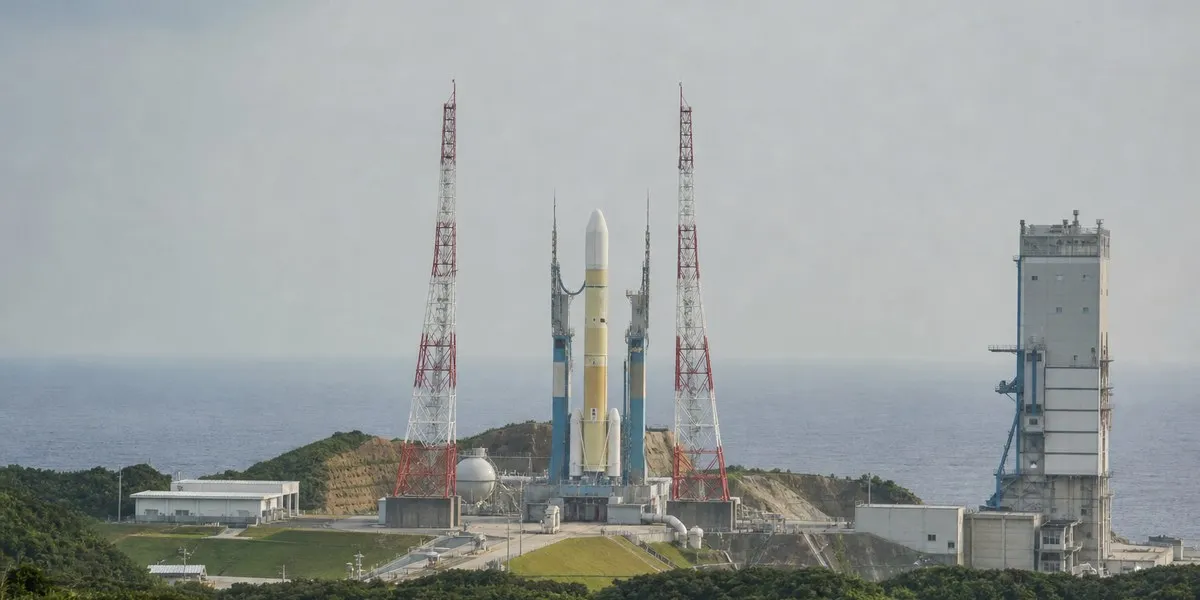
On October 20, Japan successfully launched an H3 rocket carrying the Martian Moons eXploration, or MMX, interplanetary probe from the Tanegashima Space Center in Kagoshima Prefecture. The Japan Aerospace Exploration Agency's JAXA spacecraft set off for Mars's moons as part of a five-year mission to return samples from Phobos.
The rocket lifted off at 4:41 a.m. local time. This is the first time Japan's flagship H3 rocket has been used to send a spacecraft into interplanetary space. As The Japan Times reports, MMX is expected to separate from the rocket one hour and 11 minutes after launch.
Landing on Phobos in 2029
The probe is expected to arrive at Mars in August 2027, after which it will begin observations and preparations for landings on Phobos, the larger of the planet's two moons. Phobos has a diameter of about 27 kilometers and orbits Mars at a distance of approximately 6,000 kilometers.
More current news is available on the UA.News Telegram channel Telegram.
In 2029, MMX plans to make two landings and collect at least 10 grams of material from a depth of no less than two centimeters below the surface. Before that, the small IDEFIX rover, developed with the participation of the French space agency CNES, the German Aerospace Center and JAXA, will study the terrain to select a safe landing site.
Samples are expected to return in 2031
After flyby observations of Mars's second moon, Deimos, the spacecraft is expected to begin its journey to Earth in November 2030. The sample capsule is scheduled to land in Australia in July 2031.
Scientists expect that material from Phobos will help determine the origin of Mars's moons. One theory suggests that Phobos and Deimos are asteroids captured by Mars's gravity; another holds that they formed from debris after a major collision between Mars and another celestial body. The research may also provide information about the distribution of water and organic compounds in the early Solar System.




