
China allocates 250 billion yuan for old-item trade-in program — NDTV
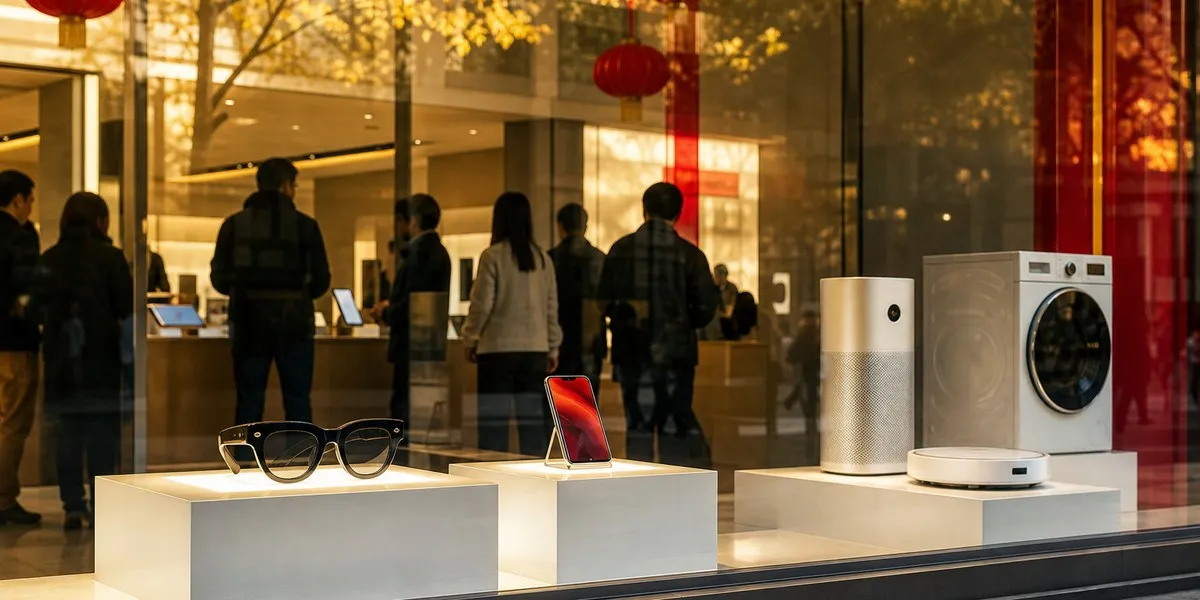
China has allocated 250 billion yuan, or about $37 billion, for a subsidy program for consumers who replace old products with new smartphones, smart glasses and energy-efficient household appliances. By August, the program had supported sales worth 1.55 trillion yuan, NDTV reports, citing Barron's and China's National Development and Reform Commission.
Subsidy terms
The program provides a subsidy of 15% of the cost of smartphones, tablets, smartwatches and smart glasses priced at up to 6,000 yuan. The maximum payment is 500 yuan per item. For example, the discount on AI glasses priced at 3,000 yuan can reach 450 yuan.
The program also covers six categories of household appliances, but subsidies are available only for models that meet the highest energy- or water-efficiency standards. Vice Minister of Commerce Sheng Qiuping said that the authorities seek to use new demand to steer new supply, and new supply to shape demand.
In August, sales of communications equipment at major retail chains increased by 27.3% year-on-year. Sales of smart glasses on major online platforms rose by 120% in the first eight months of the year, according to China's Ministry of Commerce. The program has already subsidized the purchase of 108 million digital and smart products.
More current news is available on the UA.News Telegram channel Telegram.
Weak domestic demand
At the same time, the subsidies have not resolved the problem of weak domestic demand. China's GDP grew by 4.5% year-on-year in July-September, following 4.3% in the previous quarter. In the first nine months of 2026, the economy grew by 4.6%, but retail sales rose by only 0.4% in August and 1.1% in September.
Fixed-asset investment declined by 7.2% over nine months compared with the same period in 2025. Real-estate investment fell by 20.2% in the first three quarters. Economic expert Abhinav Tripathi told NDTV that China's export-oriented manufacturing sector remains strong, while domestic demand and investment are failing to gain momentum.
China's exports increased by 36.3% year-on-year in September, while the foreign trade surplus reached $938.1 billion in the first nine months of 2026. The International Monetary Fund lowered its forecast for China's economic growth in 2026 from 4.6% to 4.5%, and for 2027 from 4.1% to 4%. The fund linked the revision to weak consumption, declining investment and problems in the real-estate sector, which are only partly offset by strong exports.




