
17 fragments of medieval manuscripts found on Guernsey
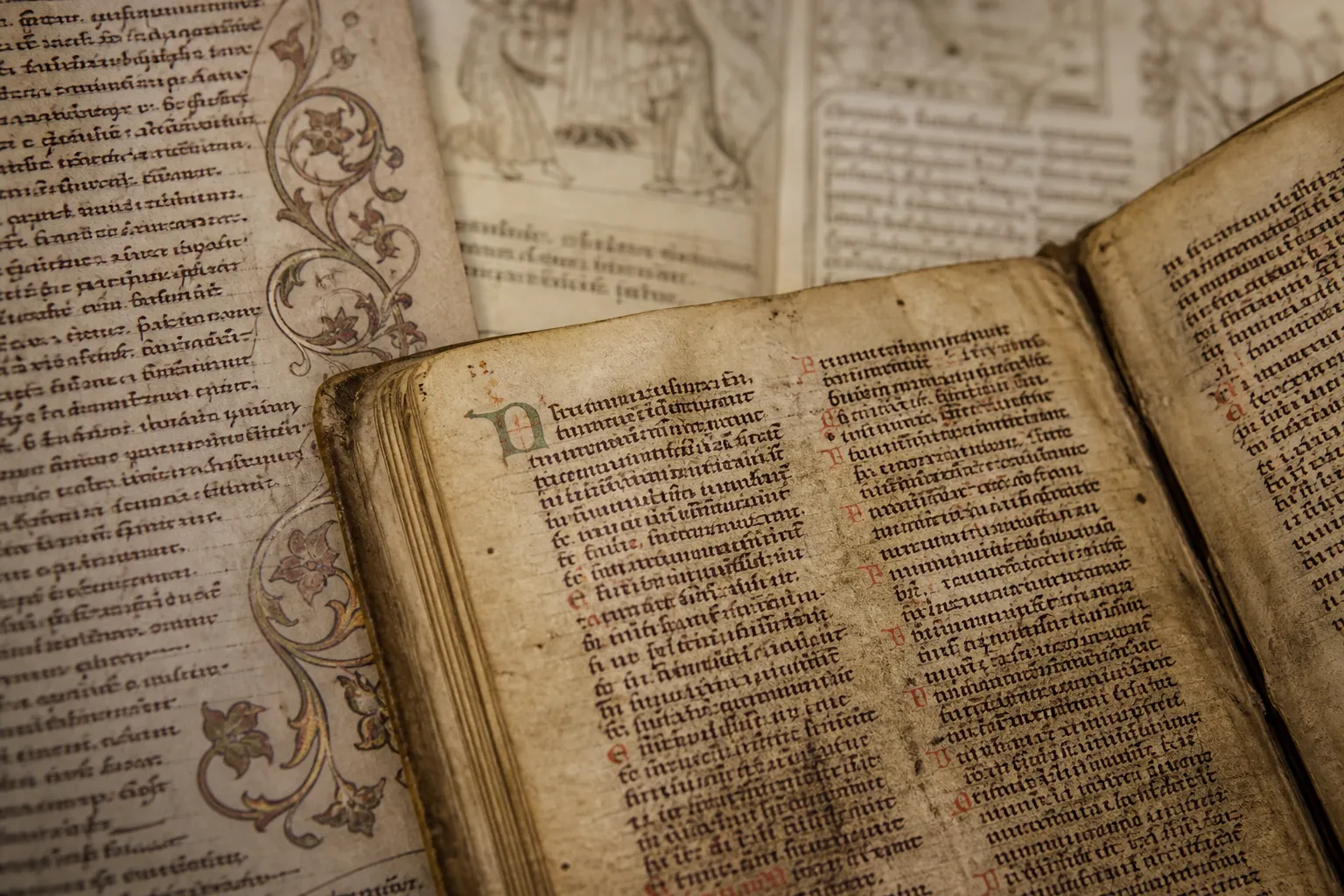
Seventeen fragments of medieval manuscripts dating from the 12th to the 15th centuries have been discovered on the island of Guernsey. They testify to the diverse reading and intellectual interests of the island’s inhabitants in the Middle Ages, including the important role of French as a literary language. The Guardian World reports.
Texts from administrative bindings
The fragments remained unnoticed for a long time: in the 16th and 17th centuries, they were cut up and reused as bindings for rent account books and other administrative documents. According to researchers, this reuse helped preserve the manuscript leaves for centuries.
The materials are held in the public collections of the Island Archives and the repository of Guernsey’s royal greffier. They were identified by Island Archives staff together with manuscript specialist David Rundle of the Centre for Medieval and Early Modern Studies at the University of Kent and book historian Tamara Atkin of the University of Oxford.
More current news is available on the UA.News Telegram channel Telegram.
French literature and biblical texts
Among the discoveries are excerpts from a play, Ovid’s poetry, biblical texts and a fragment of a work about travels. Some of the literary texts are written in French. Scholars believe this indicates the importance of French as a literary language on Guernsey in the late Middle Ages, when its role in England was already declining.
In particular, the collection contains a dramatic poem from the French secular play L’Estoire de Griseldis, which was probably written around 1395 by Philippe de Mézières. The work retells the story of Griselda, which first appeared in Giovanni Boccaccio’s 1353 “Decameron.” This version is exceptionally rare, and the discovered fragment shows that the play was read not only in circles of the French royal court.
A late-12th-century Latin biblical fragment with an early-15th-century note, which may have been made by a priest, was also discovered. The research began after archive assistant Callum Tostevin-Hall noticed a parchment cover with Latin text that had been removed from a document during previous restoration work. Scholars suggest that other similar fragments may be preserved in Guernsey’s archives and other collections.




