
Visegrad Group prime ministers ask to postpone new carbon charges — RMF24
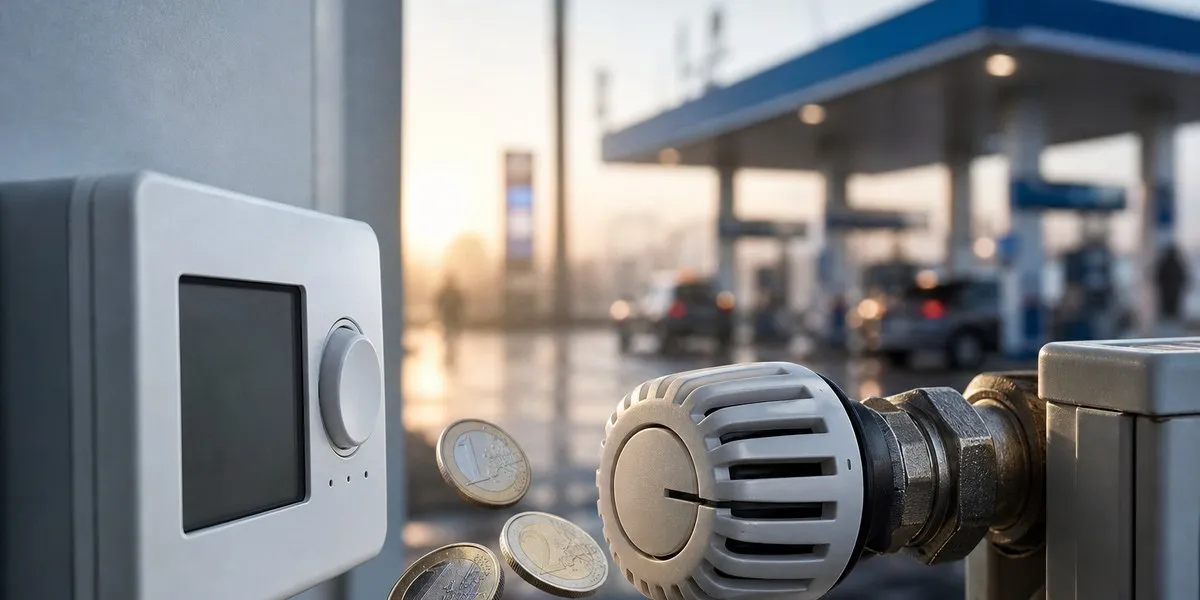
The prime ministers of Poland, Hungary, Slovakia and the Czech Republic, including Polish Prime Minister Donald Tusk, sent a letter to European Commission President Ursula von der Leyen. They propose providing for the possibility of postponing the launch of ETS2 — a new mechanism for CO₂ emissions payments in road transport and building heating — from 2028 to 2030 for EU member states that wish to do so. This was reported by RMF24.
Arguments of the four countries
In the letter, the prime ministers refer to the conclusions of the October EU summit, according to which the European Commission is to update its assessment of the consequences of introducing ETS2. The heads of government named eight areas which, in their view, should be taken into account in the new analysis. These include the system’s impact on inflation, energy prices, citizens’ cost of living and the competitiveness of European companies.
The prime ministers warn that the new payments could mean additional costs of tens of billions of euros. In their view, higher heating and transport costs will affect households and businesses, while ETS2 may be perceived as a new European climate tax. The letter also says that rising costs weaken purchasing power and public confidence in the possibility of carrying out the energy transition.
More current news is available on the UA.News Telegram channel Telegram.
Auctions and the position of other countries
The four countries also want to suspend the first emissions allowance auctions, scheduled for January 2027, until the system’s future is clarified. They are not proposing to postpone ETS2 for the entire European Union, but ask that the possibility of a delay be considered only for member states that want it.
At the same time, Denmark, Finland, Germany, Luxembourg, the Netherlands, Portugal, Spain and Sweden opposed changes and further delays. In a letter to European Commissioner for Climate Wopke Hoekstra, they stated that ETS2 is important for Europe’s energy security, as it is intended to reduce dependence on imported oil and gas and accelerate the electrification of transport and heating. Member states plan to agree on a position regarding the reform of the emissions trading system on December 11.




