
New index assesses 126 countries’ vulnerability to fishing conflicts — Mongabay
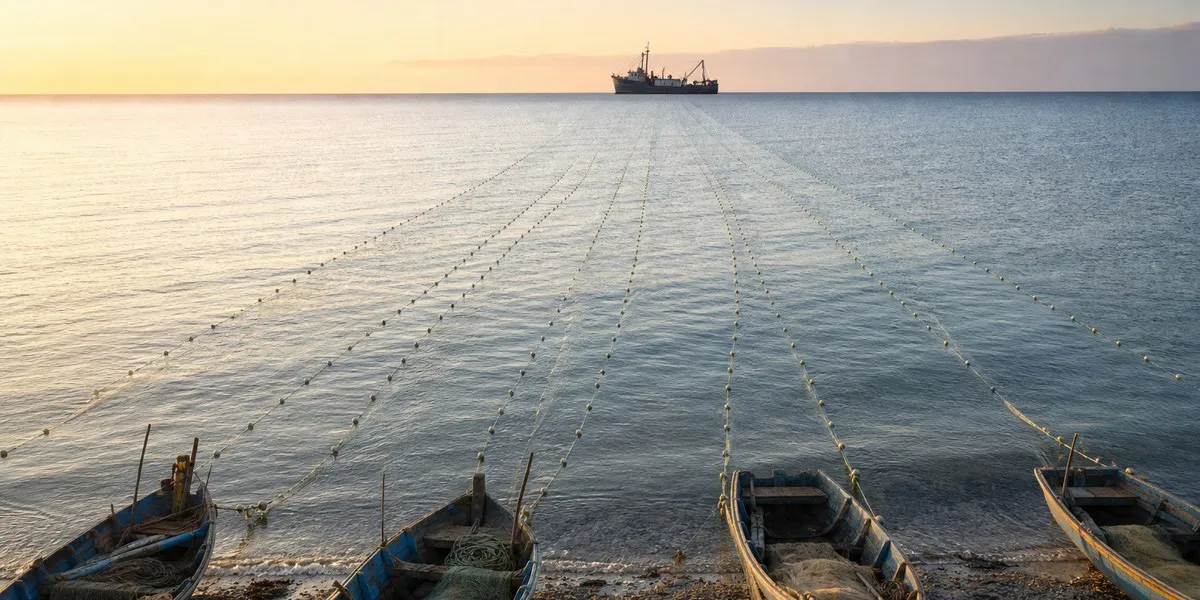
Researchers have developed an index of 126 countries’ vulnerability to conflicts between small-scale fishers and industrial fishing vessels. Guinea, Sierra Leone and Mozambique received the highest scores, Mongabay reports.
What the index considers
The study, published on October 22 in the journal Nature Food, assesses not recorded cases of disputes but countries’ likely vulnerability to them. The authors considered the intensity of industrial fleet activity near the coast, the population’s dependence on small-scale fishing for food and income, as well as the quality of governance.
By conflict, the researchers mean a clash of interests that does not necessarily involve physical violence. This includes competition for the same fish species and fishing grounds, as well as damage to equipment. Africa was identified as the most vulnerable region, followed by Oceania, Asia, and Central and South America. Among subregions, West Africa has particularly high scores.
More current news is available on the UA.News Telegram channel Telegram.
Data on industrial fishing
To assess the potential overlap between the sectors’ activities, the researchers analyzed the density of visible industrial fishing within 25 kilometers of the coast from 2017 to 2021. They used satellite data on vessel positions from the AIS system on the Global Fishing Watch platform and radar imagery for vessels without AIS.
The authors note that most small-scale fishing boats are not shown on the platform. Therefore, to assess the potential overlap of industrial and small-scale fishing, they also considered the intensity of catches by small-scale fishers, determined in previous studies. At the same time, the work did not establish whether both sectors operated in exactly the same areas, at the same depths, or caught the same species.
Measures to reduce disputes
According to the study, more than 40 countries have priority access zones for small-scale fishers, where industrial fishing or certain types of fishing gear are restricted near the coast. However, such rules are not always properly enforced. The authors recommend securing small-scale fishers’ rights to access resources, ensuring enforcement of coastal restrictions, reducing subsidies that contribute to excessive industrial fleet capacity, and concluding fairer fisheries agreements with other countries.




