
Global mangrove area increased by 477 km² over four decades — Mongabay
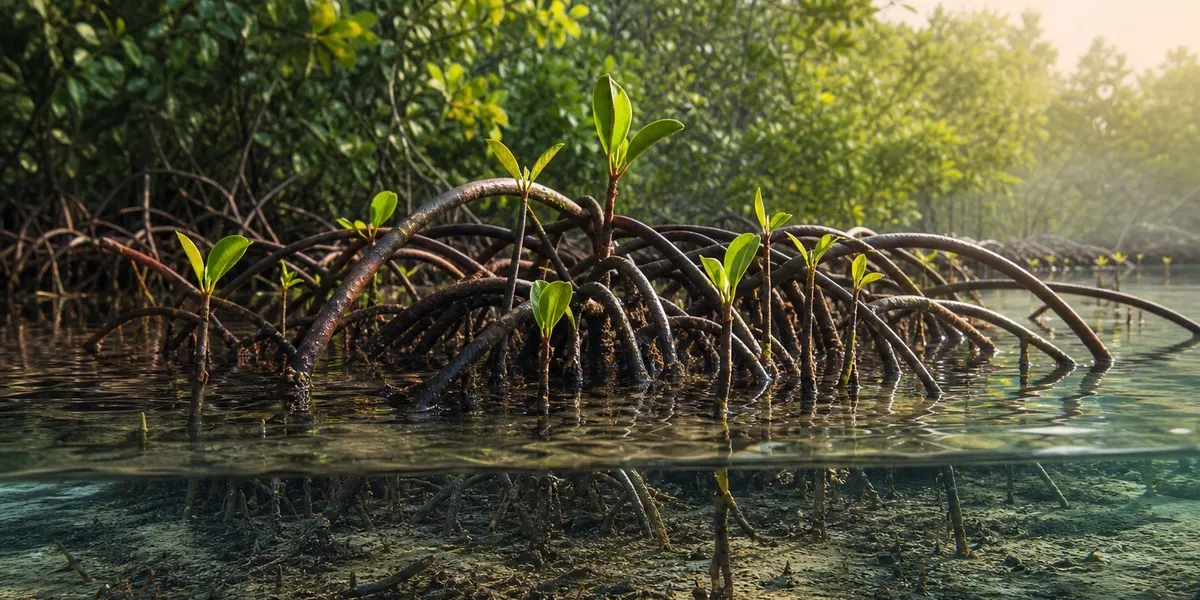
The global area of mangrove forests increased by 477 km², or 0.3%, over four decades. This indicates a modest turnaround after a long period of predominantly declining losses in these coastal ecosystems, Mongabay reports, citing updated Global Mangrove Watch data.
Researchers analyzed changes in mangrove cover in 108 countries using satellite imagery with a resolution of 10 meters and machine learning. The latest update covers the period from 1985 to 2024, while the previous version of the data tracked changes from 1996.
Where mangrove forest area increased
The largest net gain was recorded in India, at 1,180 km². Significant expansion of mangrove areas also occurred in Pakistan, Australia, the Philippines and Senegal.
In India, restoration was supported by wetland protection, the cessation of clearing, engineering solutions and the participation of local communities. In particular, since the late 1980s, fishbone-shaped canals have been constructed in the states of Tamil Nadu and Andhra Pradesh, providing the inflow and outflow of seawater and creating conditions for mangrove growth.
More current news is available on the UA.News Telegram channel Telegram.
Losses remain significant
At the same time, mangrove forest area declined in a number of countries. The largest net losses since 1985 were recorded in Indonesia, at 2,043 km². It was followed by Myanmar with 1,458 km², Malaysia with 390 km², Nigeria with 312 km² and Cuba with 272 km².
The main causes of mangrove destruction include land conversion for aquaculture, rice and oil palm cultivation, urban development, pollution, as well as excessive harvesting of timber and charcoal. At the same time, net area decline in Indonesia slowed after 2010, and since 2015 the country has been among the three states with the largest gains in mangrove cover.
Mangrove forests store carbon, provide habitats for many species, support coral reef health and weaken the impact of waves and wind. Experts emphasize that effective restoration requires not only mass planting of seedlings, but also the restoration of natural conditions and the long-term involvement of local communities.




