
Drought in Indonesia affects 13 palm oil mills — The Japan Times
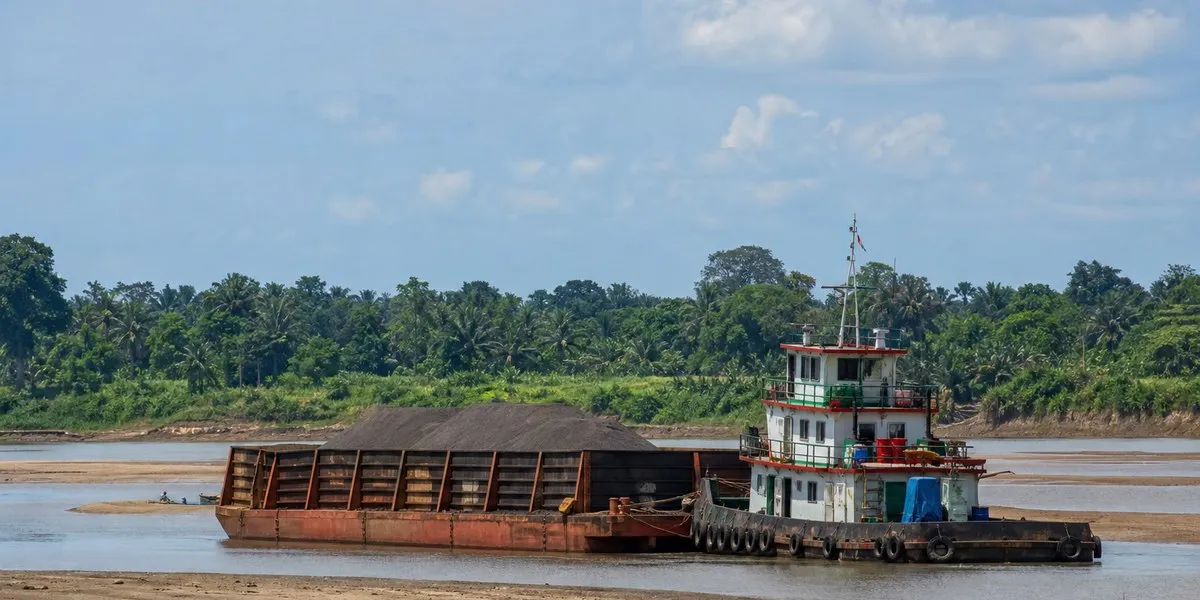
In Indonesia’s West Kalimantan province, drought linked to the El Niño phenomenon has complicated the transport of palm oil along the Kapuas River. As water levels fall, barges and tugboats are running aground, while processing facilities are reducing purchases of fresh oil palm fruit because they cannot move the oil already produced out of storage.
As The Japan Times reports, transport disruptions have affected 13 of the region’s 50 palm oil mills, which account for about half of the province’s processing capacity. West Kalimantan produces around 11% of Indonesia’s palm oil, with Indonesia being the world’s largest producer of the commodity.
Mill storage facilities are overflowing
According to the Indonesian Palm Oil Association, GAPKI, 40% of West Kalimantan’s palm oil is normally transported via the Kapuas River, the country’s longest river at 1,143 kilometers. Road transport cannot fully replace river transport: trucks have lower capacity, are in short supply, and delivery by truck is more expensive.
More current news is available on the UA.News Telegram channel Telegram.
Dian Kurniawan, manager of the Multi Prima Entakai mill, said that in September the company purchased 10,000 tonnes of fruit, while in July it processed 30,000 tonnes. As of October 1, the mill held 8,200 tonnes of crude palm oil, against tank capacity of 8,500 tonnes. He said the facility had previously been able to ship 2,000 tonnes of product in four days, whereas trucks can sometimes transport only 100 tonnes per day, and the cost of such transportation is three times higher.
Farmers cannot sell their harvest
Smallholders are left with fruit that is spoiling. Farmer Supendi waited for four days in early October to unload seven tonnes of fruit near a mill in the city of Sanggau, but the facility refused to accept the cargo because its storage facilities were full.
Indra Rustandi, head of the local branch of the APKASINDO farmers’ group, said that due to lost income, some producers have cut fertilizer use by up to 70%. GAPKI has also lowered its forecast for Indonesia’s palm oil production in 2026 by 2.9%, as the association estimates that dry weather is slowing fruit ripening.




