
Peshawar court to hear PTI lawsuit against emergency rule — Dawn
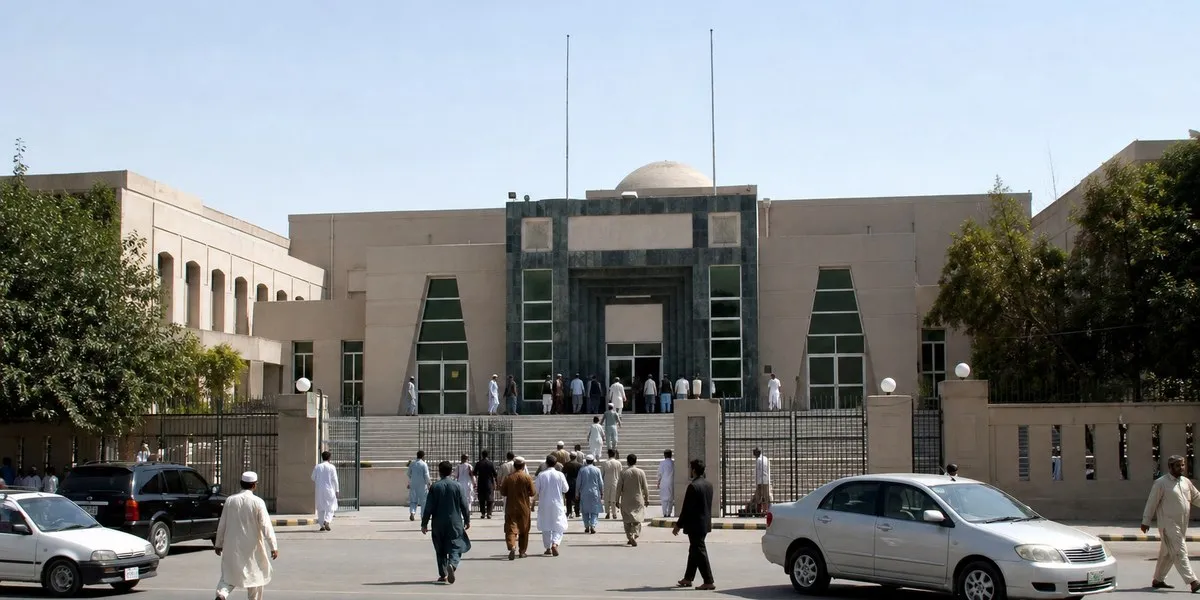
The Peshawar High Court in Pakistan has scheduled a preliminary hearing for October 20 in a lawsuit filed by Gohar Ali Khan, chairman of the Pakistan Tehreek-e-Insaf (PTI) party. He is challenging the imposition of an emergency and governor's rule in Khyber Pakhtunkhwa, Dawn reports.
Claimant's demands
Pakistan's federal government imposed an emergency in Khyber Pakhtunkhwa and governor's rule on October 11. According to the federal authorities, the reason was the provincial government's deliberate withdrawal from the fight against terrorism.
Gohar Ali Khan is asking the court to declare the decision unconstitutional and annul the relevant order. In the lawsuit filed on October 14, he also challenges the deployment of army units in the province and subsequent orders adopted after the emergency was imposed.
Among the claimant's demands is the annulment of the establishment of an 11-member Khyber Pakhtunkhwa advisory council, which is to assist Governor Faisal Karim Kundi in administering the province on behalf of the federal authorities. He also demands that the court be provided with the documents and materials on which the emergency order and subsequent decisions were based.
More current news is available on the UA.News Telegram channel Telegram.
Claimant's arguments
The claimant argues that the transfer of the provincial assembly's legislative powers to parliament took place without a prior assembly resolution required under Article 232(1) of Pakistan's Constitution. In his view, this violates the principles of federalism, democracy, and provincial autonomy.
Gohar Ali Khan also stated that the order does not mention a grave emergency related to war or external aggression. He believes that the reference to internal unrest was not supported by objective criteria.
Separately, on October 20, the court will hear a joint lawsuit by National Democratic Movement leaders Mohsin Dawar and Bushra Gohar. They also ask for the presidential order of October 11, 2026, to be declared legally void and for its operation to be temporarily suspended until the court's final decision.




