
October 9, 2026 Holiday — Hangil Day in South Korea: History and Traditions

On October 9, South Korea celebrates Hangul Day—a holiday dedicated to the Korean writing system. On this day, people commemorate King Sejong the Great, during whose reign in the 15th century a new writing system was created that was more accessible to ordinary people. Today, Hangeul Day is a national holiday that serves as a reminder of the history of the language, culture, and the importance of accessible writing.
Hangeul Day is celebrated annually on October 9. For South Korea, it is not just a day dedicated to the Korean language, but an important cultural occasion. The holiday is dedicated to the creation and proclamation of the Korean writing system, now known as Hangeul. It is thanks to Hangeul that the Korean language can be written using its own characters, rather than Chinese characters, as was the case in the past. In modern Korea, Hangul is an integral part of national culture and identity.
Interestingly, the name “Hangul” did not appear right away. In the 15th century, the new writing system was called “Hunminjeongeum,” which roughly translates as “Proper Sounds for the Instruction of the People.” The name itself reflects the creators’ main idea: the writing system was meant to be understandable and accessible not only to the educated elite. In the 20th century, the name “Hangul” became firmly established for the system. Today, this is the word used in South Korea and around the world when referring to the Korean writing system.
How Hangul Came to Be
Before the advent of Hangul, Koreans largely used Chinese characters, known as Hanja. The problem was that the Chinese writing system was difficult to learn. Furthermore, the Chinese and Korean languages differed greatly, so it was difficult to convey Korean pronunciation and grammar using Chinese characters. For the average person, learning to read and write was much harder than it was for members of the wealthy and educated classes.
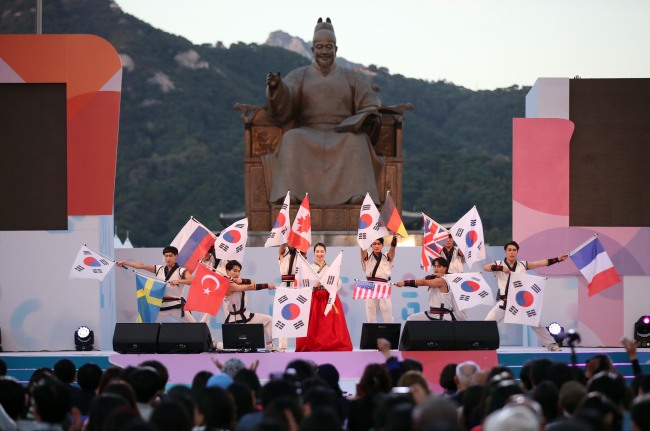
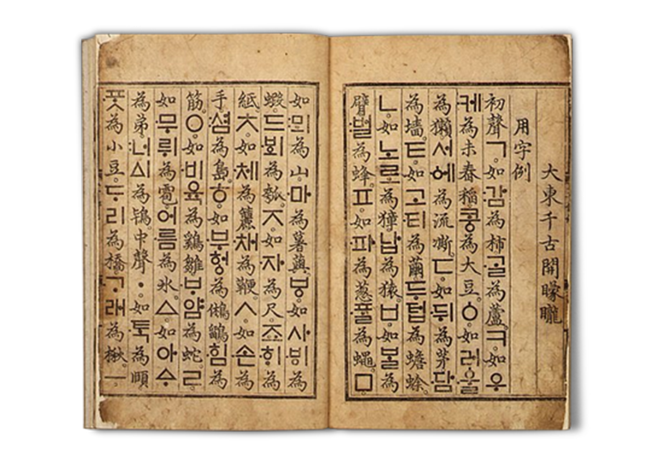
King Sejong the Great, who ruled the Joseon Dynasty in the 15th century, decided to change this situation. During his reign, a new writing system was created that was designed to better reflect the sounds of the Korean language. Hangul was developed in 1443 and officially presented to the public in 1446, along with an explanation of how to use it. This document was titled “Hunminjeongeum.”
King Sejong wanted people to be able to write down their own thoughts without having to spend years studying the complex system of Chinese characters. The preface to the “Hunminjeongeum” explained that the sounds of the Korean language differ from those of Chinese, making it difficult for people to convey their thoughts using traditional Chinese characters. The idea was to create a writing system that could be learned quickly. That is why Hangul is often called one of the most systematic and well-thought-out alphabets in the world.
Why Hangul Is Considered an Unusual Writing System
One of Hangul’s main features is that its characters were designed with an understanding of how sounds are produced in human speech. For example, the shapes of some consonants are related to the position of the tongue, lips, or other speech organs during pronunciation. This is not a random set of symbols, but a system in which a certain logic can be seen in the shape and structure of the characters. Originally, Hangul consisted of 28 characters—17 consonants and 11 vowels. Over time, some of them fell out of use, and modern Korean uses 24 basic letters—14 consonants and 10 vowels. At the same time, additional characters and their combinations can also be found in Korean writing.
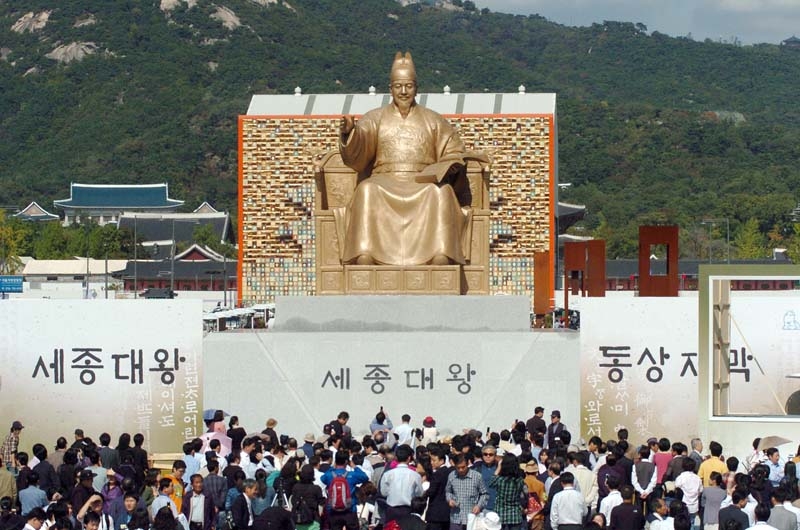
Another interesting feature is that Koreans do not write words as a simple long horizontal chain of individual letters. Letters are grouped into syllable blocks. Therefore, a single block in writing may look like a separate square symbol, even though it actually consists of several letters. This is precisely why Korean text has such a distinctive appearance, one that is easily recognizable even to someone who doesn’t know Korean.
Why King Sejong Is Important to Koreans
King Sejong the Great holds a special place in the history of South Korea. He is remembered not only as a ruler but also as a patron of science, education, and cultural development. The creation of Hangeul became one of the most famous achievements of his reign. In modern-day Seoul, a large statue dedicated to the king stands in Gwanghwamun Square. It has become one of the capital’s most famous landmarks.
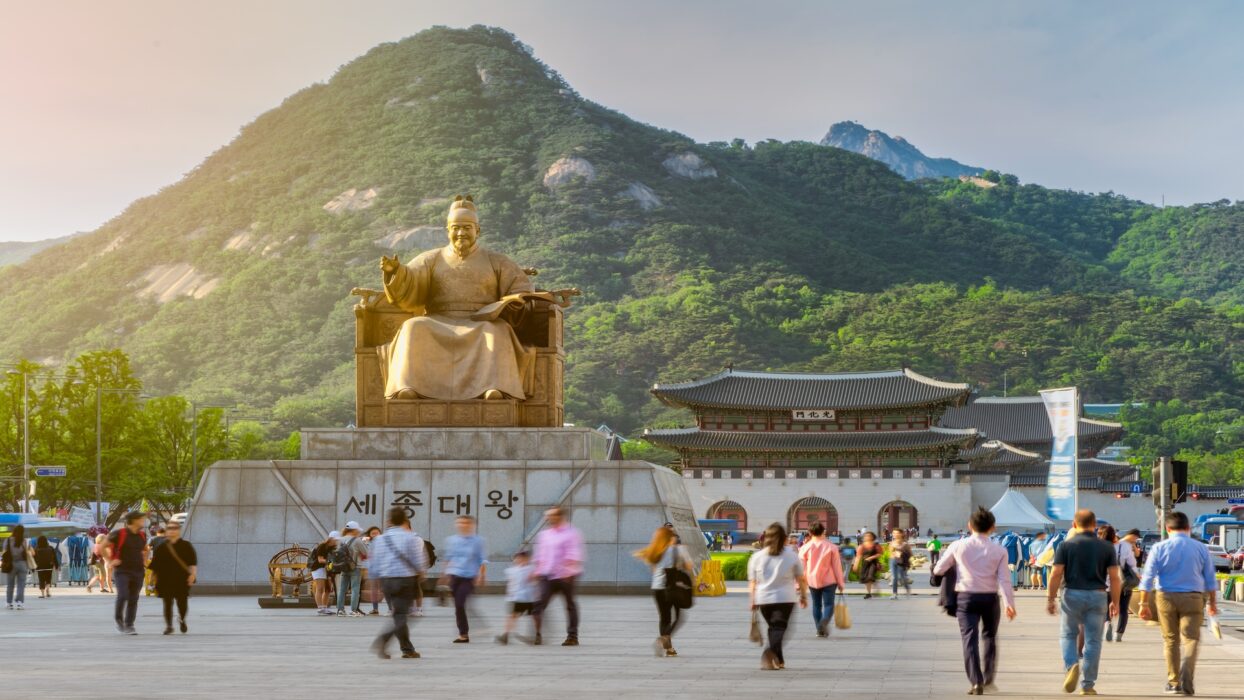
It is precisely because of Hangeul’s connection to Sejong that he plays a central role in the October 9 celebrations. On this day, people discuss the history of the script’s creation, hold cultural events, and commemorate the king’s contribution to the development of Korean culture. In schools and cultural institutions, children and adults are taught why the creation of a native writing system became so important for the country.
When Hangul Day Became a Holiday
The history of the holiday itself is also a story in its own right. October 9 was officially designated as Hangeul Day in 1946. Since then, it has been an annual occasion to honor the Korean writing system. Later, the holiday was designated a national holiday, and today, October 9 is an official day off in South Korea.
The date of October 9 is specifically linked to the historic publication of the *Hunminjeongeum* in 1446. In other words, Koreans celebrate not just the creation of a new set of letters, but the moment when the new writing system was presented to the public and its use was explained. This document has become one of the most important sources for understanding the origins of Hangul.
What People Do on Hangul Day
On Hangul Day, various cultural events take place throughout South Korea. These may include exhibitions, lectures, contests, concerts, performances, and workshops related to the Korean language and writing system. Special attention is given to calligraphy, as writing Hangeul in beautiful handwriting has long been a part of Korean culture. People can not only view ancient documents but also try their hand at writing Korean characters themselves.

Museums play an important role in the celebration. For example, the National Hangeul Museum in Seoul hosts special exhibitions and programs for visitors. There, visitors can learn how the Korean writing system has evolved over the centuries, view historical documents, and see various examples of Hangul in use. The museum also hosts events where visitors can become more familiar with the Korean language.
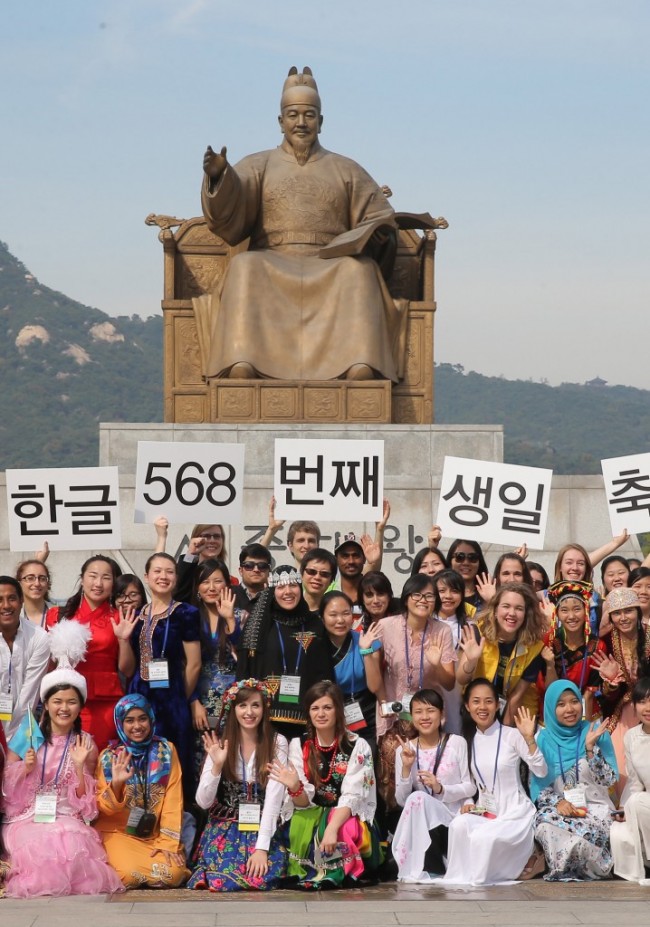
Even people who aren’t native Korean speakers join in the celebration. For foreigners, they organize contests for writing Korean words, exhibitions, and creative projects. For example, as part of one of the festive events, participants from various countries wrote Korean words and letters on T-shirts. Such events demonstrate that Hangul has long since spread beyond Korea’s borders and has become part of people’s interest in Korean culture.
How Hangul Day Will Be Celebrated in 2026
In 2026, Hangul Day falls on Friday, October 9. This year’s celebration holds special significance, as it marks the 580th anniversary of the official proclamation of the “Hunminjeongeum.” In addition, 2026 marks the 100th anniversary of Hangul Day being established as a separate commemorative date. That is why South Korea has planned an expanded program of events.
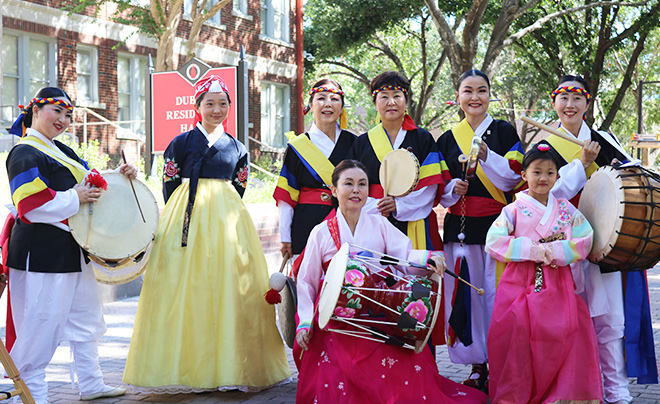
The celebrations will last more than one day. The so-called “Hangul Week” will take place from October 6 to 17 throughout the country. In Seoul, a festival featuring musical performances, poetry readings, theater, and creative programs is planned at Gwanghwamun Square. Interactive activities will be organized for children, and other cities will host their own festivals, contests, and cultural events.
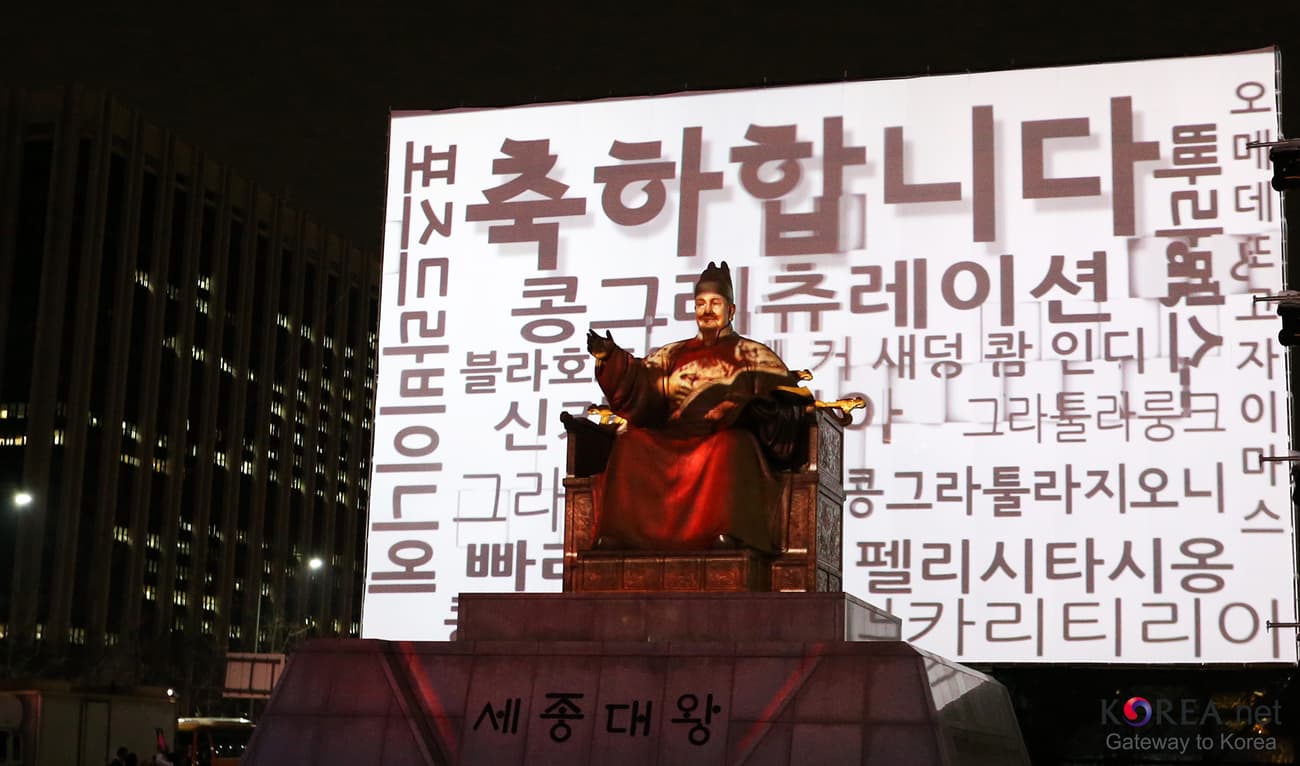
On October 8, the eve of the holiday, a special evening program will take place at Gwanghwamun Square. One of its highlights will be a large-scale video installation dedicated to the 24 basic letters of Hangul. In the projection, the letters will transform into constellations and then into images of nature and life. The show will be projected onto the Gwanghwamun facade for several evenings in a row. A separate Hangeul Festival will take place in Sejong from October 9 to 11. The Hangeul Run, a race dedicated to the holiday, is also scheduled there. The National Museum of World Writing Systems in Incheon will open a special exhibition, and Korean language cultural centers across the country will host contests, creative workshops, and other programs for visitors.
Interesting Facts About Hangeul
One of the most fascinating things about Hangeul is that we know not only the date of its creation but also the history behind it. Usually, little is known about ancient writing systems: researchers can only speculate about who created them and why. In the case of Hangul, the situation is quite different. There is a historical document that describes the principles of the new writing system and explains the reasons for its creation. That is why the history of Hangul can be studied in much greater detail.
The “Hunminjeongeum” is of immense cultural significance and has been inscribed on UNESCO’s “Memory of the World” Register. The document is considered a unique record of how an entire writing system was conceived and created. It describes not only the characters themselves but also the principles of their use. This makes the document important not only for Koreans but also for the global history of writing.
There is another interesting point: modern Hangul looks completely different from how it did at the time of its creation. The original system had 28 characters, but today the Korean writing system is based on 24 letters. Some of the older characters are no longer used. At the same time, modern letters can be combined with one another to form a large number of syllabic units.
Hangul has also long been a part of modern popular culture. It can be seen on signs, clothing, packaging, posters, and in design and advertising. Korean letters are even used as decorative elements, regardless of whether people understand their meaning. Amid the global popularity of K-pop, Korean TV series, movies, and cosmetics, interest in Hangul outside of South Korea also continues to grow.
Why Hangul Day Is Important Today
For South Korea, Hangul is more than just a set of letters. It is part of the country’s history, which helped make reading and writing more accessible to a wide range of people. It is precisely this idea that remains one of the main reasons why Koreans take their writing so seriously. Hangul Day provides an opportunity to reflect not only on ancient history but also on how language influences culture and society.
Today, Hangul is used by millions of people in South Korea and beyond. It is studied by foreigners interested in the Korean language, culture, and modern Korea. For many, their introduction to the language begins with these unusual-looking letters, which at first seem complicated but gradually reveal their system and logic. Thus, Hangul Day is at once a historical, cultural, and modern holiday that demonstrates how a single writing system can endure for nearly six centuries and remain important to people.




