
7 million hectares of forest destroyed in 2025 despite decline in deforestation — Asharq Al-Awsat
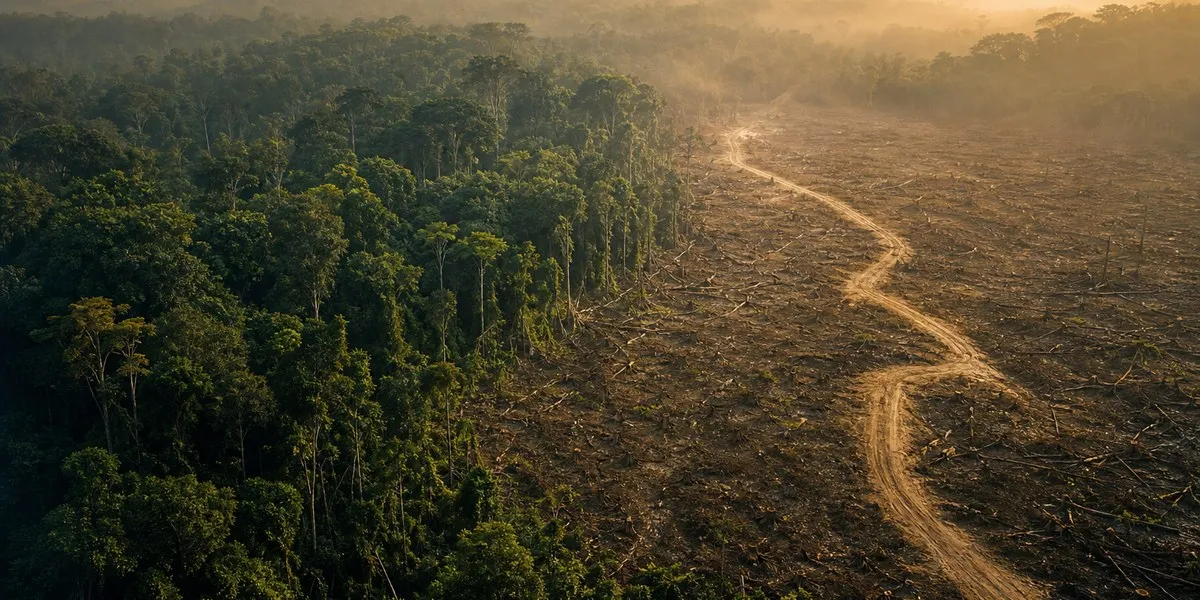
In 2025, 7 million hectares of forest were permanently destroyed worldwide — roughly the area of Ireland. This was 15% less than the previous year, but the pace of reducing losses is insufficient to fulfill the global pledge to halt deforestation by 2030, Asharq Al-Awsat reports, citing the annual Forest Declaration Assessment report.
The pace must decline faster
The report was prepared by a coalition of research groups and non-governmental organizations. To achieve the goal agreed at the UN COP26 climate conference in 2021, the scale of deforestation must be reduced by about 1 million hectares each year.
Study co-author and Climate Focus lead consultant Erin Matson called the 2025 result encouraging, but stressed that it remains more of an exception than a new trend. The report identifies land clearing for agriculture and mineral extraction as the main causes of forest destruction.
More current news is available on the UA.News Telegram channel Telegram.
Latin America and the Congo Basin
In Latin America, forest losses in 2025 decreased by 33%. The assessment's authors linked this, in particular, to Brazil's plan to combat deforestation and tighter controls in the Amazon.
Meanwhile, in the Congo Basin in Central Africa, tropical forest losses reached 2.4 million hectares. For the first time, they nearly matched the level of deforestation in the Amazon. Sam Nguiffo, founder of the Centre for Environment and Development in Cameroon, said deforestation in the region causes significant harm to the cultural identity and livelihoods of local and Indigenous communities.
Risk of droughts and fires
Further progress could also be threatened by El Niño — the warm phase of a natural climate cycle that causes droughts and increases the risk of forest fires. The current phenomenon, which emerged in June, is forecast to peak later this year and could become the strongest on record. The report noted that if forecasts of a strong El Niño in 2026–2027 materialize, the risks of droughts and fires in tropical forests will intensify.




