
Canada’s last known epishelf lake disappears — Mongabay
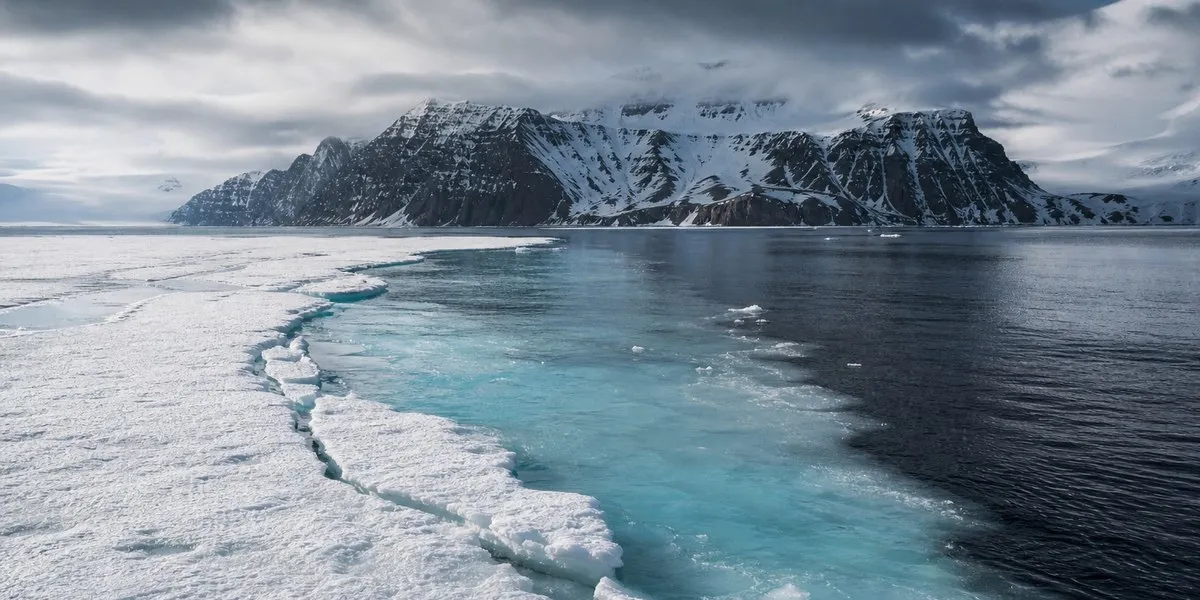
Canada’s last known epishelf lake has disappeared on Ellesmere Island — the body of water in Milne Fiord drained into the sea after part of the Milne Ice Shelf broke off in July 2020. As Mongabay reports, data from measuring instruments showed that the fresh water disappeared within several months afterward and is not being replenished.
An ecosystem that existed for millennia
Epishelf lakes form when an ice shelf blocks a polar fjord. Fresh meltwater from glaciers accumulates above denser seawater, and distinct freshwater and marine layers exist within a single water column.
Researchers estimate that the ice shelf and lake in Milne Fiord existed for about 4,000 years. Regular observations of the body of water began in 2011, when scientists installed instruments to measure temperature and salinity at different depths. At that time, the freshwater layer was up to 10 metres thick.
Before its collapse, the Milne Ice Shelf had an area of 186 square kilometres and was 85 metres thick. In July 2020, a floating fragment with an area of 64 square kilometres broke off from it, causing the shelf to lose nearly half of its area.
More current news is available on the UA.News Telegram channel Telegram.
Signs of warming in the Arctic
In the 20th century, between 10 and 17 epishelf lakes existed along the northern coast of Ellesmere Island. Over recent decades, they disappeared as a result of warming linked to the burning of fossil fuels. After the 65-metre-deep lake in neighbouring Disraeli Fiord drained in 2002, the body of water in Milne Fiord remained the last of its kind in the Canadian Arctic.
Scientists link the shelf’s collapse to warming of the atmosphere and ocean. The very warm years of 2019 and 2020 contributed to the accumulation of a larger volume of meltwater on the shelf, while warmer ocean water intensified melting from below. Before the break-off, a large area of open water formed in front of the ice edge, exposing the shelf to wave impacts.
Milne Fiord is located in the Last Ice Area, a part of the Arctic previously considered one of the most resilient to climate change. According to University of Alberta researcher Andrew Hamilton, the remaining ice shelf may also drift away over time, and the fjord, which is still covered by multiyear ice, may become ice-free in summer.




